Topic: Podcaster A

50 chapters across the catalog

What Happens If You Do Nothing
Episode 10 0:00 - 6:18

10: What Happens If You Do Nothing

The Invisible Cost of Doing Nothing for Podcast Discoverability

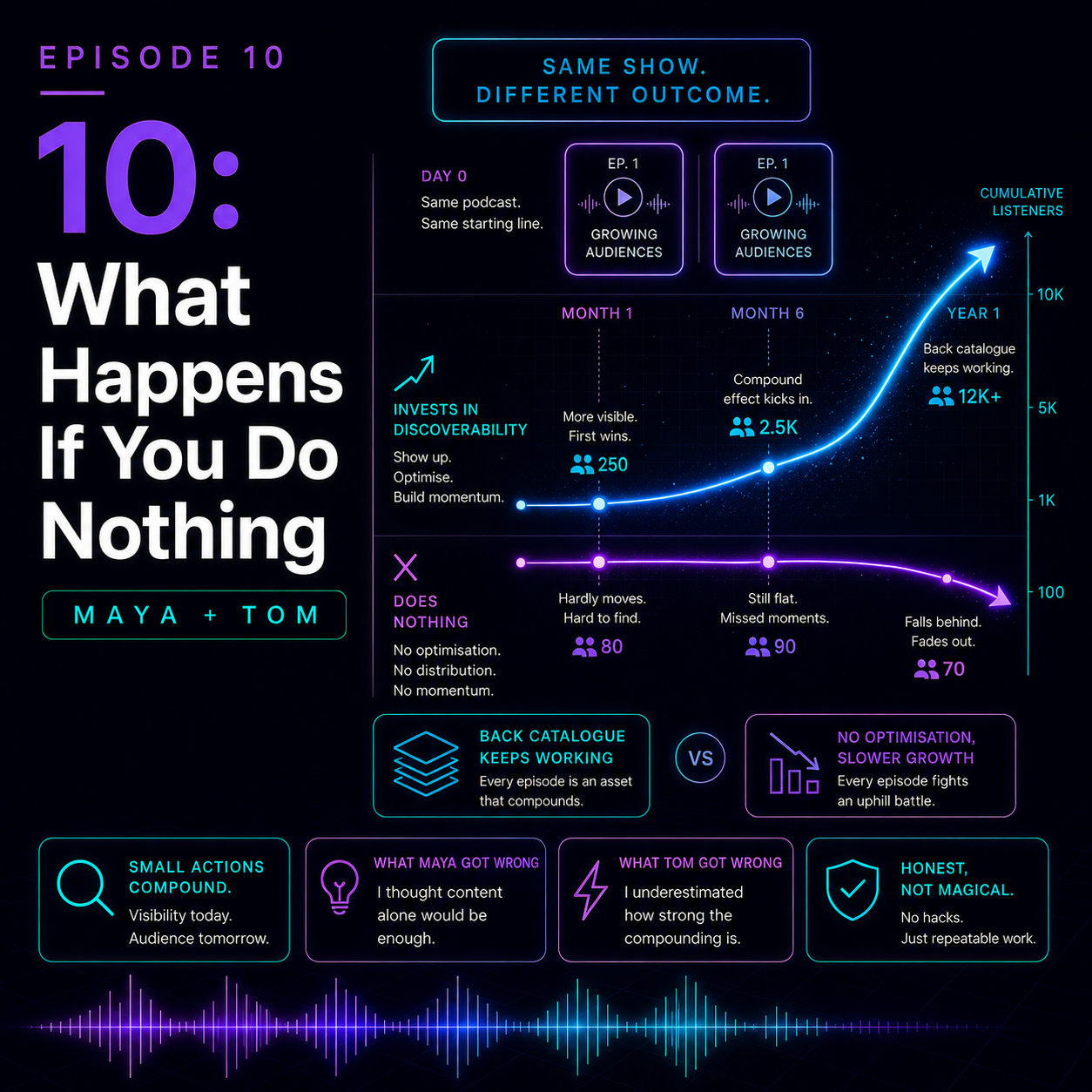
This episode, the season finale of "How to Get Discovered," explores the "invisible cost" of neglecting podcast discoverability. Through a thought experiment comparing two identical podcasts, Show A invests in discoverability (transcripts, show notes, data analysis) while Show B does nothing. After 12 months, Show A's back catalog generates new listeners through search, while Show B's audience remains stable, missing out on potential growth.
What Happens If You Do Nothing
Episode 10 6:19 - 9:00

10: What Happens If You Do Nothing

Maya's Self-Correction on Podcast Discoverability

Maya admits three areas where she was wrong during the season. First, she underestimated the energy required for discoverability work. Second, she was overly confident about AI chatbots surfacing content, noting the system is noisier than implied. Third, she sometimes prioritized search optimization over voice in episode titling, making content less engaging.

What Happens If You Do Nothing
Episode 10 9:01 - 10:49

10: What Happens If You Do Nothing

Tom's Self-Correction on Podcast Loyalty and SEO

Tom admits three areas where he was wrong. He initially dismissed transcripts, acknowledging his early versions were inadequate. He also realized that while loyalty is crucial, it's not opposed to acquisition, as every loyal listener was once a stranger. Most embarrassingly, he admitted to defensively rolling his eyes at podcast SEO, protecting himself from the possibility it might actually matter.

What Happens If You Do Nothing
Episode 10 10:49 - 13:10

10: What Happens If You Do Nothing

The Back Catalog as a Podcast Asset

The core argument of the season is that podcasters undervalue their back catalog, viewing it as an archive rather than an asset. The conversations and information within old episodes remain relevant, but they are invisible without discoverability efforts. This isn't about gaming algorithms or content marketing, but about respecting the work already done and making it findable, avoiding the invisible opportunity cost of inaction.

What Happens If You Do Nothing
Episode 10 13:10 - 15:29

10: What Happens If You Do Nothing

Tom's Conversion to Podcast Discoverability and PodHerd

Tom, initially skeptical, now believes loyalty and word-of-mouth are necessary but insufficient for podcast growth; discoverability is also crucial. He signed up for PodHerd's begrudging tier and is now upgrading his account to integrate with Search Console and set up a CNAME on his own domain. This shift reflects his realization that he has been building "somebody else's house" for too long.

What Happens If You Do Nothing
Episode 10 15:29 - 17:07

10: What Happens If You Do Nothing

Season 1 Conclusion and Listener Call to Action

The hosts conclude Season 1 by encouraging listeners to consider implementing discoverability strategies for their own shows. The key takeaway is to view the back catalog as an ongoing asset that can still "earn" for the show, rather than completed work. They thank listeners for engaging with the 10-episode argument and invite feedback for potential future seasons.

Compounding
Episode 9 0:00 - 2:21

9: Compounding

Podcast Discoverability Experiment: Initial Disappointment

The hosts of "How to Get Discovered" discuss the initial three weeks of a podcast discoverability experiment. Despite transcripts being indexed and Google beginning to crawl pages, the data shows only tiny, single-digit results, leading to slight disappointment for one host who expected a more dramatic, immediate impact. Access to Google Search Console, a higher-tier feature, is currently unavailable.

Compounding
Episode 9 2:21 - 5:35

9: Compounding

Compounding Effect: Back Catalog Value in Podcasting

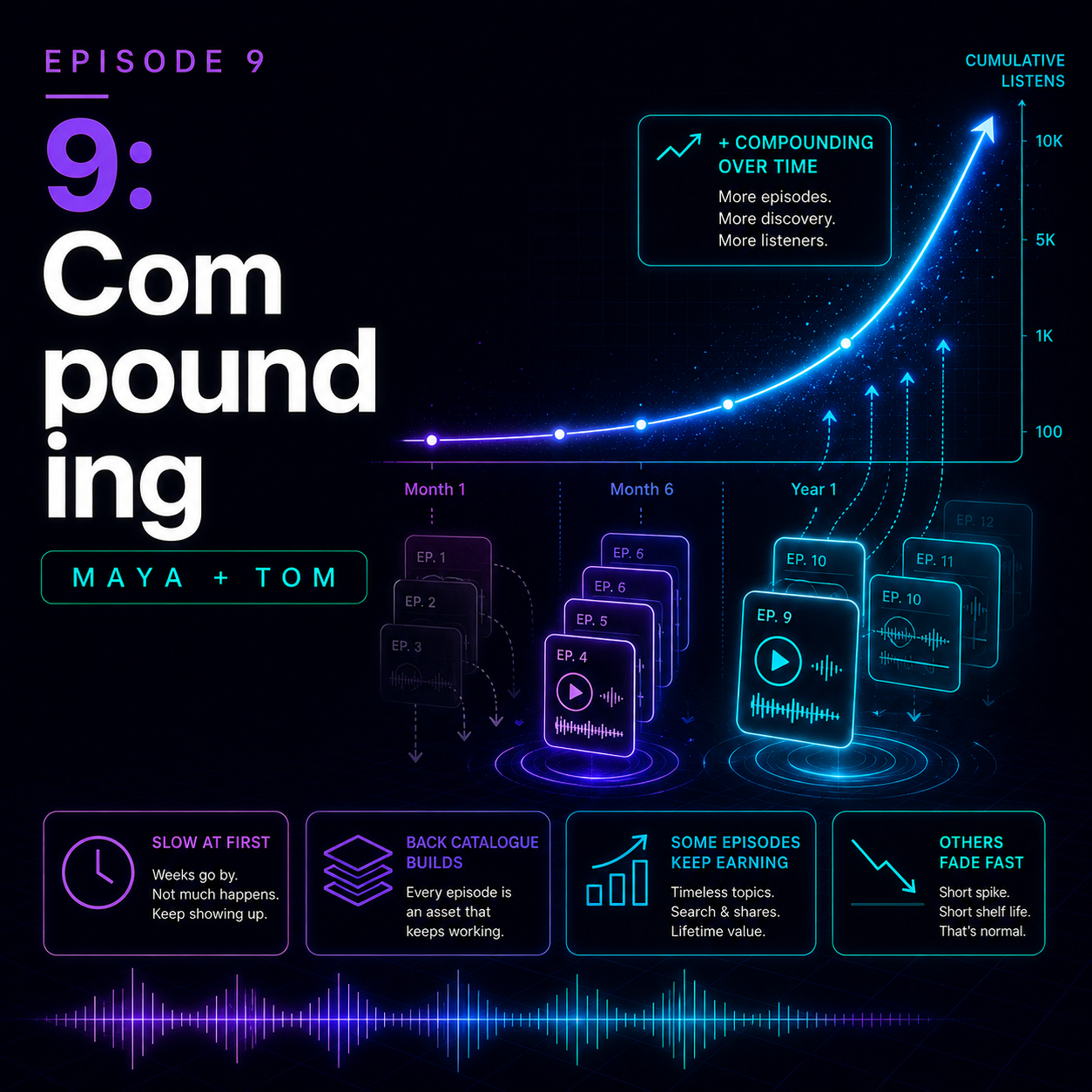
The compounding effect in podcasting describes how a back catalog accumulates listens over years, contrasting with the conventional front-loaded model where most listens occur in the first two weeks. Episodes from early years can receive more monthly listens in later years than during their initial release. This challenges industry measurements focused solely on 30 or 90-day performance, suggesting a different, more enduring asset value for shows with strong discoverability.

Compounding
Episode 9 8:54 - 10:28

9: Compounding

Acknowledging Dormant Podcast Value and Past Inaction

One host reflects on over 350 episodes created in 10 years, acknowledging a potentially large amount of dormant value due to a lack of discoverability focus. This realization caused initial anger towards oneself and hosting platforms, eventually leading to the acceptance that new tools now exist to leverage this untapped content. The key takeaway is to move past anger and begin utilizing available resources.

Compounding
Episode 9 10:30 - 12:18

9: Compounding

Newsjacking Episodes: Short-Term Spikes vs. Compounding

Newsjacking episodes, created in response to current events, provide immediate spikes in listenership and engage existing audiences but typically do not compound. Their relevance is temporary, meaning their back catalog quickly becomes an archive rather than a continually earning asset. While valuable for timely engagement, a content strategy solely reliant on newsjacking prevents the long-term accumulation of listens seen with evergreen content.

Compounding
Episode 9 13:57 - 15:51

9: Compounding

Longform Clips: Deep Acquisition and Listener Evaluation

The length of shared clips significantly impacts listener acquisition. While 30-second clips serve as top-of-funnel awareness, longer clips (e.g., 5-15 minutes) allow friends to share entire arguments or conversations, providing a more complete experience. Podherd's higher tier, offering up to 15-minute clips, is highlighted as crucial for deep acquisition work, enabling potential listeners to fully evaluate a show before subscribing.

Compounding
Episode 9 15:51 - 16:43

9: Compounding

Search Console Integration: Upgrading for Data Visibility

One host expresses a quiet intention to upgrade their Podherd tier, specifically to gain access to Google Search Console integration. This decision stems from the current inability to see detailed data for their three-week-old podcast discoverability experiment, highlighting the desire for deeper insights into how their content is performing in search results.

Compounding
Episode 9 16:44 - 17:20

9: Compounding

Season Finale: Discoverability Investment vs. Inaction

The hosts announce the upcoming season finale, which will explore the consequences of investing in discoverability versus doing nothing. The episode will feature a year in the life of two hypothetical shows, revisit major disagreements from the season, and present a closing argument on the importance of discoverability.

Under the Hood
Episode 8 0:00 - 1:47

8: Under the Hood

Podcast Discoverability and Technical Indexing

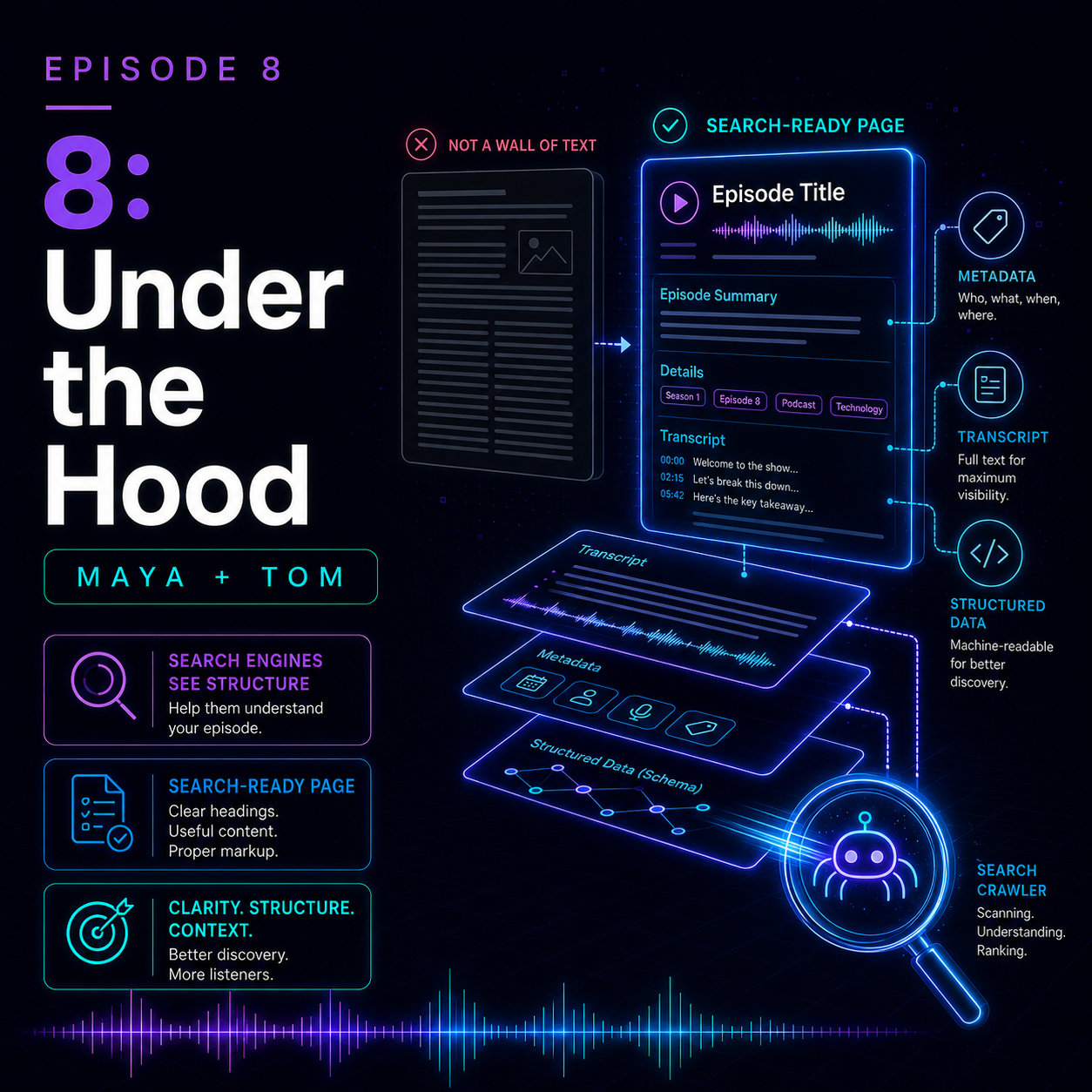
The podcast "How to Get Discovered" introduces its technical episode, focusing on how transcript indexing works for search engines. The hosts establish a rule to define all technical terms and acronyms to ensure listener comprehension. The core question for the episode is why a properly structured transcript page differs significantly from a transcript pasted into a regular show notes page in the eyes of a search engine.

Under the Hood
Episode 8 3:28 - 5:50

8: Under the Hood

Structured Data and Schema.org for Podcasts

Structured data, following standards like Schema.org, allows webpages to communicate their specific content type to search engines. For podcasts, this means marking up a page to explicitly state it's a podcast episode, including its title, description, duration, and transcript. This structured approach helps search engines understand the content without guessing, leading to better legibility for both machines and AI systems, rather than just higher ranking. Most show notes pages lack this due to hosting platform priorities.

Under the Hood
Episode 8 10:34 - 13:04

8: Under the Hood

Domain Authority and Podcast Transcript Hosting

The domain where a podcast transcript is hosted significantly impacts its search performance. Domains with a long history, reputable links, and strong engagement signals accumulate "authority" over time. New pages on high-authority domains rank faster and higher. When transcripts are hosted on a podcast platform's default subdomain, the show benefits less from this authority, as it's spread across all podcasts on that platform. Hosting on a custom domain builds authority for the podcaster's own property.

Under the Hood
Episode 8 14:01 - 15:36

8: Under the Hood

Google Search Console for Podcast Discoverability

Google Search Console is a free tool that provides critical data for any domain owner, including which search queries lead to their pages, page click-through rates, average search positions, and pages appearing in results but not clicked. This data is invaluable for understanding discoverability and optimizing content. However, this tool is only accessible for domains a user can prove they control, meaning platform-hosted transcripts cannot leverage this data directly.

Under the Hood
Episode 8 14:44 - 17:33

8: Under the Hood

PodHerd Integration and Personal Experimentation

One of the hosts admits to setting up a personal podcast feed on PodHerd's starter tier, which offers Search Console integration. This move, described as "begrudging experimentation," aims to test the discoverability claims made throughout the season. The host plans to gather three months of data to determine if the strategies discussed, particularly regarding metrics and domain authority, prove effective.

The Question Behind the Query
Episode 7 0:00 - 1:14

7: The Question Behind the Query

How to Get Discovered: The Question Behind The Query

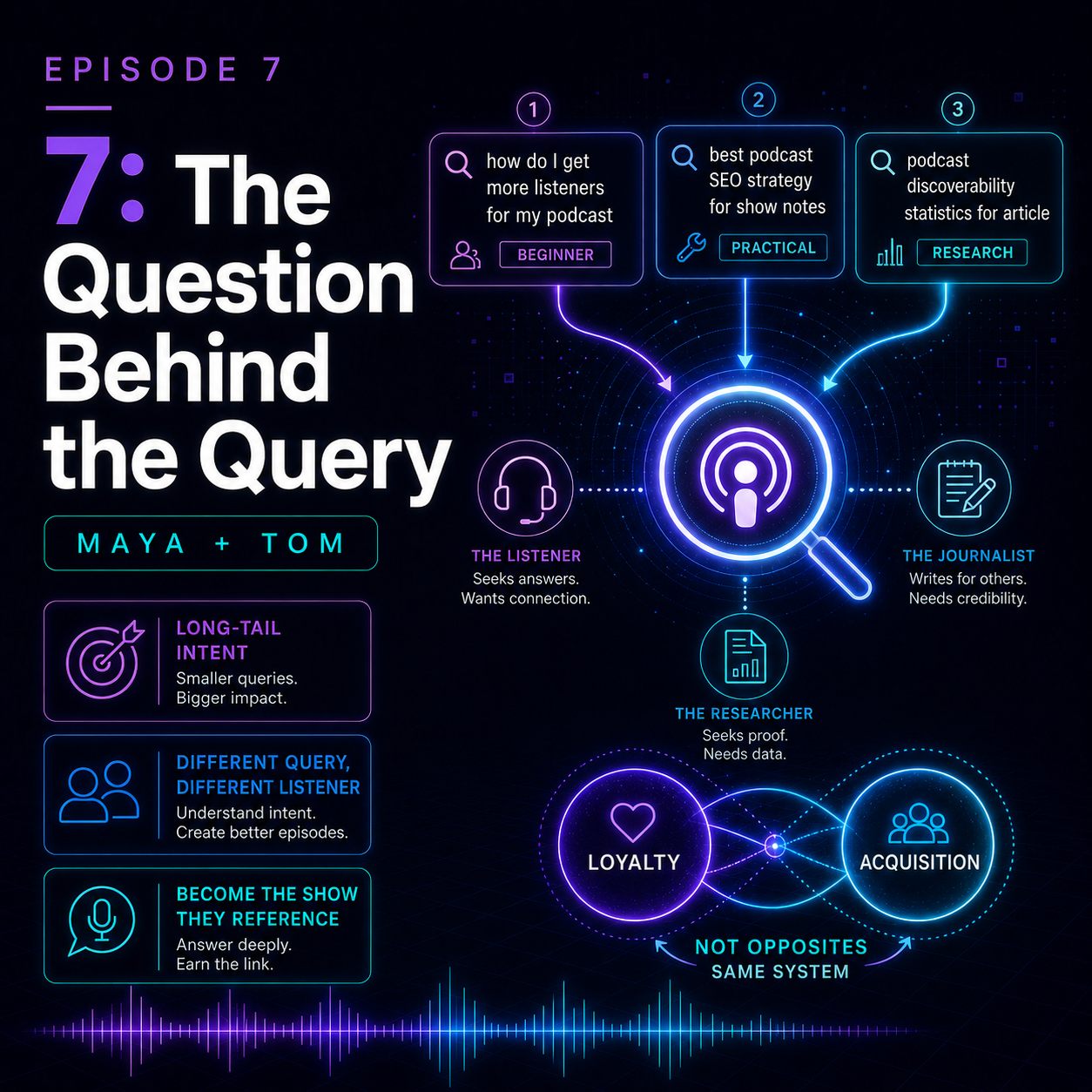
The podcast "How to Get Discovered" introduces its latest episode, "The Question Behind The Query," which delves into the philosophical aspects of podcast discoverability. The episode will explore long-tail search intent, how podcasts become reference material for journalists and researchers, and the relationship between listener loyalty and acquisition.