Topic: Podcast Listens

17 chapters across the catalog

What Happens If You Do Nothing
Episode 10 15:29 - 17:07

10: What Happens If You Do Nothing

Season 1 Conclusion and Listener Call to Action

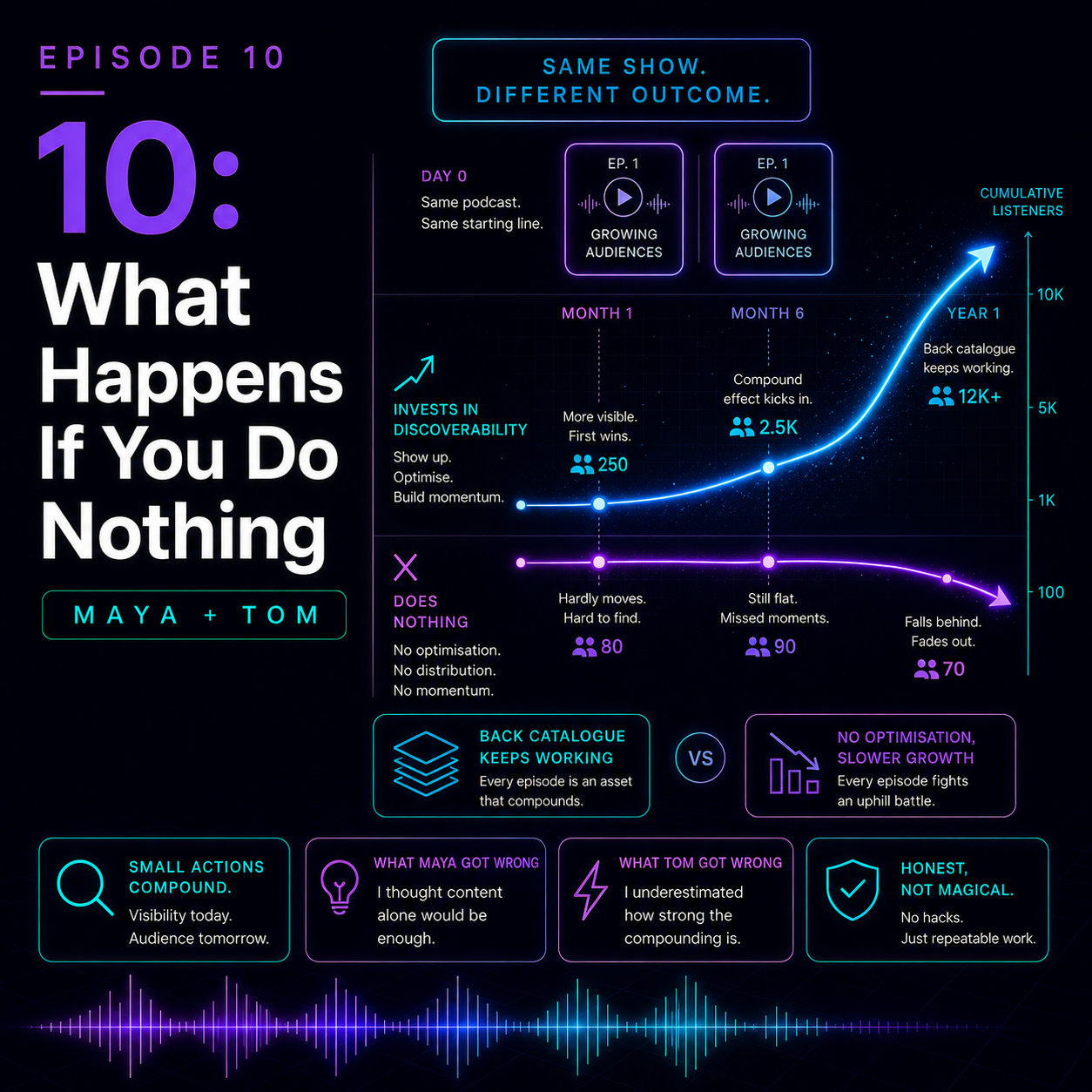
The hosts conclude Season 1 by encouraging listeners to consider implementing discoverability strategies for their own shows. The key takeaway is to view the back catalog as an ongoing asset that can still "earn" for the show, rather than completed work. They thank listeners for engaging with the 10-episode argument and invite feedback for potential future seasons.
Compounding
Episode 9 2:21 - 5:35

9: Compounding

Compounding Effect: Back Catalog Value in Podcasting

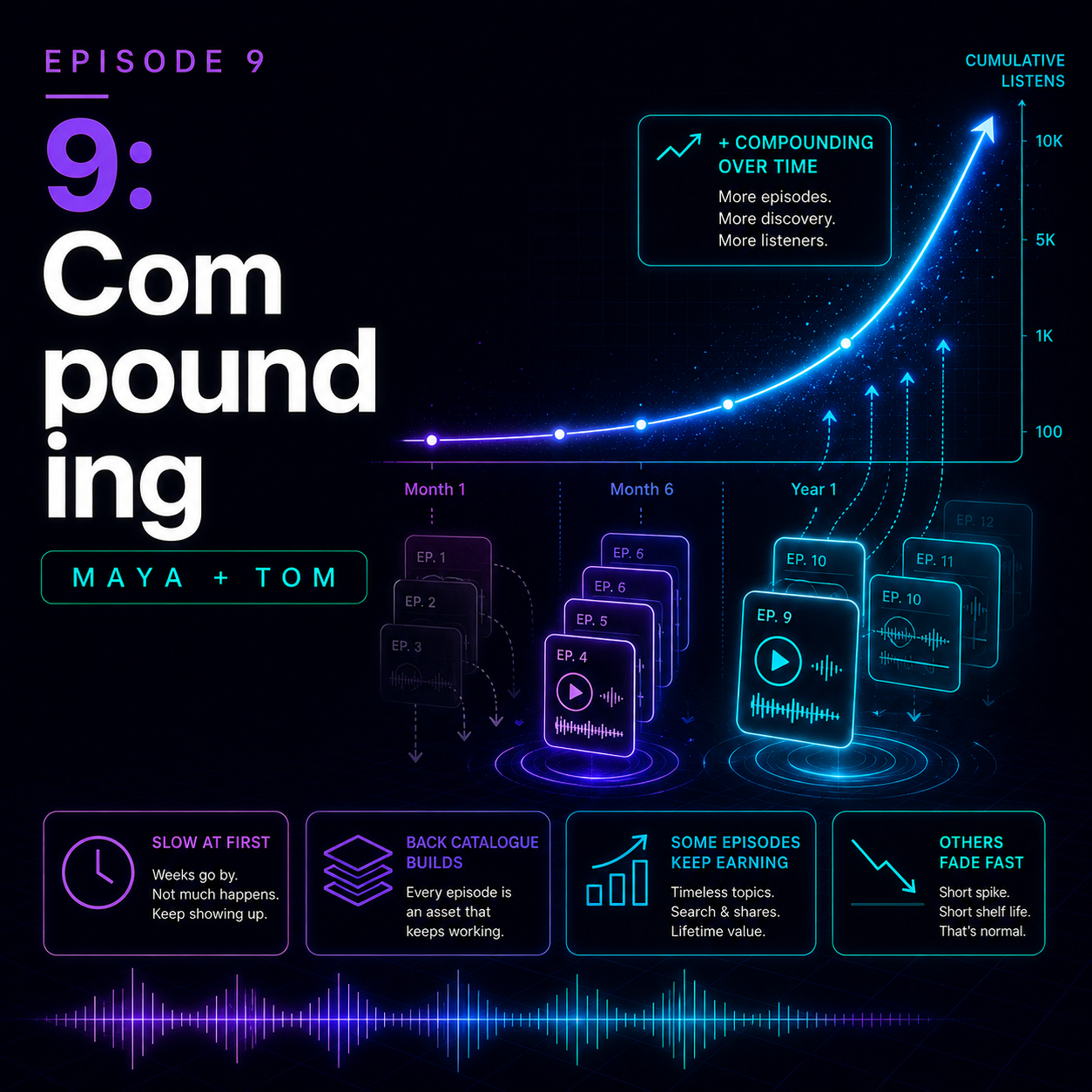
The compounding effect in podcasting describes how a back catalog accumulates listens over years, contrasting with the conventional front-loaded model where most listens occur in the first two weeks. Episodes from early years can receive more monthly listens in later years than during their initial release. This challenges industry measurements focused solely on 30 or 90-day performance, suggesting a different, more enduring asset value for shows with strong discoverability.

Compounding
Episode 9 13:57 - 15:51

9: Compounding

Longform Clips: Deep Acquisition and Listener Evaluation

The length of shared clips significantly impacts listener acquisition. While 30-second clips serve as top-of-funnel awareness, longer clips (e.g., 5-15 minutes) allow friends to share entire arguments or conversations, providing a more complete experience. Podherd's higher tier, offering up to 15-minute clips, is highlighted as crucial for deep acquisition work, enabling potential listeners to fully evaluate a show before subscribing.

Compounding
Episode 9 15:51 - 16:43

9: Compounding

Search Console Integration: Upgrading for Data Visibility

One host expresses a quiet intention to upgrade their Podherd tier, specifically to gain access to Google Search Console integration. This decision stems from the current inability to see detailed data for their three-week-old podcast discoverability experiment, highlighting the desire for deeper insights into how their content is performing in search results.

The Question Behind the Query
Episode 7 1:15 - 2:46

7: The Question Behind the Query

Analyzing Listener Search Queries and Intent

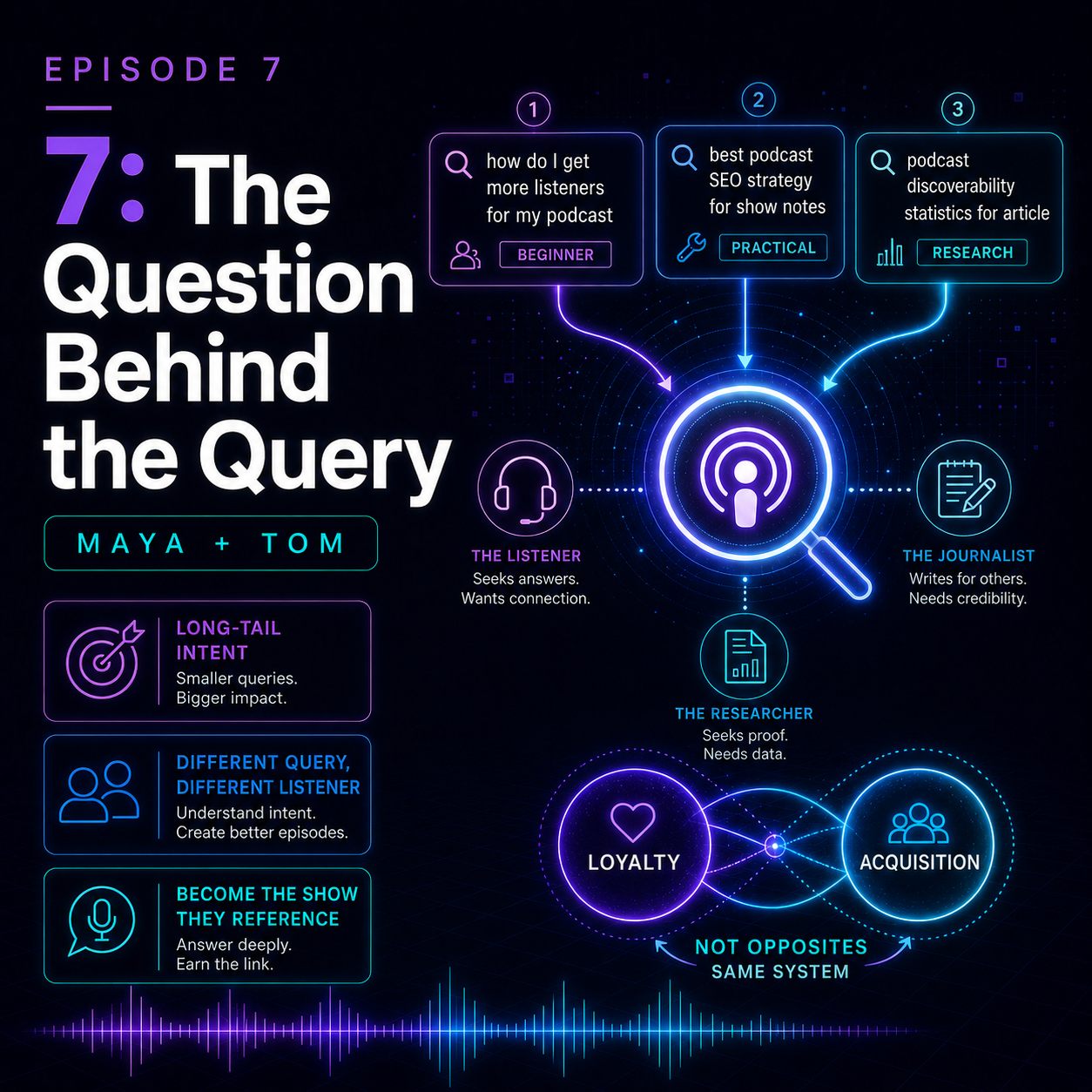
The hosts analyze three distinct search queries related to freelancing to illustrate different listener intents. Queries like "How do I negotiate my freelance rate without sounding desperate?" indicate an urgent need for specific advice, while "Best podcast for freelancers UK" suggests browsing for a new show. "Should I be sole trader or limited company? Side project under 30k" reveals a listener seeking authoritative guidance for a specific decision.

The Question Behind the Query
Episode 7 2:47 - 5:50

7: The Question Behind the Query

Three Types of Podcast Listeners: Moment, Relationship, Authority

The discussion categorizes podcast listeners into three types based on their search intent: the "one-clip listener" seeking a specific tip, the "subscribe-or-not listener" looking for a long-term relationship with a show, and the "authority listener" needing trusted expertise for a specific problem. A podcast must present itself in different ways to satisfy each type, moving beyond a simple episode feed.

The Question Behind the Query
Episode 7 8:54 - 10:29

7: The Question Behind the Query

Loyalty and Acquisition: Not Opposites

The podcast challenges the common perception that loyalty and acquisition are opposing goals. Instead, it argues that loyalty is the natural progression of acquired listeners over time. Every loyal listener was once a stranger who entered through some "door," whether it was word-of-mouth, search, or a shared clip. The focus should be on acquiring listeners and then retaining them.

Stop Writing Bad Show Notes
Episode 6

6: Stop Writing Bad Show Notes

Podcast Show Notes: Labels vs. Pitches for Discoverability

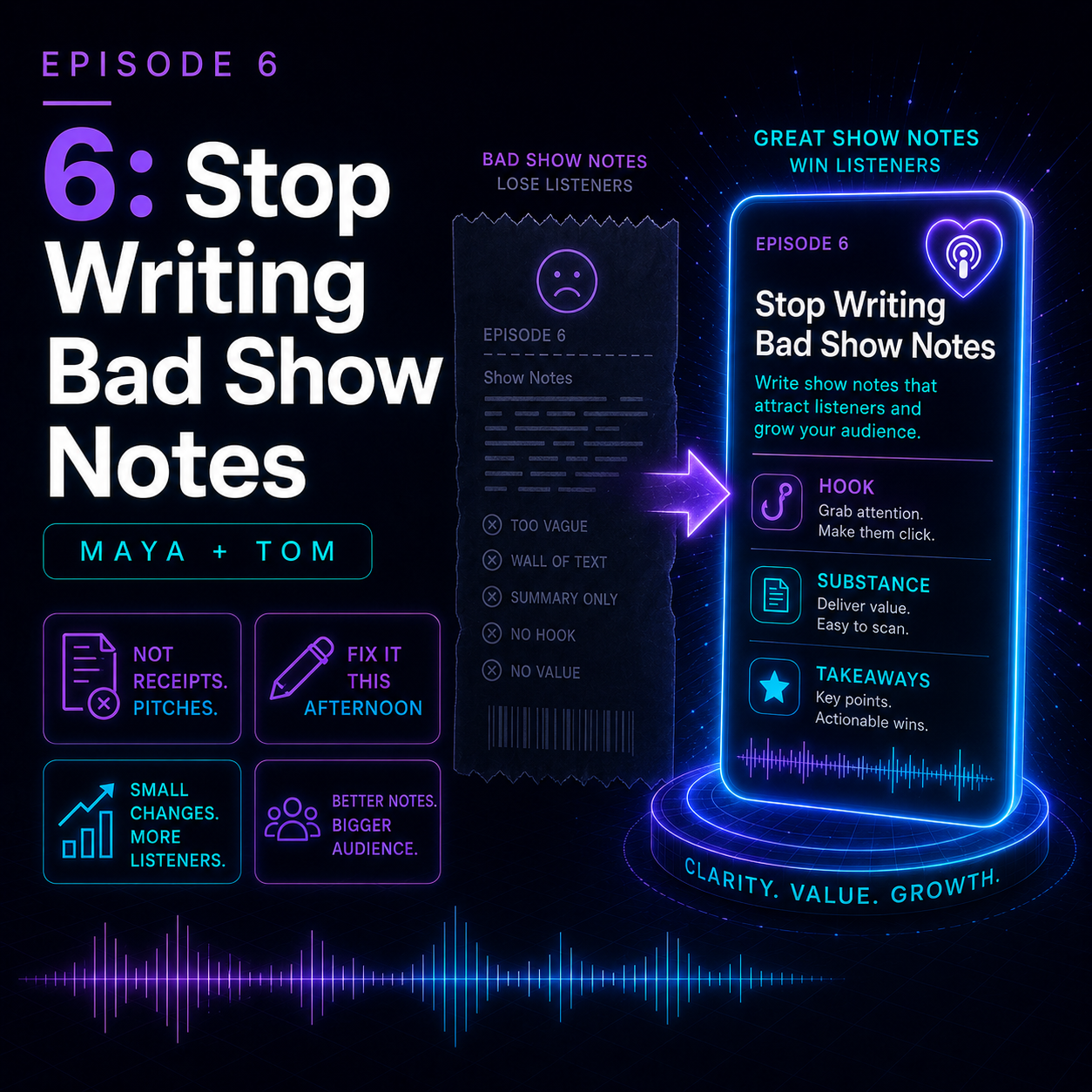
The hosts introduce the episode's focus on "easy wins" for podcast discoverability, specifically improving show notes. One host confesses to writing terrible, one-sentence show notes for three years, viewing them as mere "receipts" or labels. The key argument is that show notes are the second thing potential new listeners see (after the title) and should be written as pitches, not just labels, to encourage playback.

Stop Writing Bad Show Notes
Episode 6 2:40 - 5:07

6: Stop Writing Bad Show Notes

Effective Show Note Structure for New Listeners

An effective show note structure is proposed, consisting of three paragraphs: a hook (what the episode is about, framed for a stranger), substance (three to four specific topics discussed, concretely detailed for search engines and interested listeners), and guest credibility (why their opinion matters, with verifiable details). This approach, though taking 15 minutes per episode, has measurably increased new listeners.

Stop Writing Bad Show Notes
Episode 6 5:07 - 8:42

6: Stop Writing Bad Show Notes

Podcast Episode Titles: Avoiding Common Pitfalls

Podcast episode titles often fall into three ineffective categories: "cute" (in-jokes, wordplay), "lazy" (Episode 47), or "keyword-stuffed" (over-optimized for search engines that don't work as expected). A fourth, more effective category is proposed: descriptive titles that tell a human what the episode is about, potentially with a guest name or a "voice bit" for added hook. The goal is to write for the stranger, trusting regular listeners to tolerate less "cute" titles.

The Loyalty Trap
Episode 4 0:00 - 2:28

4: The Loyalty Trap

The Loyalty Trap: Podcast Growth vs. Listener Love

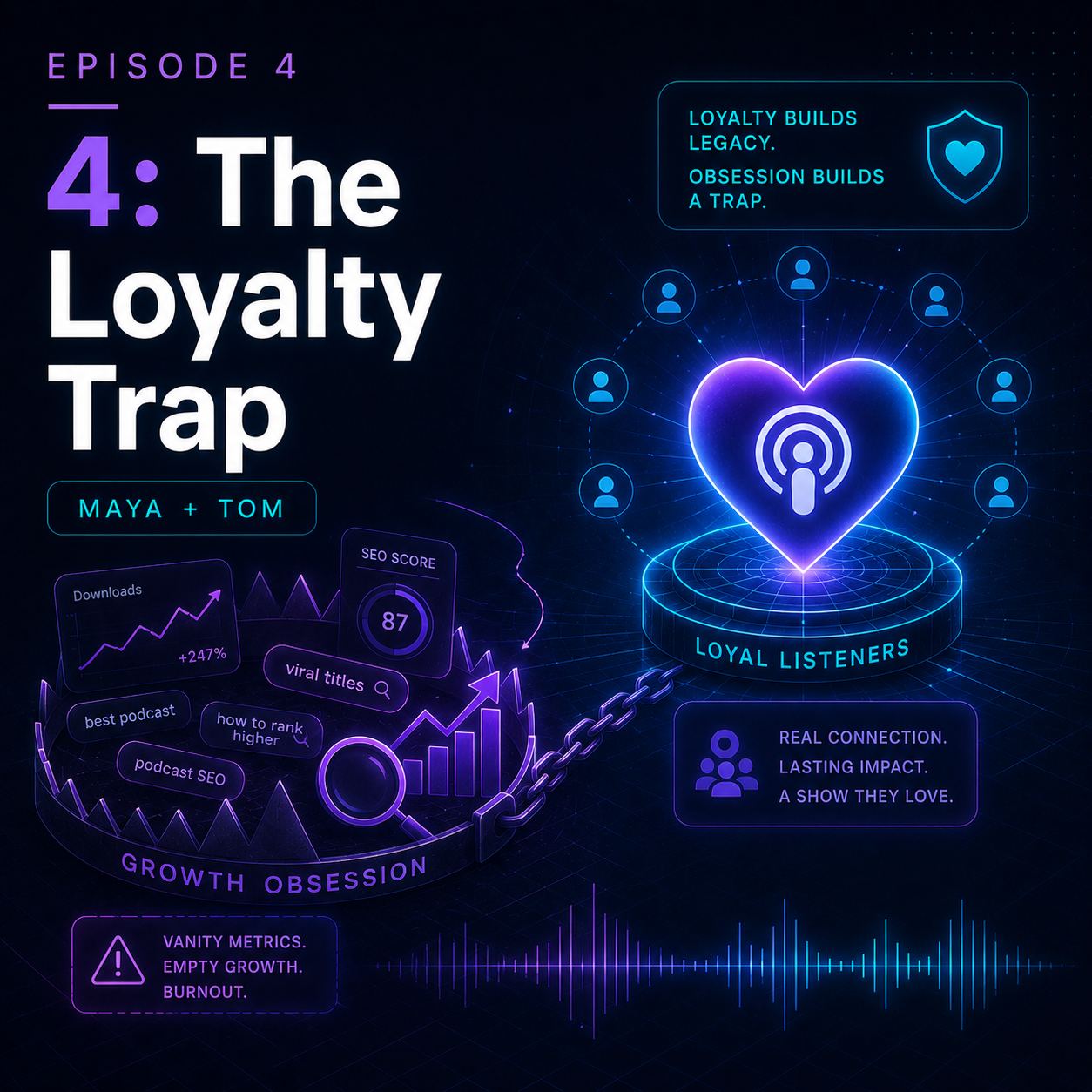
The podcast "How to Get Discovered" introduces "The Loyalty Trap" episode, where Tom argues that chasing new listeners through search and discoverability is a distraction from making a show loyal listeners truly love. He contends that the industry has prioritized growth tactics like SEO, thumbnails, and cross-promotion, leading to well-optimized but mediocre shows, as energy is diverted from content quality.

The Loyalty Trap
Episode 4 2:29 - 5:28

4: The Loyalty Trap

Word-of-Mouth Growth and the Cost of Growth Tactics

Tom asserts that podcasts with meaningful, lasting audiences grow through trust and word-of-mouth recommendations, driven by genuinely good content. He argues that growth tactics, such as SEO and metadata optimization, are not free; they consume time and energy that should be spent on improving the show, ultimately making the content worse and alienating loyal listeners.

The Loyalty Trap
Episode 4 5:29 - 8:33

4: The Loyalty Trap

Search-Driven Discoverability and Long-Tail Questions

The hosts debate how new listeners find podcasts. While word-of-mouth is acknowledged as important, the argument is made that search is an increasingly significant entry point for "cold listeners" who have specific questions. These listeners often use "long-tail" search queries, and episodes that answer these specific questions can attract highly engaged individuals who are more likely to subscribe.

The Loyalty Trap
Episode 4 11:09 - 13:29

4: The Loyalty Trap

Listener-Driven Clip Generation vs. Host-Cut Clips

The concept of "clip generation" is clarified, distinguishing between host-cut clips for marketing and listener-driven clips. Listener-driven clips allow the audience to highlight and share specific passages from a transcript as video clips, complete with audio and attribution. This method is seen as superior because listeners have better instincts about what is shareable and it doesn't incentivize hosts to perform for clips.

The Loyalty Trap
Episode 4 13:30 - 15:02

4: The Loyalty Trap

PodHerd and Longer Podcast Clips for Deeper Engagement

The discussion highlights the limitations of short, TikTok-style clips (30-60 seconds) for genuine word-of-mouth sharing. It introduces PodHerd, a tool that allows listeners to create longer clips, up to 5 or 15 minutes, enabling the sharing of entire arguments or segments. This approach is considered more effective for capturing and sharing content that truly resonates with listeners.

Invisible Shows
Episode 1 1:41 - 3:27

1: Invisible Shows

Invisible Shows: The Podcast Discoverability Problem

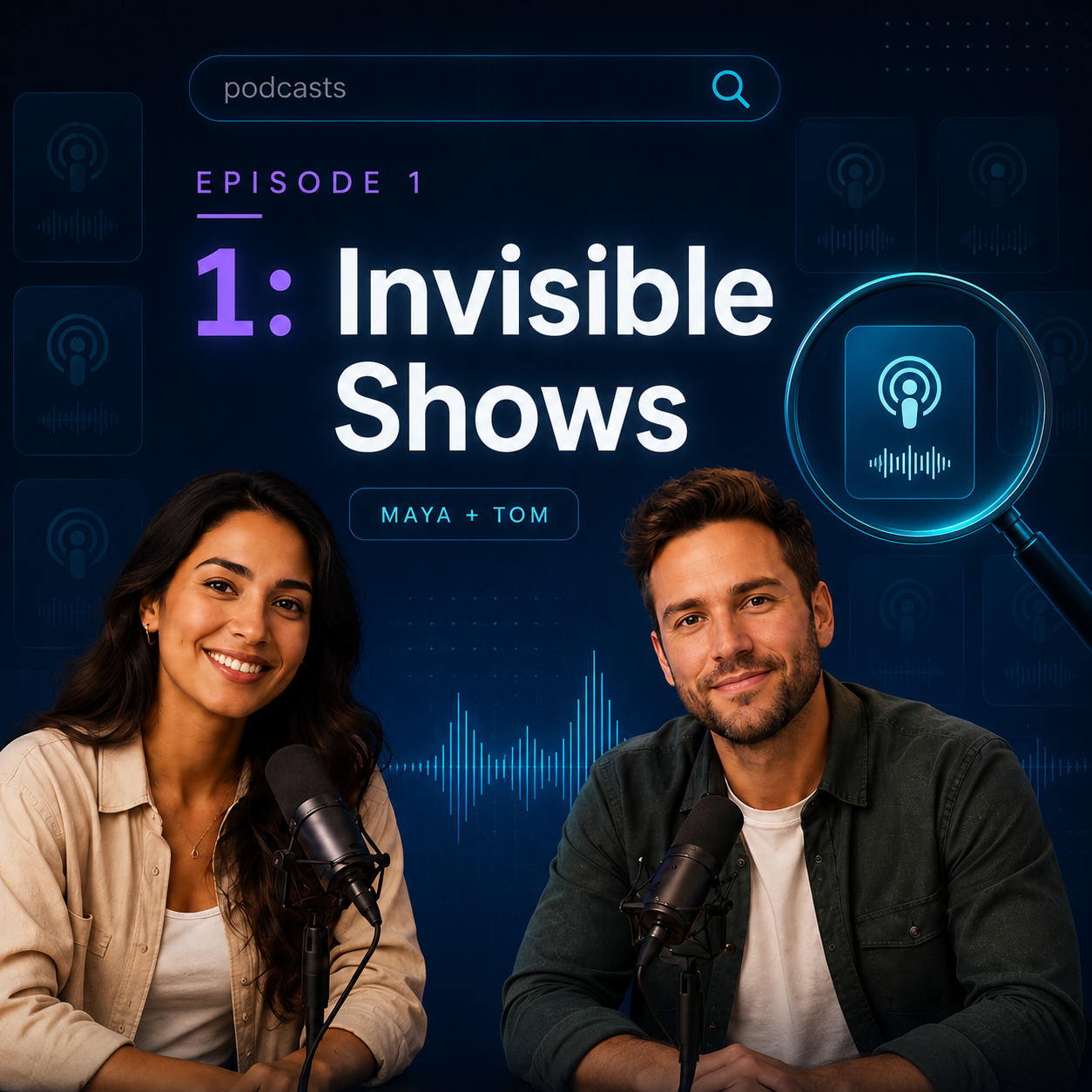
The episode "Invisible Shows" explores the challenge of new listeners finding podcasts without prior knowledge. A thought experiment illustrates that someone searching for a niche topic, like "podcast about beekeeping for beginners," is unlikely to find smaller, high-quality shows, instead discovering only established ones. This highlights the core problem of podcasts being "invisible" to potential new audiences.

Invisible Shows
Episode 1 11:12 - 13:20

1: Invisible Shows

Search-Shaped Listeners and the Podcast Funnel

The discussion introduces the concept of "search-shaped listeners" who have specific questions and actively seek answers, contrasting them with "browsing listeners" who desire company or a trusted host. It is argued that search serves as the top of the podcast funnel, leading new listeners to specific episodes, and if they like the host, they become loyal "browsers." Many podcasters have neglected this top-of-funnel discoverability.