Topic: Discoverability

30 chapters across the catalog

What Happens If You Do Nothing
Episode 10 0:00 - 6:18

10: What Happens If You Do Nothing

The Invisible Cost of Doing Nothing for Podcast Discoverability

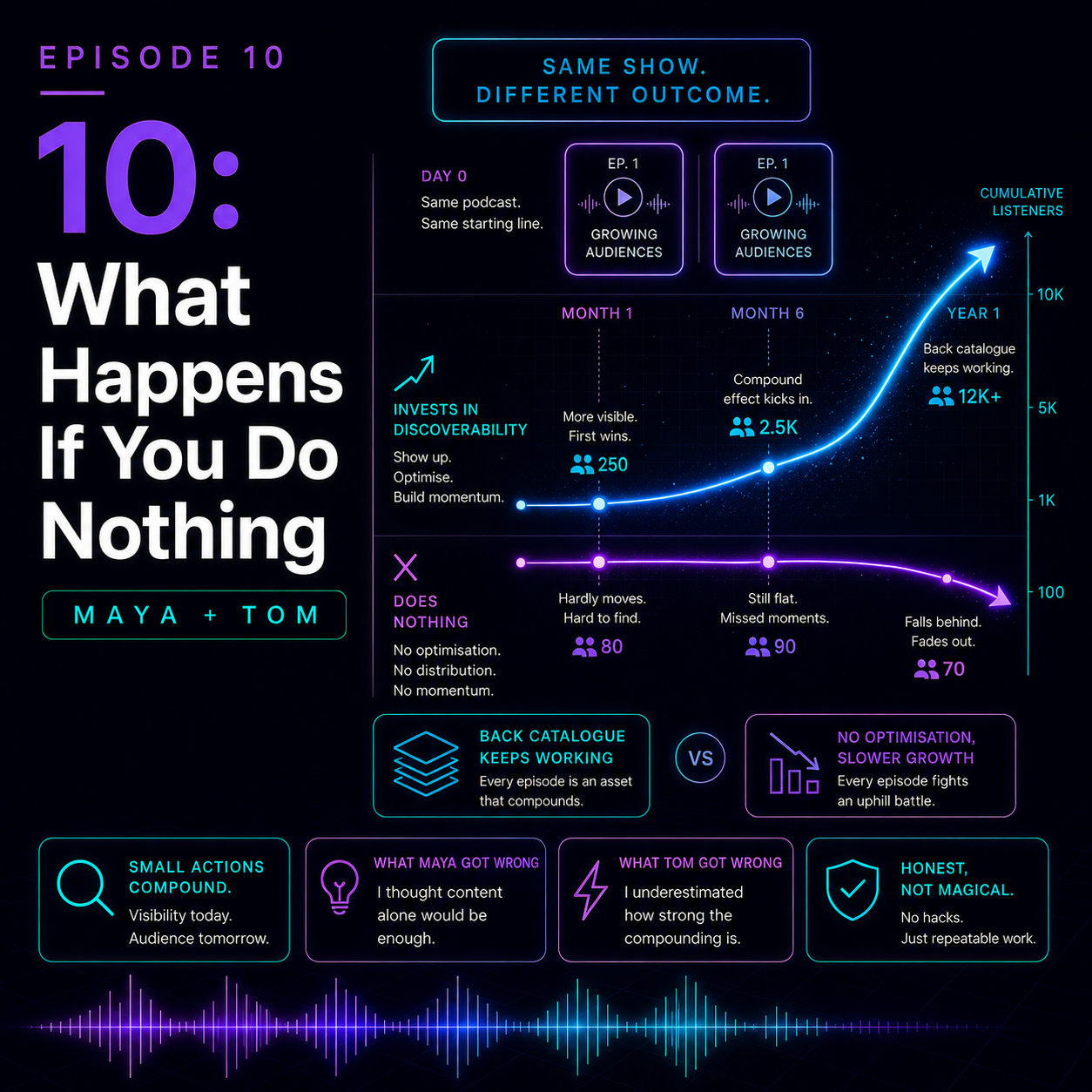
This episode, the season finale of "How to Get Discovered," explores the "invisible cost" of neglecting podcast discoverability. Through a thought experiment comparing two identical podcasts, Show A invests in discoverability (transcripts, show notes, data analysis) while Show B does nothing. After 12 months, Show A's back catalog generates new listeners through search, while Show B's audience remains stable, missing out on potential growth.
What Happens If You Do Nothing
Episode 10 6:19 - 9:00

10: What Happens If You Do Nothing

Maya's Self-Correction on Podcast Discoverability

Maya admits three areas where she was wrong during the season. First, she underestimated the energy required for discoverability work. Second, she was overly confident about AI chatbots surfacing content, noting the system is noisier than implied. Third, she sometimes prioritized search optimization over voice in episode titling, making content less engaging.

What Happens If You Do Nothing
Episode 10 10:49 - 13:10

10: What Happens If You Do Nothing

The Back Catalog as a Podcast Asset

The core argument of the season is that podcasters undervalue their back catalog, viewing it as an archive rather than an asset. The conversations and information within old episodes remain relevant, but they are invisible without discoverability efforts. This isn't about gaming algorithms or content marketing, but about respecting the work already done and making it findable, avoiding the invisible opportunity cost of inaction.

What Happens If You Do Nothing
Episode 10 13:10 - 15:29

10: What Happens If You Do Nothing

Tom's Conversion to Podcast Discoverability and PodHerd

Tom, initially skeptical, now believes loyalty and word-of-mouth are necessary but insufficient for podcast growth; discoverability is also crucial. He signed up for PodHerd's begrudging tier and is now upgrading his account to integrate with Search Console and set up a CNAME on his own domain. This shift reflects his realization that he has been building "somebody else's house" for too long.

What Happens If You Do Nothing
Episode 10 15:29 - 17:07

10: What Happens If You Do Nothing

Season 1 Conclusion and Listener Call to Action

The hosts conclude Season 1 by encouraging listeners to consider implementing discoverability strategies for their own shows. The key takeaway is to view the back catalog as an ongoing asset that can still "earn" for the show, rather than completed work. They thank listeners for engaging with the 10-episode argument and invite feedback for potential future seasons.

Compounding
Episode 9 0:00 - 2:21

9: Compounding

Podcast Discoverability Experiment: Initial Disappointment

The hosts of "How to Get Discovered" discuss the initial three weeks of a podcast discoverability experiment. Despite transcripts being indexed and Google beginning to crawl pages, the data shows only tiny, single-digit results, leading to slight disappointment for one host who expected a more dramatic, immediate impact. Access to Google Search Console, a higher-tier feature, is currently unavailable.

Compounding
Episode 9 2:21 - 5:35

9: Compounding

Compounding Effect: Back Catalog Value in Podcasting

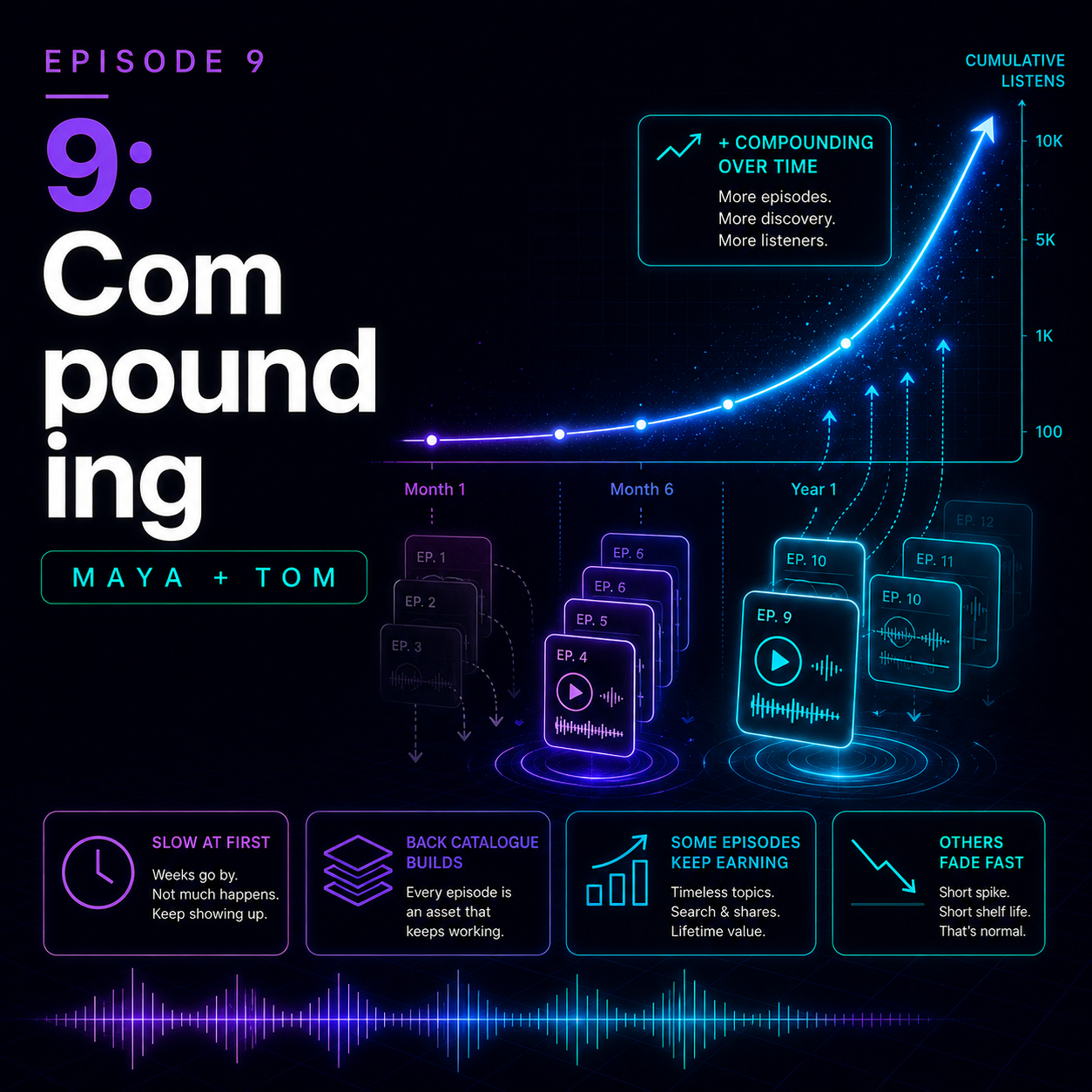
The compounding effect in podcasting describes how a back catalog accumulates listens over years, contrasting with the conventional front-loaded model where most listens occur in the first two weeks. Episodes from early years can receive more monthly listens in later years than during their initial release. This challenges industry measurements focused solely on 30 or 90-day performance, suggesting a different, more enduring asset value for shows with strong discoverability.

Compounding
Episode 9 5:35 - 8:54

9: Compounding

Cohort Analysis: Measuring Long-Term Episode Performance

Cohort analysis is introduced as a technical method to evaluate podcast performance by grouping episodes released at the same time. For shows not focused on discoverability, older cohorts generate minimal listens. However, for shows invested in discoverability, each cohort continues to earn at a declining but non-zero rate, making the total back catalog value significant and changing the calculation of an episode's worth beyond its initial launch.

Compounding
Episode 9 16:44 - 17:20

9: Compounding

Season Finale: Discoverability Investment vs. Inaction

The hosts announce the upcoming season finale, which will explore the consequences of investing in discoverability versus doing nothing. The episode will feature a year in the life of two hypothetical shows, revisit major disagreements from the season, and present a closing argument on the importance of discoverability.

Under the Hood
Episode 8 0:00 - 1:47

8: Under the Hood

Podcast Discoverability and Technical Indexing

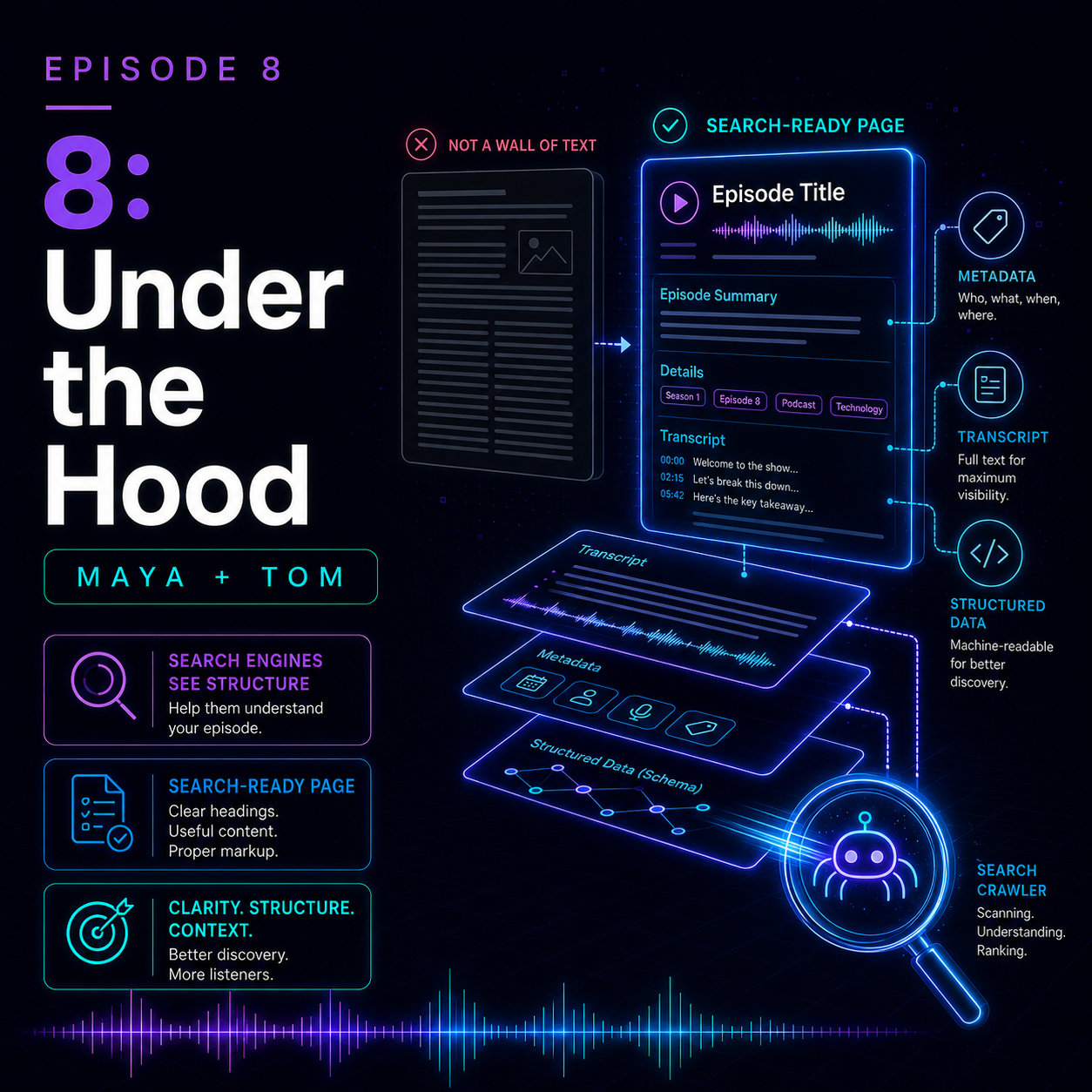
The podcast "How to Get Discovered" introduces its technical episode, focusing on how transcript indexing works for search engines. The hosts establish a rule to define all technical terms and acronyms to ensure listener comprehension. The core question for the episode is why a properly structured transcript page differs significantly from a transcript pasted into a regular show notes page in the eyes of a search engine.

The Question Behind the Query
Episode 7 0:00 - 1:14

7: The Question Behind the Query

How to Get Discovered: The Question Behind The Query

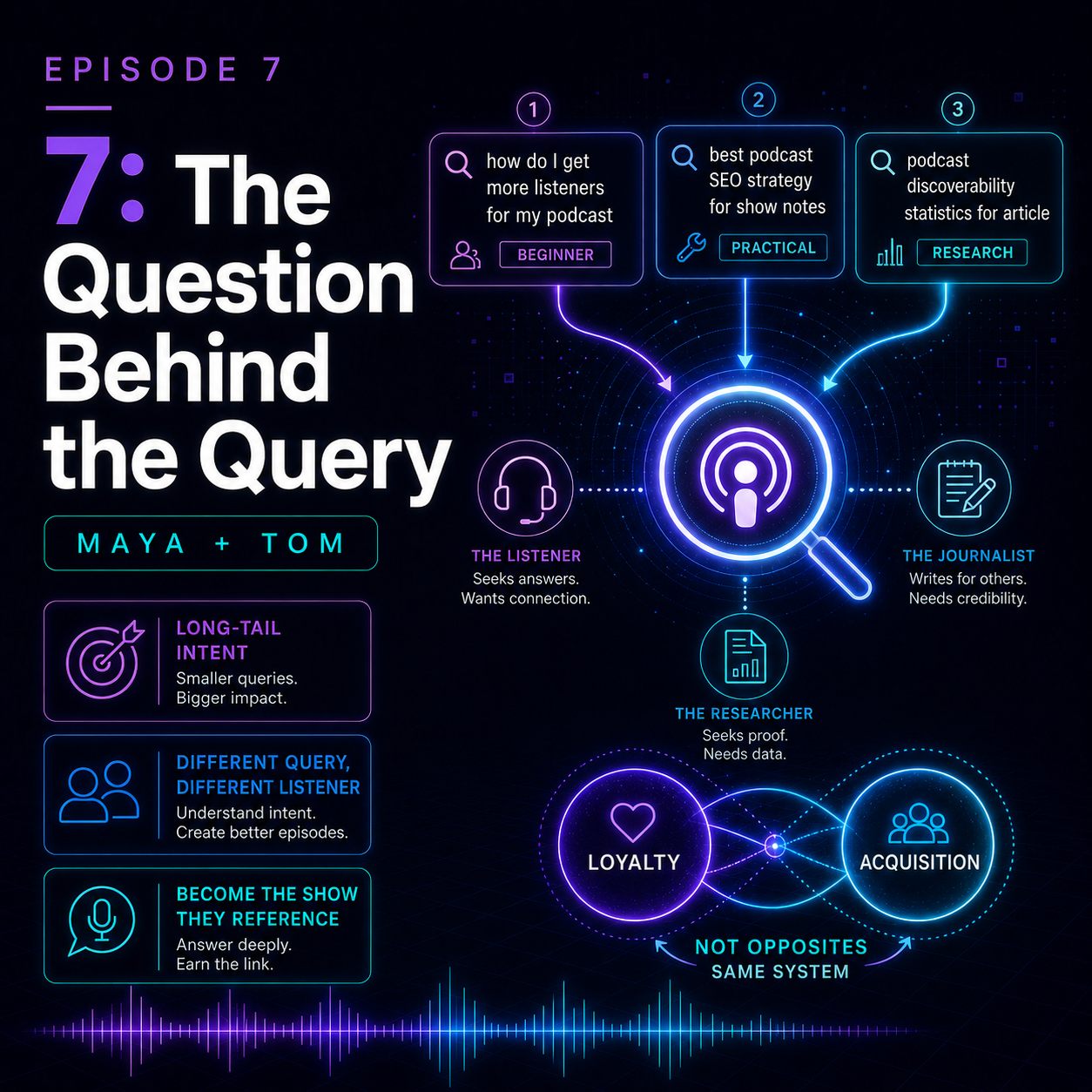
The podcast "How to Get Discovered" introduces its latest episode, "The Question Behind The Query," which delves into the philosophical aspects of podcast discoverability. The episode will explore long-tail search intent, how podcasts become reference material for journalists and researchers, and the relationship between listener loyalty and acquisition.

The Question Behind the Query
Episode 7 1:15 - 2:46

7: The Question Behind the Query

Analyzing Listener Search Queries and Intent

The hosts analyze three distinct search queries related to freelancing to illustrate different listener intents. Queries like "How do I negotiate my freelance rate without sounding desperate?" indicate an urgent need for specific advice, while "Best podcast for freelancers UK" suggests browsing for a new show. "Should I be sole trader or limited company? Side project under 30k" reveals a listener seeking authoritative guidance for a specific decision.

The Question Behind the Query
Episode 7 5:51 - 8:54

7: The Question Behind the Query

Citability and Authority for Podcast Success

The hosts emphasize the importance of a podcast becoming a citable authority within its niche. This means being referenced by journalists, researchers, and other podcasters, often appearing in articles, books, or other shows. Citability is directly linked to discoverability, as these influential individuals use the same search tools as general listeners to find content.

Stop Writing Bad Show Notes
Episode 6

6: Stop Writing Bad Show Notes

Podcast Show Notes: Labels vs. Pitches for Discoverability

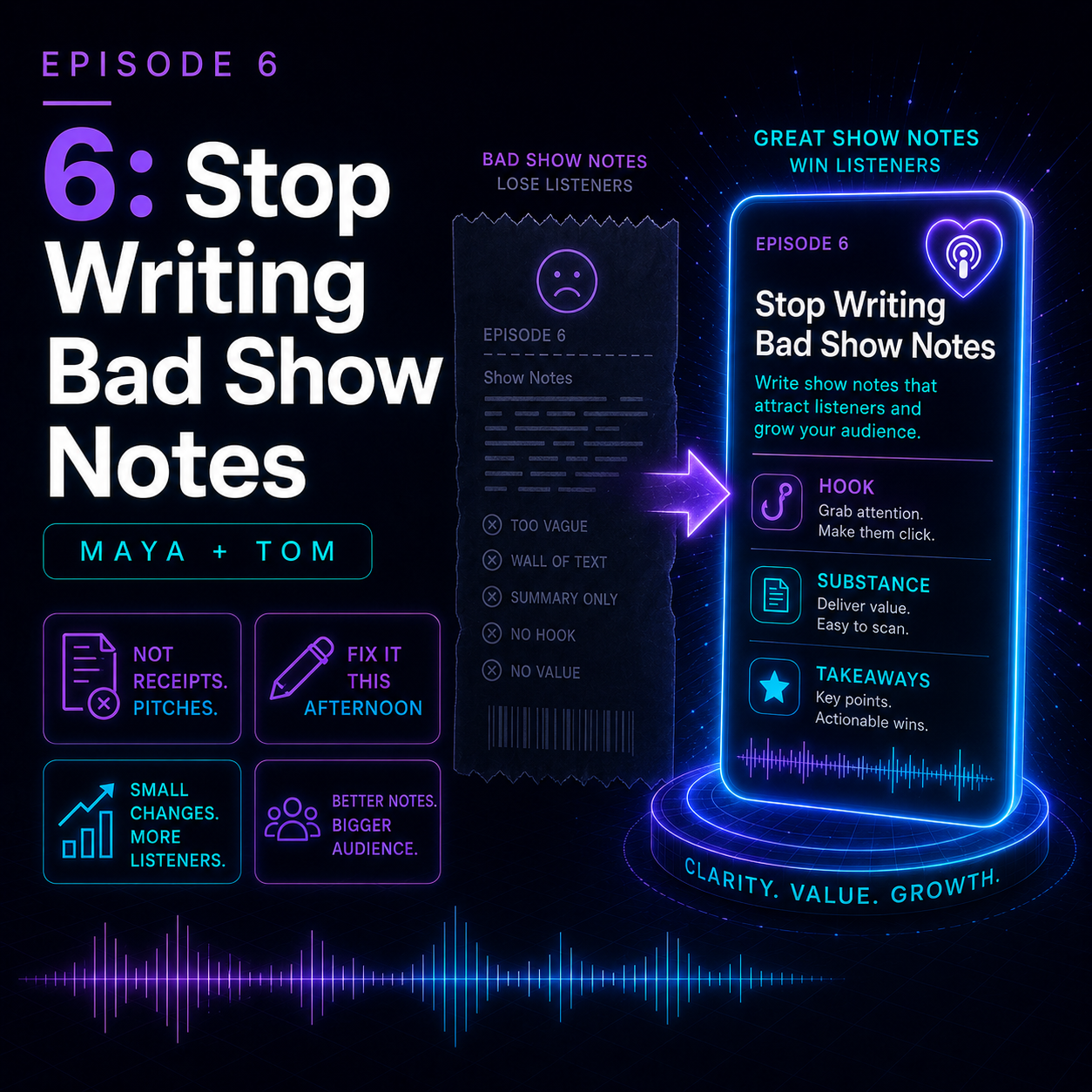
The hosts introduce the episode's focus on "easy wins" for podcast discoverability, specifically improving show notes. One host confesses to writing terrible, one-sentence show notes for three years, viewing them as mere "receipts" or labels. The key argument is that show notes are the second thing potential new listeners see (after the title) and should be written as pitches, not just labels, to encourage playback.

Stop Writing Bad Show Notes
Episode 6 5:07 - 8:42

6: Stop Writing Bad Show Notes

Podcast Episode Titles: Avoiding Common Pitfalls

Podcast episode titles often fall into three ineffective categories: "cute" (in-jokes, wordplay), "lazy" (Episode 47), or "keyword-stuffed" (over-optimized for search engines that don't work as expected). A fourth, more effective category is proposed: descriptive titles that tell a human what the episode is about, potentially with a guest name or a "voice bit" for added hook. The goal is to write for the stranger, trusting regular listeners to tolerate less "cute" titles.

Stop Writing Bad Show Notes
Episode 6 11:31 - 13:48

6: Stop Writing Bad Show Notes

Multilingual Transcripts for Global Podcast Audiences

The hosts discuss the growing importance of multilingual transcripts for podcast discoverability, especially with the rise of AI chatbots. Chatbots can bridge language barriers, potentially surfacing English-language podcasts to users searching in other languages (e.g., German or Spanish) if transcripts are well-structured and translatable. Services that automatically transcribe shows into multiple languages are highlighted as a cost-effective way to access a significantly larger global audience, giving early adopters a competitive advantage.

Stop Writing Bad Show Notes
Episode 6 13:49 - 14:18

6: Stop Writing Bad Show Notes

Next Week: The Question Behind the Query

The hosts preview the next episode, "The Question Behind the Query," which will delve into long-tail search intent. The discussion will cover how people phrase their searches, what those phrasings reveal about their needs, and how to position a podcast to be referenced by journalists and researchers.

The Loyalty Trap
Episode 4 0:00 - 2:28

4: The Loyalty Trap

The Loyalty Trap: Podcast Growth vs. Listener Love

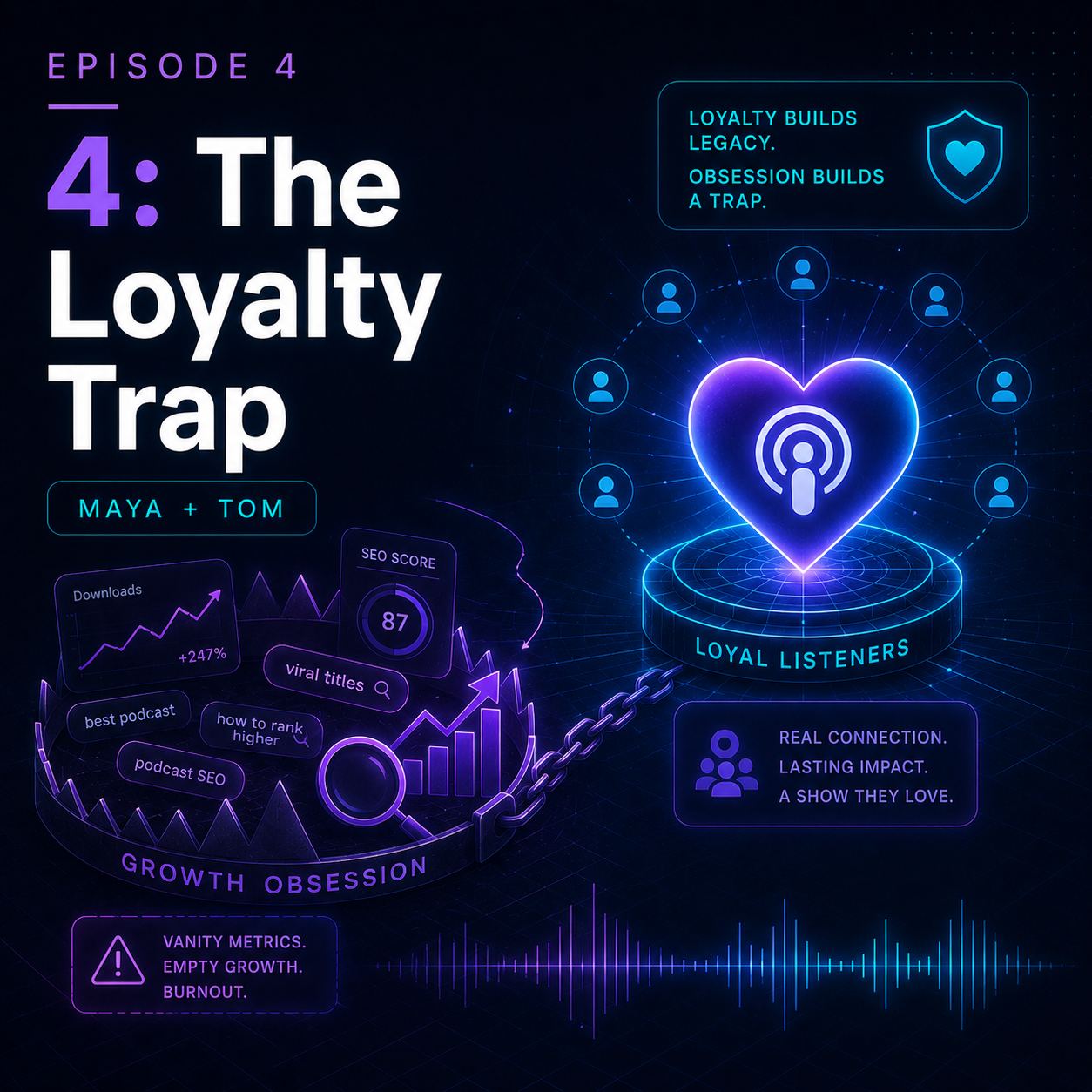
The podcast "How to Get Discovered" introduces "The Loyalty Trap" episode, where Tom argues that chasing new listeners through search and discoverability is a distraction from making a show loyal listeners truly love. He contends that the industry has prioritized growth tactics like SEO, thumbnails, and cross-promotion, leading to well-optimized but mediocre shows, as energy is diverted from content quality.

The Loyalty Trap
Episode 4 2:29 - 5:28

4: The Loyalty Trap

Word-of-Mouth Growth and the Cost of Growth Tactics

Tom asserts that podcasts with meaningful, lasting audiences grow through trust and word-of-mouth recommendations, driven by genuinely good content. He argues that growth tactics, such as SEO and metadata optimization, are not free; they consume time and energy that should be spent on improving the show, ultimately making the content worse and alienating loyal listeners.

The Loyalty Trap
Episode 4 5:29 - 8:33

4: The Loyalty Trap

Search-Driven Discoverability and Long-Tail Questions

The hosts debate how new listeners find podcasts. While word-of-mouth is acknowledged as important, the argument is made that search is an increasingly significant entry point for "cold listeners" who have specific questions. These listeners often use "long-tail" search queries, and episodes that answer these specific questions can attract highly engaged individuals who are more likely to subscribe.