
Topic: Indexing

5 chapters across the catalog

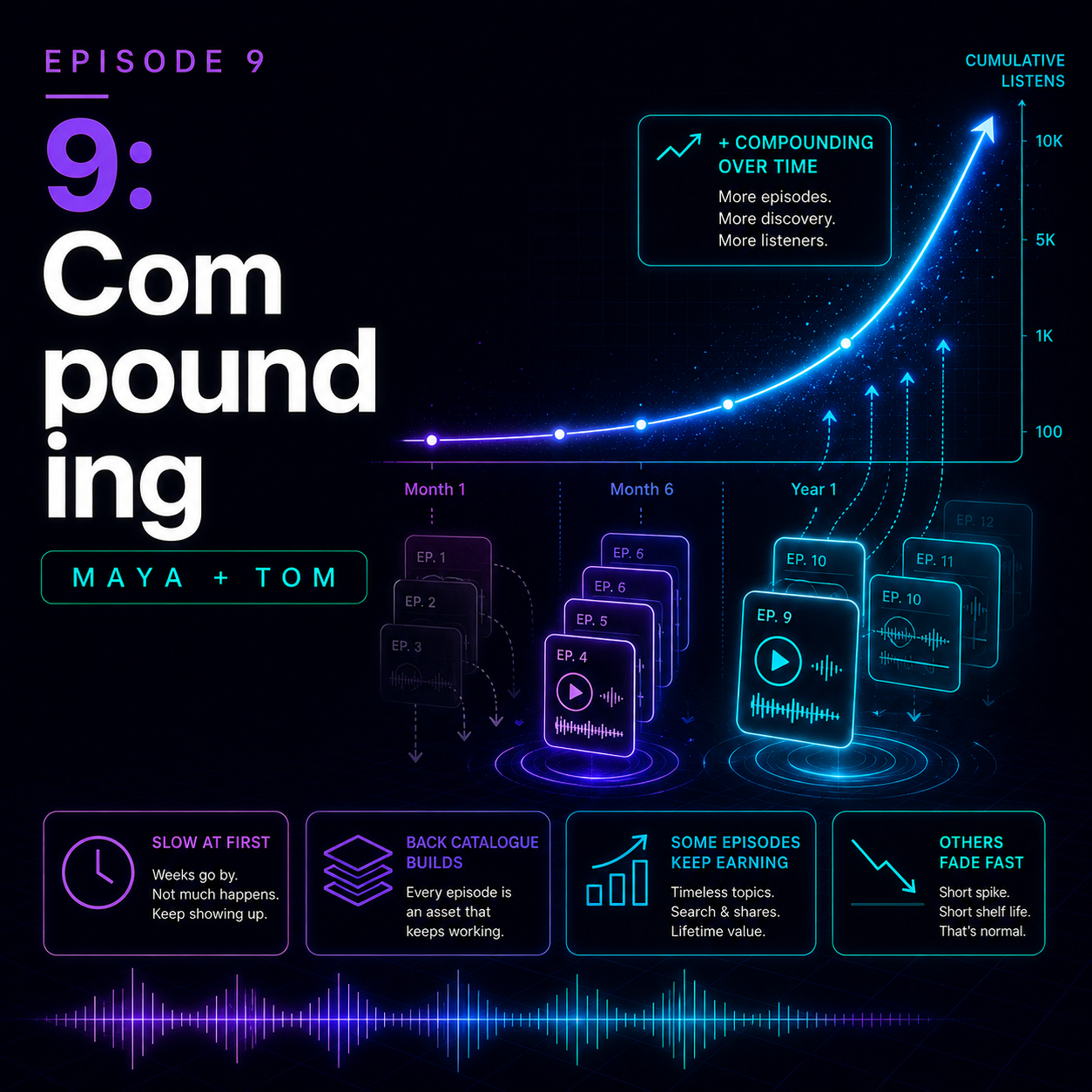
Compounding
Episode 9 0:00 - 2:21

9: Compounding

Podcast Discoverability Experiment: Initial Disappointment

The hosts of "How to Get Discovered" discuss the initial three weeks of a podcast discoverability experiment. Despite transcripts being indexed and Google beginning to crawl pages, the data shows only tiny, single-digit results, leading to slight disappointment for one host who expected a more dramatic, immediate impact. Access to Google Search Console, a higher-tier feature, is currently unavailable.
Under the Hood
Episode 8 0:00 - 1:47

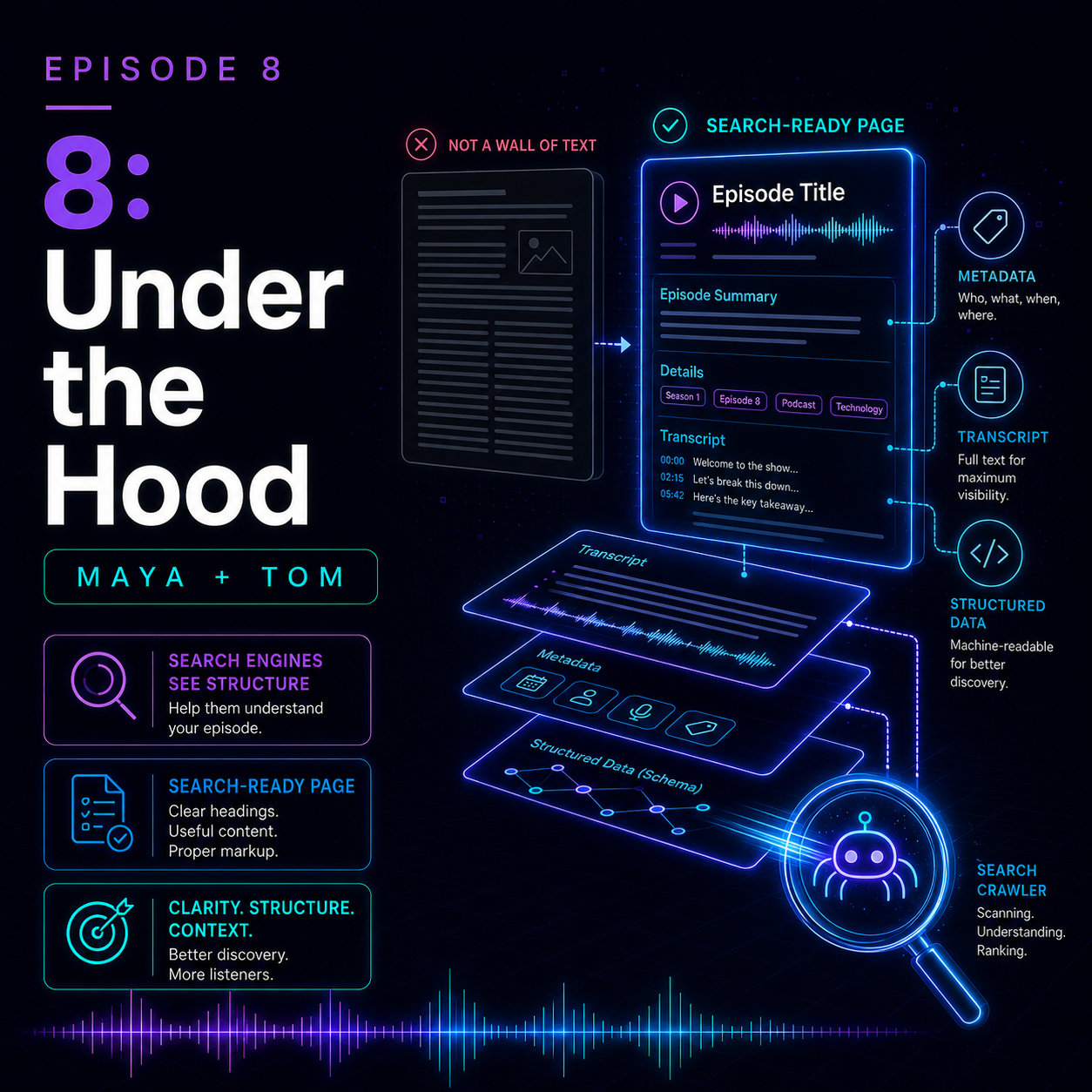
8: Under the Hood

Podcast Discoverability and Technical Indexing

The podcast "How to Get Discovered" introduces its technical episode, focusing on how transcript indexing works for search engines. The hosts establish a rule to define all technical terms and acronyms to ensure listener comprehension. The core question for the episode is why a properly structured transcript page differs significantly from a transcript pasted into a regular show notes page in the eyes of a search engine.

Under the Hood
Episode 8 5:50 - 9:04

8: Under the Hood

Transcript Structure and Addressable Moments

An unstructured "wall of text" transcript, even if accurate, is seen by search engines as one undifferentiated block, limiting its discoverability to broad topics. A structured transcript, however, breaks content into sections with headings, paragraphs, and crucial timestamps. These timestamps create "addressable moments," allowing search engines to index specific parts of an episode, enabling users to land directly on a relevant segment when searching for a particular question, rather than just the episode page.

Under the Hood
Episode 8 9:04 - 11:24

8: Under the Hood

Search Engine Indexing Mechanics and Ranking

For a transcript page to appear in search results, Google must know the page exists, crawl and index it, and then rank it as a good answer to a search query. Submitting a sitemap helps Google discover pages. Crawling depends on the domain's historical usefulness and authority. The page's structure, metadata, transcript quality, speed, and inbound links all contribute to its ranking, though listeners remain unaware of this complex process.

Under the Hood
Episode 8 12:18 - 14:43

8: Under the Hood

CNAME Records and Domain Ownership for SEO

A CNAME record in a domain's DNS acts as a redirect, allowing a custom URL (e.g., `archive.myshowname.com`) to point to a server hosted by a third-party service. While the actual server is external, the URL seen by the listener and, crucially, by search engines, remains the podcaster's own domain. This ensures that search authority and compound interest over time accrue to the podcaster's domain, rather than the hosting platform's.