Topic: Transcripts

8 chapters across the catalog

What Happens If You Do Nothing
Episode 10 9:01 - 10:49

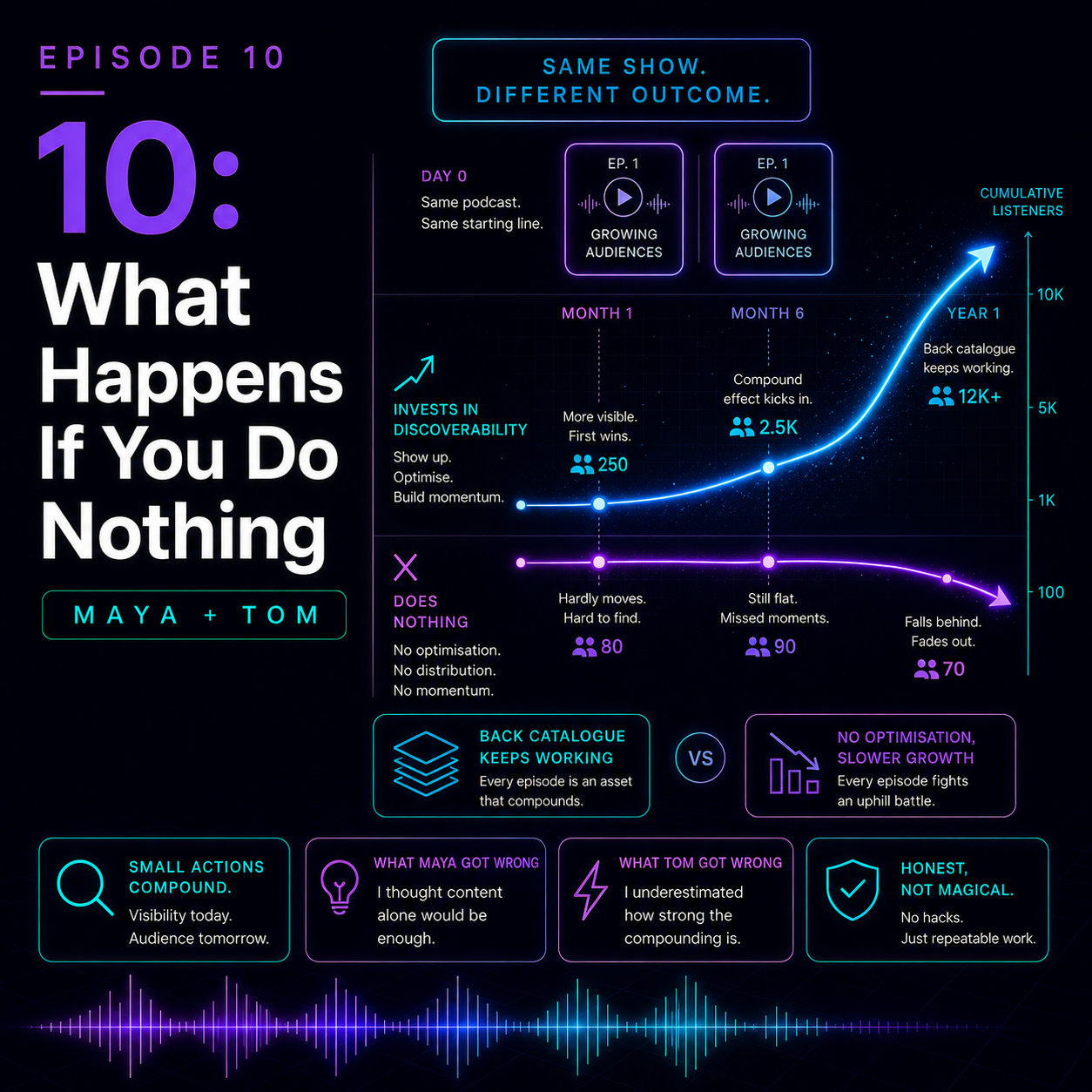
10: What Happens If You Do Nothing

Tom's Self-Correction on Podcast Loyalty and SEO

Tom admits three areas where he was wrong. He initially dismissed transcripts, acknowledging his early versions were inadequate. He also realized that while loyalty is crucial, it's not opposed to acquisition, as every loyal listener was once a stranger. Most embarrassingly, he admitted to defensively rolling his eyes at podcast SEO, protecting himself from the possibility it might actually matter.
Under the Hood
Episode 8 0:00 - 1:47

8: Under the Hood

Podcast Discoverability and Technical Indexing

The podcast "How to Get Discovered" introduces its technical episode, focusing on how transcript indexing works for search engines. The hosts establish a rule to define all technical terms and acronyms to ensure listener comprehension. The core question for the episode is why a properly structured transcript page differs significantly from a transcript pasted into a regular show notes page in the eyes of a search engine.

Under the Hood
Episode 8 5:50 - 9:04

8: Under the Hood

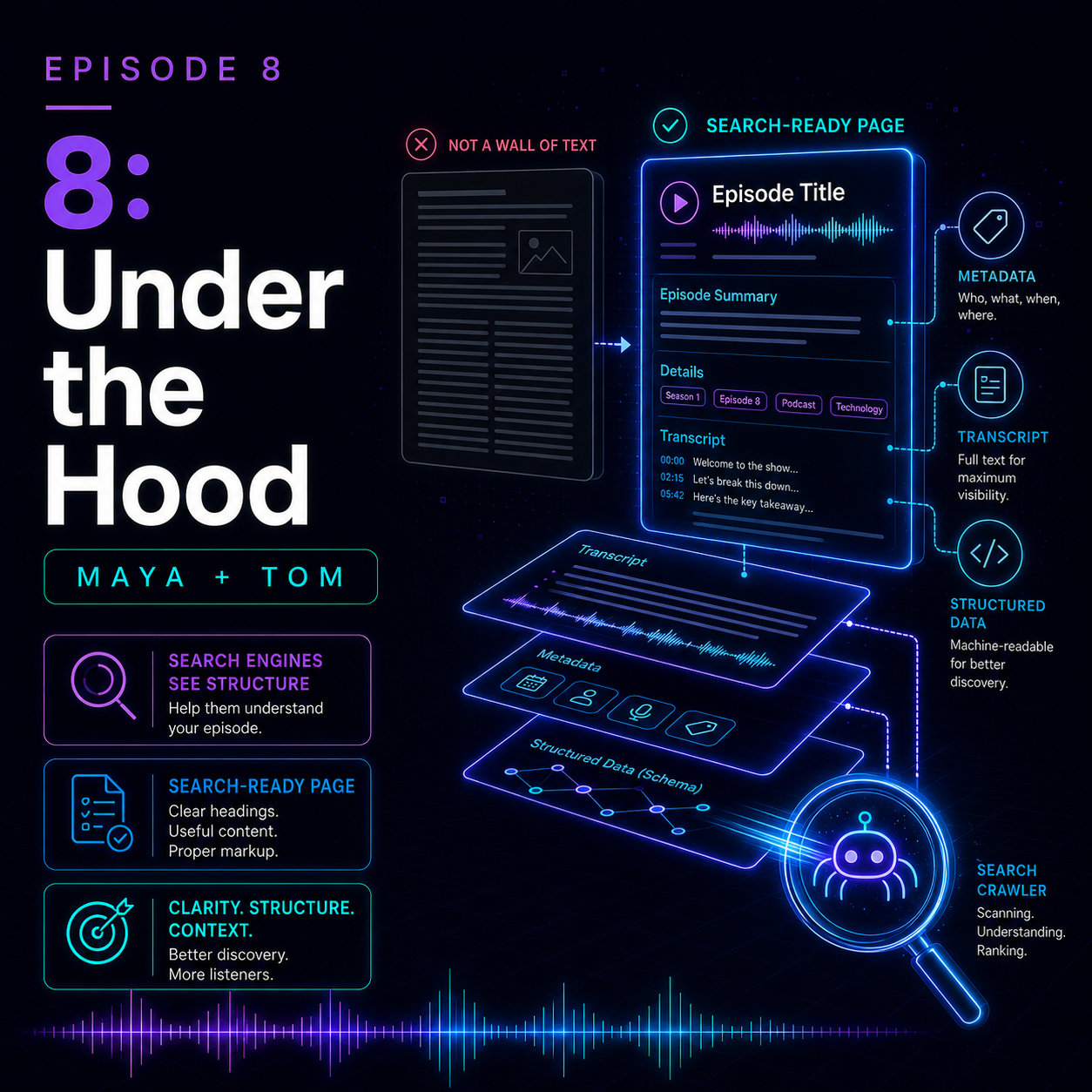
Transcript Structure and Addressable Moments

An unstructured "wall of text" transcript, even if accurate, is seen by search engines as one undifferentiated block, limiting its discoverability to broad topics. A structured transcript, however, breaks content into sections with headings, paragraphs, and crucial timestamps. These timestamps create "addressable moments," allowing search engines to index specific parts of an episode, enabling users to land directly on a relevant segment when searching for a particular question, rather than just the episode page.

Under the Hood
Episode 8 10:34 - 13:04

8: Under the Hood

Domain Authority and Podcast Transcript Hosting

The domain where a podcast transcript is hosted significantly impacts its search performance. Domains with a long history, reputable links, and strong engagement signals accumulate "authority" over time. New pages on high-authority domains rank faster and higher. When transcripts are hosted on a podcast platform's default subdomain, the show benefits less from this authority, as it's spread across all podcasts on that platform. Hosting on a custom domain builds authority for the podcaster's own property.

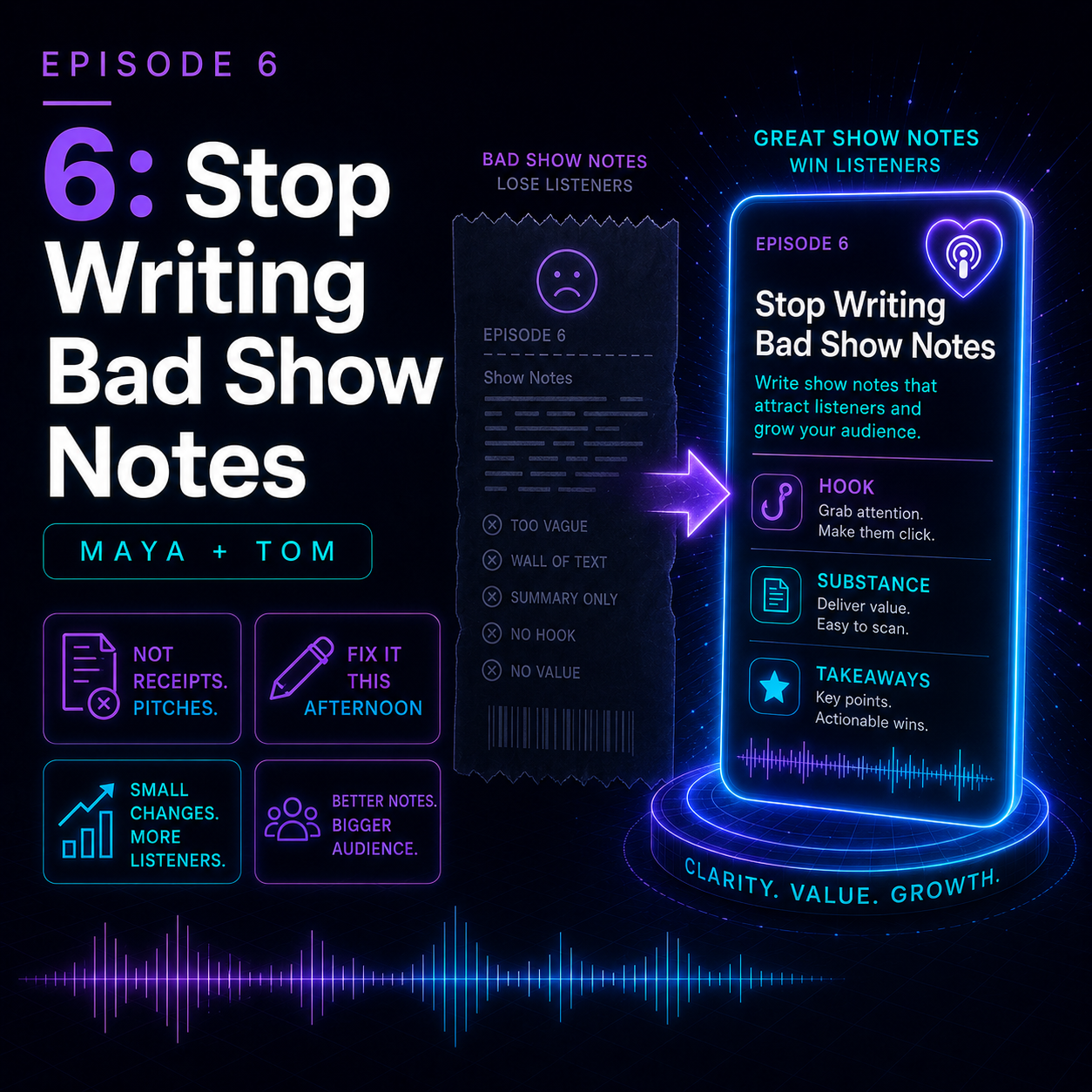
Stop Writing Bad Show Notes
Episode 6 11:31 - 13:48

6: Stop Writing Bad Show Notes

Multilingual Transcripts for Global Podcast Audiences

The hosts discuss the growing importance of multilingual transcripts for podcast discoverability, especially with the rise of AI chatbots. Chatbots can bridge language barriers, potentially surfacing English-language podcasts to users searching in other languages (e.g., German or Spanish) if transcripts are well-structured and translatable. Services that automatically transcribe shows into multiple languages are highlighted as a cost-effective way to access a significantly larger global audience, giving early adopters a competitive advantage.

Whose House Are You Building
Episode 2 5:35 - 6:22

2: Whose House Are You Building

PodHerd: Transcribing and Structuring Podcast Content

The discussion introduces services like PodHerd that automate the process of transcribing podcast episodes from an RSS feed, structuring them into searchable web pages, and publishing them. This technology simplifies the task of creating a comprehensive podcast website, a process that previously required significant development effort.

Whose House Are You Building
Episode 2 6:22 - 9:23

2: Whose House Are You Building

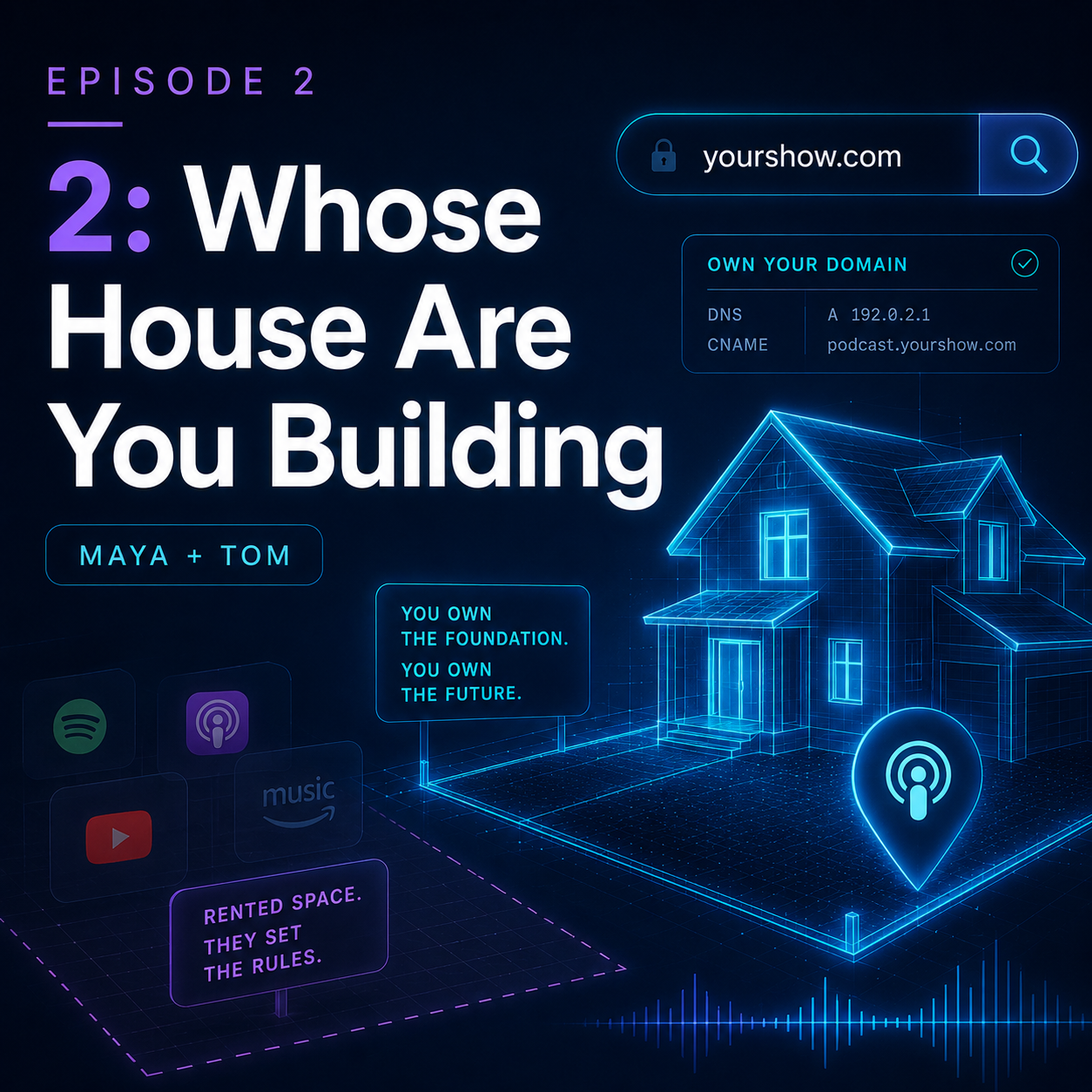
CNAMEs and Domain Authority for Podcast Transcripts

The concept of using a CNAME record to host podcast transcripts on a service like PodHerd while maintaining a custom URL is explained. This setup allows the podcast's own domain to accrue search authority and equity, even though the content is technically hosted on the service's servers. This strategy ensures long-term discoverability and SEO benefits for the podcaster.

Invisible Shows
Episode 1 7:57 - 9:32

1: Invisible Shows

Transcripts for Search: Beyond a Wall of Text

Simply having transcripts is insufficient for search engine discoverability; their structure and placement are crucial. A "wall of text" under an embedded player is not effectively searchable by Google, which struggles to understand specific moments or topics within it. Tools like PodHerd are now available to properly transcribe, index, and structure episodes, allowing older content to gain search traffic.