
Topic: Google

4 chapters across the catalog

Under the Hood
Episode 8 1:47 - 4:06

8: Under the Hood

Search Engine Page Interpretation and Metadata

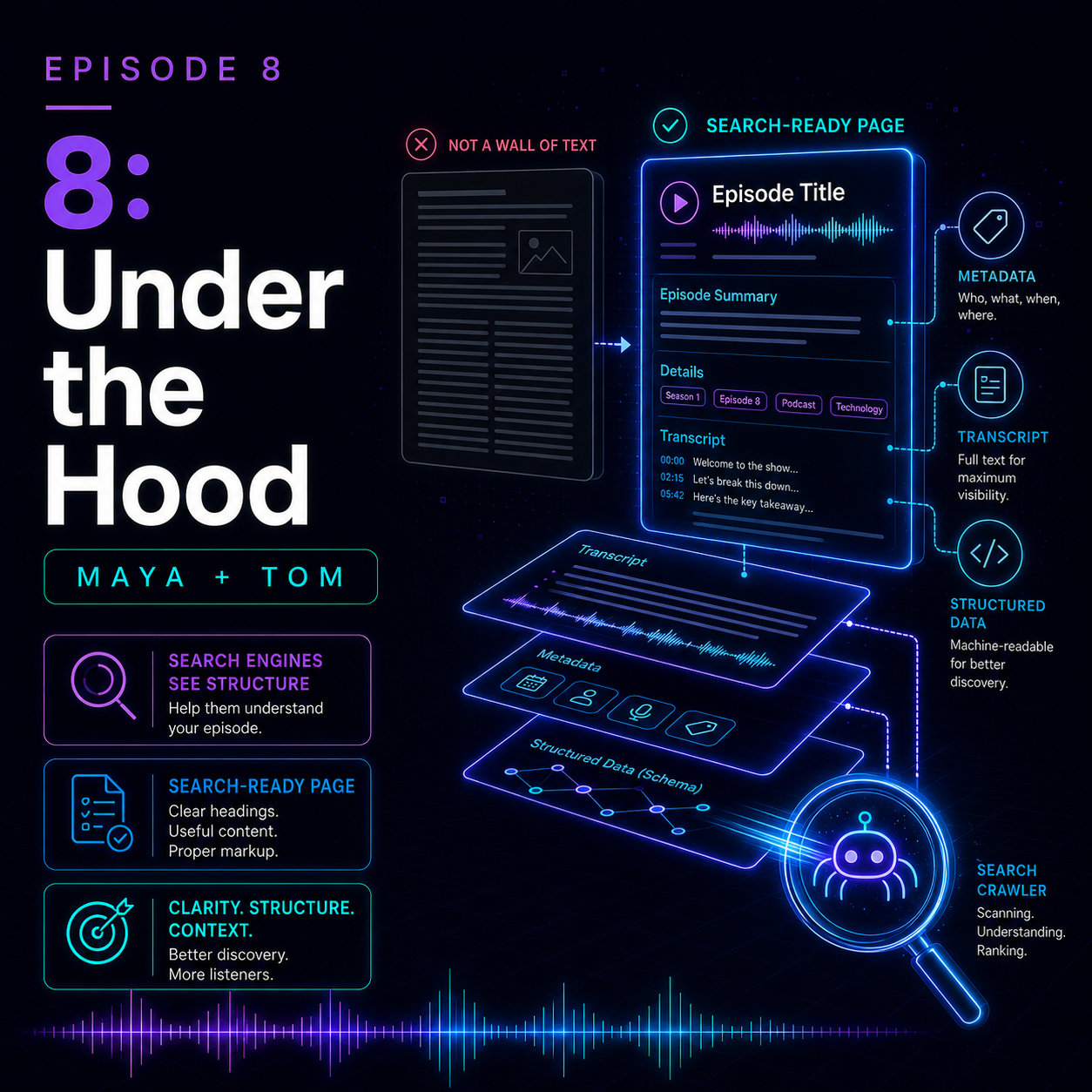
Search engines like Google and Bing interpret webpages differently than humans. Instead of visual layout, they see a document with an underlying structure, including titles, headings, body text, and metadata. Metadata, defined as "data about data," provides search engines with crucial information about the page's purpose, such as whether it's a podcast episode, article, or recipe, enabling specialized indexing and display in search results.
Under the Hood
Episode 8 9:04 - 11:24

8: Under the Hood

Search Engine Indexing Mechanics and Ranking

For a transcript page to appear in search results, Google must know the page exists, crawl and index it, and then rank it as a good answer to a search query. Submitting a sitemap helps Google discover pages. Crawling depends on the domain's historical usefulness and authority. The page's structure, metadata, transcript quality, speed, and inbound links all contribute to its ranking, though listeners remain unaware of this complex process.

Under the Hood
Episode 8 14:01 - 15:36

8: Under the Hood

Google Search Console for Podcast Discoverability

Google Search Console is a free tool that provides critical data for any domain owner, including which search queries lead to their pages, page click-through rates, average search positions, and pages appearing in results but not clicked. This data is invaluable for understanding discoverability and optimizing content. However, this tool is only accessible for domains a user can prove they control, meaning platform-hosted transcripts cannot leverage this data directly.

Whose House Are You Building
Episode 2 9:24 - 11:42

2: Whose House Are You Building

Google Search Console and Podcast Discoverability

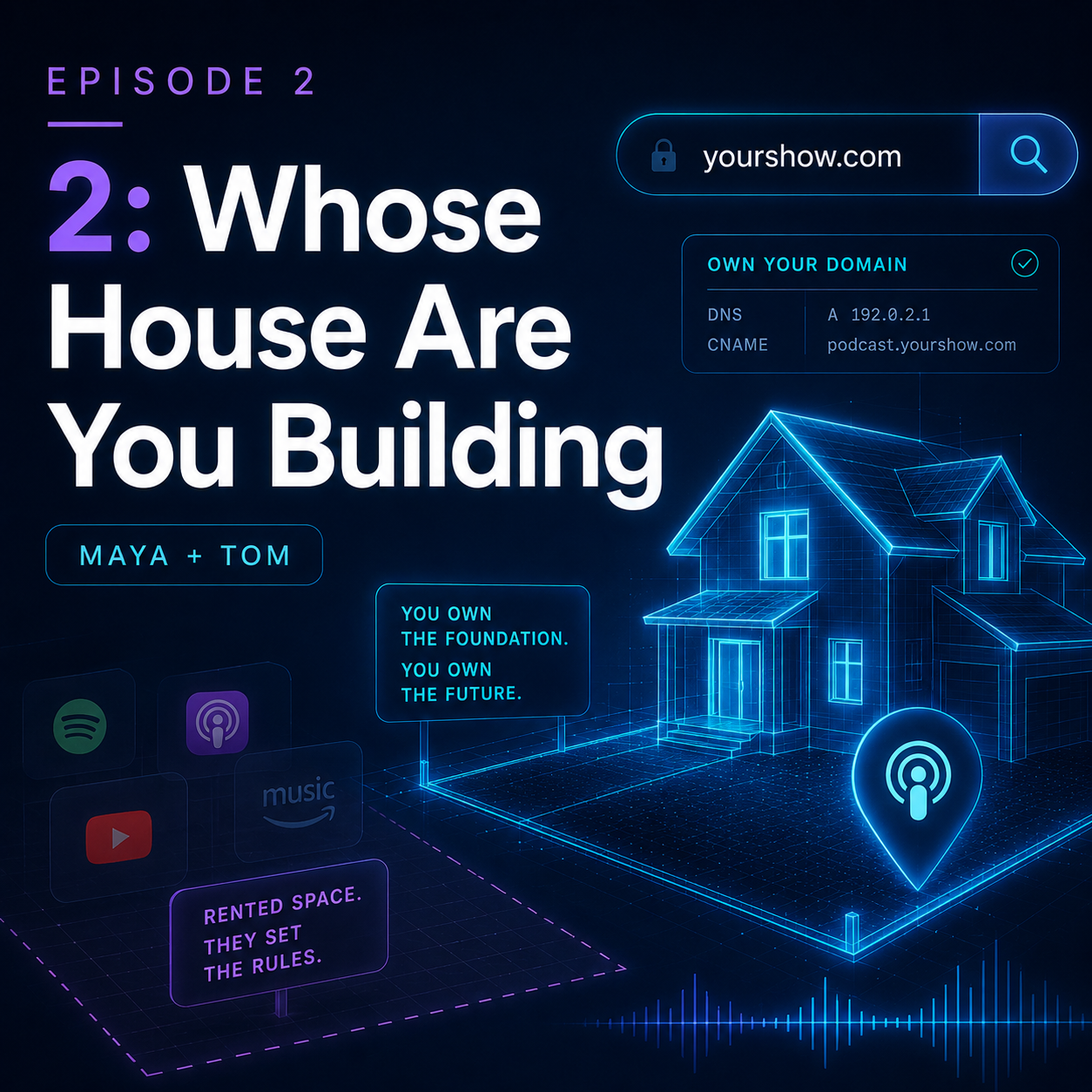
Integrating a podcast's domain with Google Search Console is presented as a crucial step for discoverability. This free tool provides valuable data on search queries, ranking episodes, and keywords, allowing podcasters to track their performance and optimize their content. This level of insight is only available when the podcaster owns and verifies their domain.