
Topic: Search Engines

6 chapters across the catalog

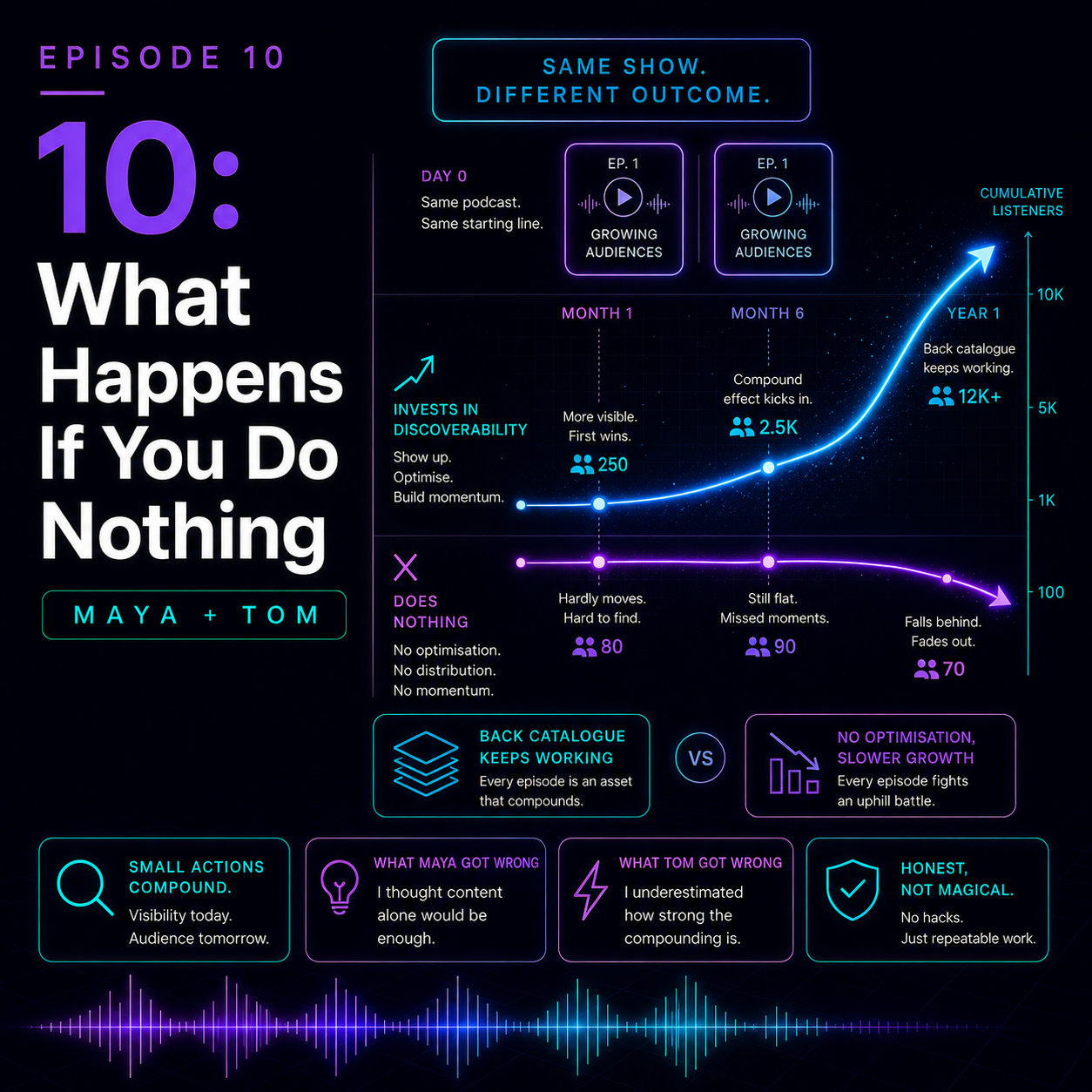
What Happens If You Do Nothing
Episode 10 0:00 - 6:18

10: What Happens If You Do Nothing

The Invisible Cost of Doing Nothing for Podcast Discoverability

This episode, the season finale of "How to Get Discovered," explores the "invisible cost" of neglecting podcast discoverability. Through a thought experiment comparing two identical podcasts, Show A invests in discoverability (transcripts, show notes, data analysis) while Show B does nothing. After 12 months, Show A's back catalog generates new listeners through search, while Show B's audience remains stable, missing out on potential growth.
Under the Hood
Episode 8 1:47 - 4:06

8: Under the Hood

Search Engine Page Interpretation and Metadata

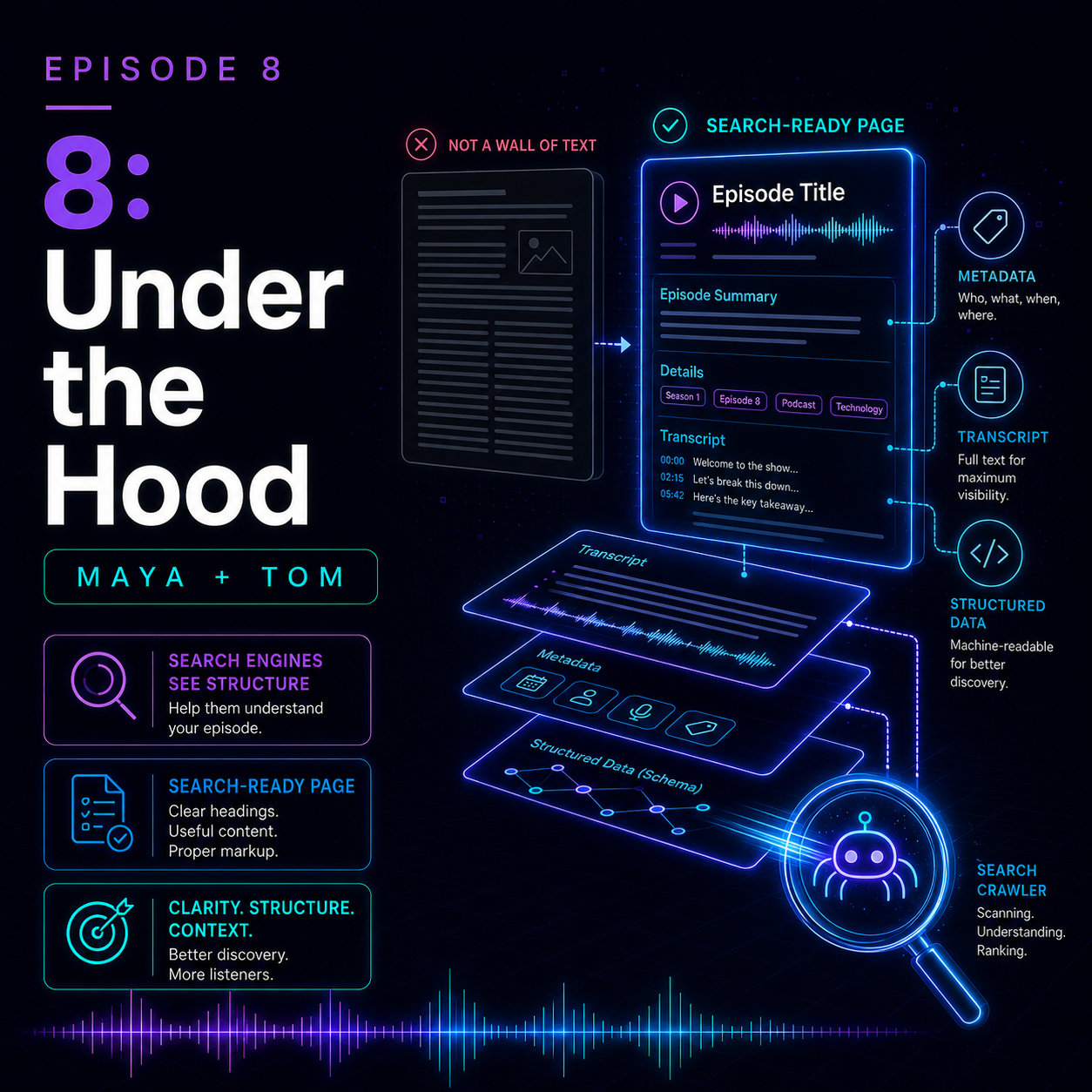
Search engines like Google and Bing interpret webpages differently than humans. Instead of visual layout, they see a document with an underlying structure, including titles, headings, body text, and metadata. Metadata, defined as "data about data," provides search engines with crucial information about the page's purpose, such as whether it's a podcast episode, article, or recipe, enabling specialized indexing and display in search results.

Under the Hood
Episode 8 3:28 - 5:50

8: Under the Hood

Structured Data and Schema.org for Podcasts

Structured data, following standards like Schema.org, allows webpages to communicate their specific content type to search engines. For podcasts, this means marking up a page to explicitly state it's a podcast episode, including its title, description, duration, and transcript. This structured approach helps search engines understand the content without guessing, leading to better legibility for both machines and AI systems, rather than just higher ranking. Most show notes pages lack this due to hosting platform priorities.

Under the Hood
Episode 8 9:04 - 11:24

8: Under the Hood

Search Engine Indexing Mechanics and Ranking

For a transcript page to appear in search results, Google must know the page exists, crawl and index it, and then rank it as a good answer to a search query. Submitting a sitemap helps Google discover pages. Crawling depends on the domain's historical usefulness and authority. The page's structure, metadata, transcript quality, speed, and inbound links all contribute to its ranking, though listeners remain unaware of this complex process.

Under the Hood
Episode 8 12:18 - 14:43

8: Under the Hood

CNAME Records and Domain Ownership for SEO

A CNAME record in a domain's DNS acts as a redirect, allowing a custom URL (e.g., `archive.myshowname.com`) to point to a server hosted by a third-party service. While the actual server is external, the URL seen by the listener and, crucially, by search engines, remains the podcaster's own domain. This ensures that search authority and compound interest over time accrue to the podcaster's domain, rather than the hosting platform's.

Invisible Shows
Episode 1 7:57 - 9:32

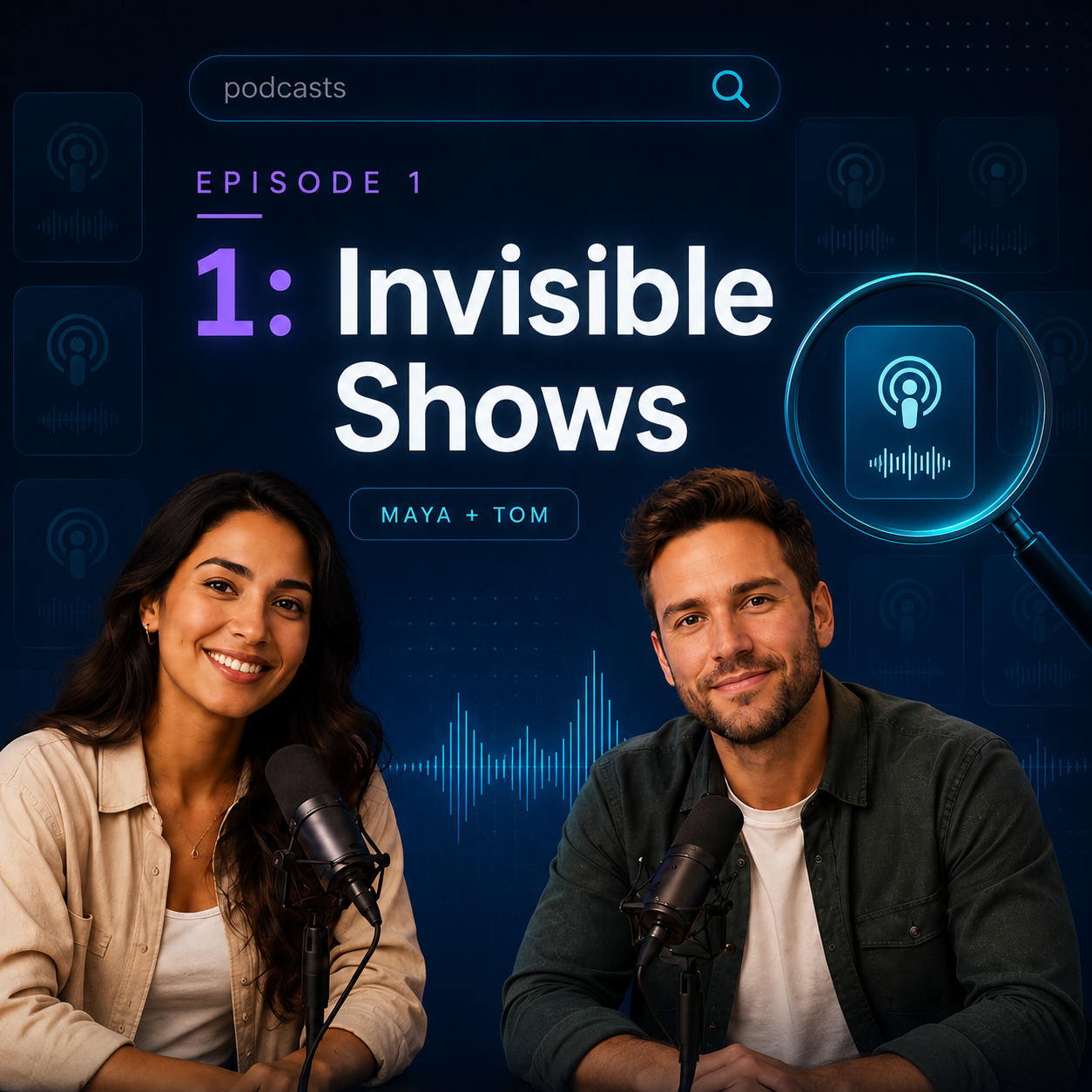
1: Invisible Shows

Transcripts for Search: Beyond a Wall of Text

Simply having transcripts is insufficient for search engine discoverability; their structure and placement are crucial. A "wall of text" under an embedded player is not effectively searchable by Google, which struggles to understand specific moments or topics within it. Tools like PodHerd are now available to properly transcribe, index, and structure episodes, allowing older content to gain search traffic.