Topic: Podcast Episodes

6 chapters across the catalog

What Happens If You Do Nothing
Episode 10 6:19 - 9:00

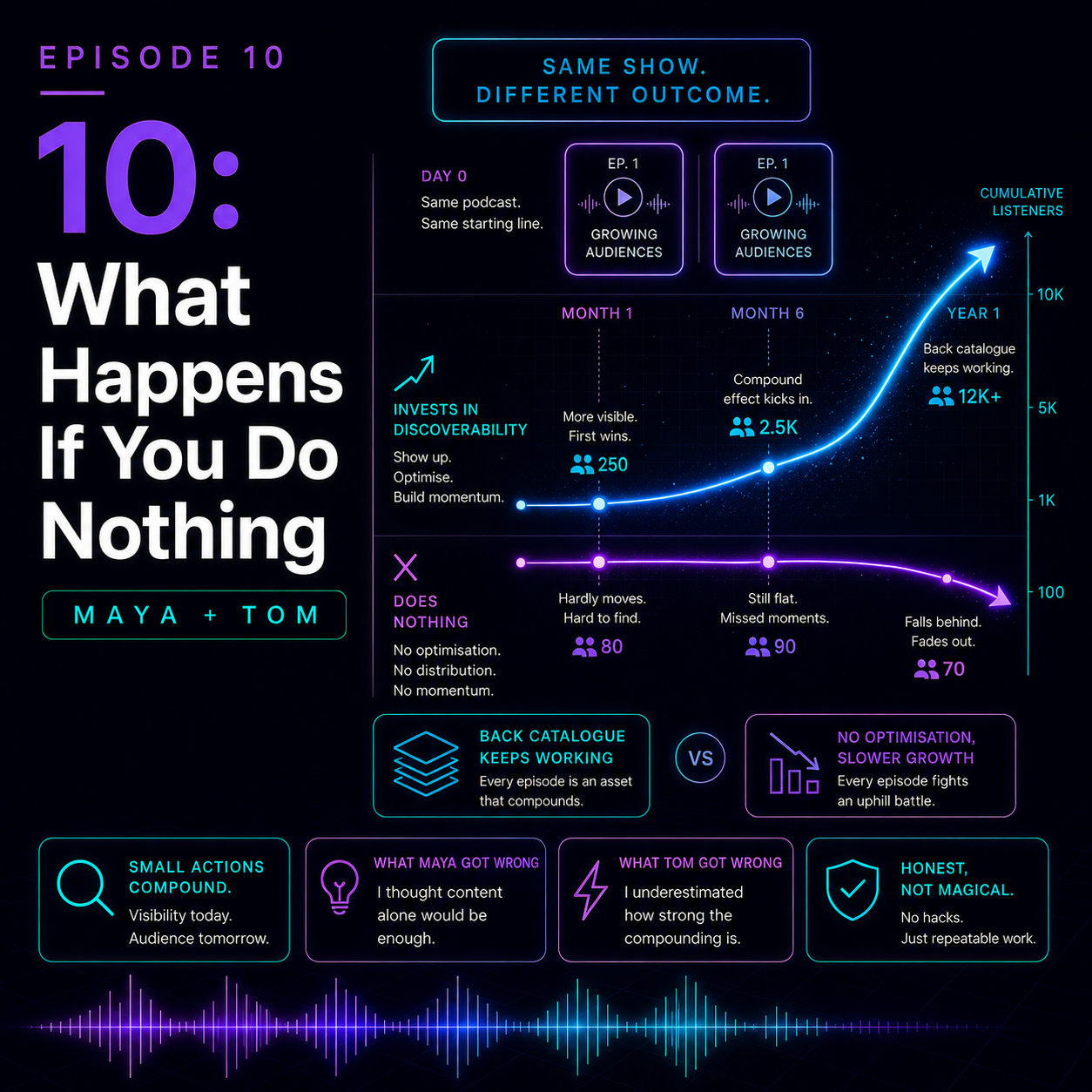
10: What Happens If You Do Nothing

Maya's Self-Correction on Podcast Discoverability

Maya admits three areas where she was wrong during the season. First, she underestimated the energy required for discoverability work. Second, she was overly confident about AI chatbots surfacing content, noting the system is noisier than implied. Third, she sometimes prioritized search optimization over voice in episode titling, making content less engaging.
Under the Hood
Episode 8 3:28 - 5:50

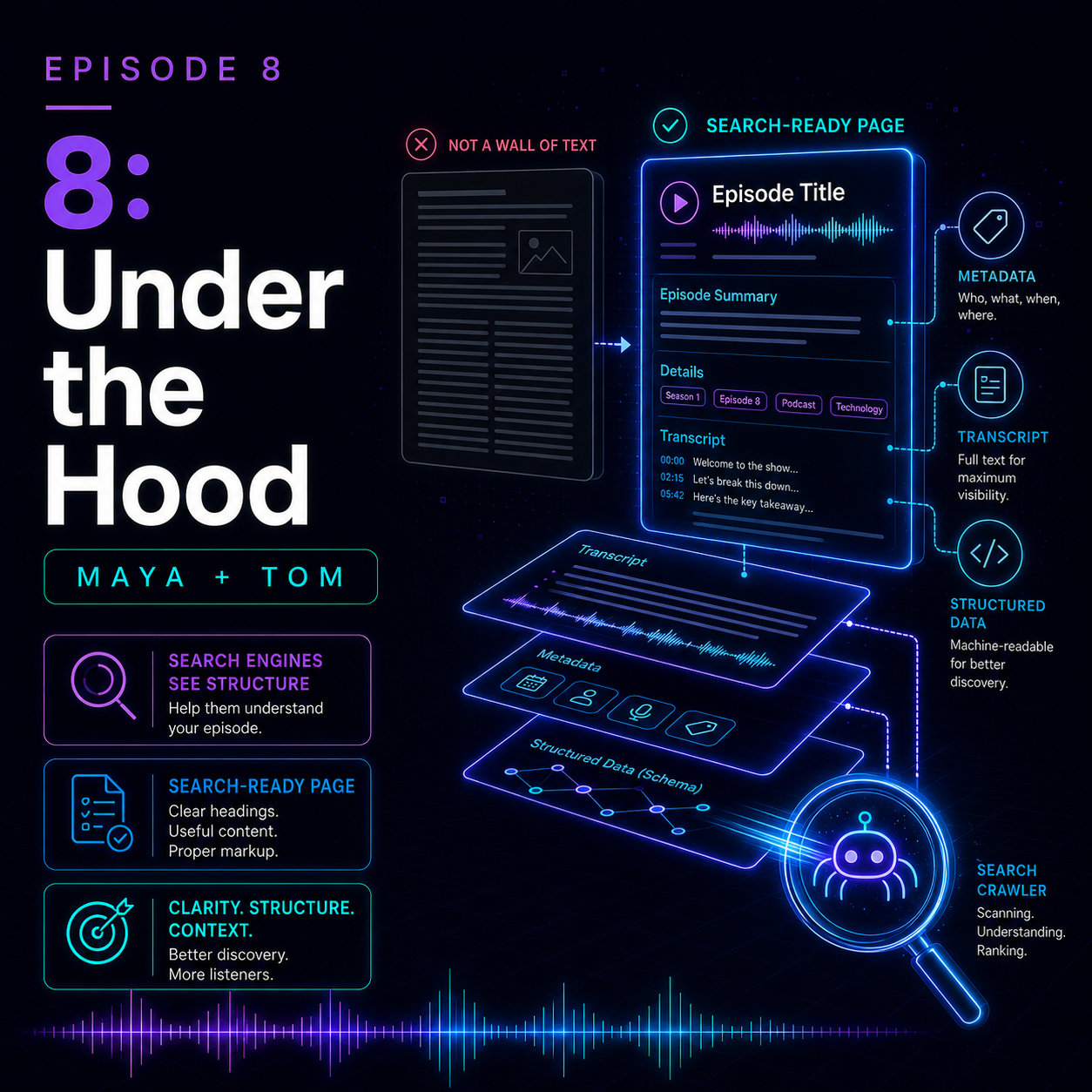
8: Under the Hood

Structured Data and Schema.org for Podcasts

Structured data, following standards like Schema.org, allows webpages to communicate their specific content type to search engines. For podcasts, this means marking up a page to explicitly state it's a podcast episode, including its title, description, duration, and transcript. This structured approach helps search engines understand the content without guessing, leading to better legibility for both machines and AI systems, rather than just higher ranking. Most show notes pages lack this due to hosting platform priorities.

Stop Writing Bad Show Notes
Episode 6

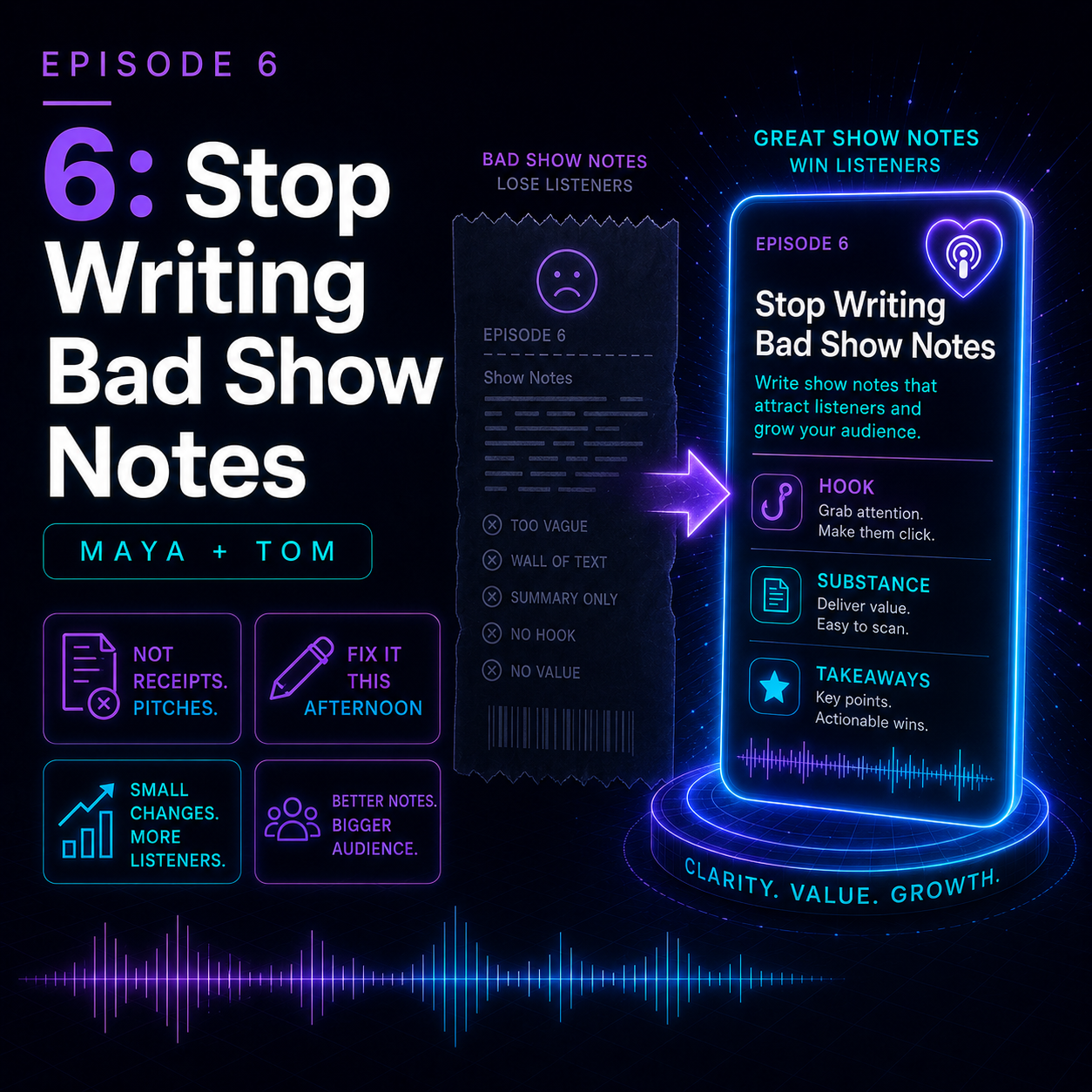
6: Stop Writing Bad Show Notes

Podcast Show Notes: Labels vs. Pitches for Discoverability

The hosts introduce the episode's focus on "easy wins" for podcast discoverability, specifically improving show notes. One host confesses to writing terrible, one-sentence show notes for three years, viewing them as mere "receipts" or labels. The key argument is that show notes are the second thing potential new listeners see (after the title) and should be written as pitches, not just labels, to encourage playback.

Stop Writing Bad Show Notes
Episode 6 2:40 - 5:07

6: Stop Writing Bad Show Notes

Effective Show Note Structure for New Listeners

An effective show note structure is proposed, consisting of three paragraphs: a hook (what the episode is about, framed for a stranger), substance (three to four specific topics discussed, concretely detailed for search engines and interested listeners), and guest credibility (why their opinion matters, with verifiable details). This approach, though taking 15 minutes per episode, has measurably increased new listeners.

Stop Writing Bad Show Notes
Episode 6 8:42 - 12:22

6: Stop Writing Bad Show Notes

Optimizing Podcast Metadata for Discoverability

The discussion shifts to optimizing podcast metadata, including show descriptions, categories, episode descriptions, author, artwork title, and episode tags. These fields are crucial for how podcast apps render and categorize shows. A specific example highlights the importance of choosing niche subcategories over broad ones (e.g., "non-profit" instead of "business") to increase visibility and charting potential, as few new listeners browse large, competitive categories. The episode description in the feed is emphasized as critical for listener decision-making.

Invisible Shows
Episode 1 3:27 - 6:10

1: Invisible Shows

Podcast Episode Lifespan and Word-of-Mouth vs. Discoverability

Podcast episodes, once published, quickly sink in feeds, becoming difficult to find for new listeners. While word-of-mouth is acknowledged as a valid growth strategy, it has limitations. The discussion emphasizes that every episode is evergreen content that could attract new listeners if discoverable, contrasting with the view that discoverability efforts are a distraction from content quality.