Topic: Podcast Back Catalog

7 chapters across the catalog

What Happens If You Do Nothing
Episode 10 0:00 - 6:18

10: What Happens If You Do Nothing

The Invisible Cost of Doing Nothing for Podcast Discoverability

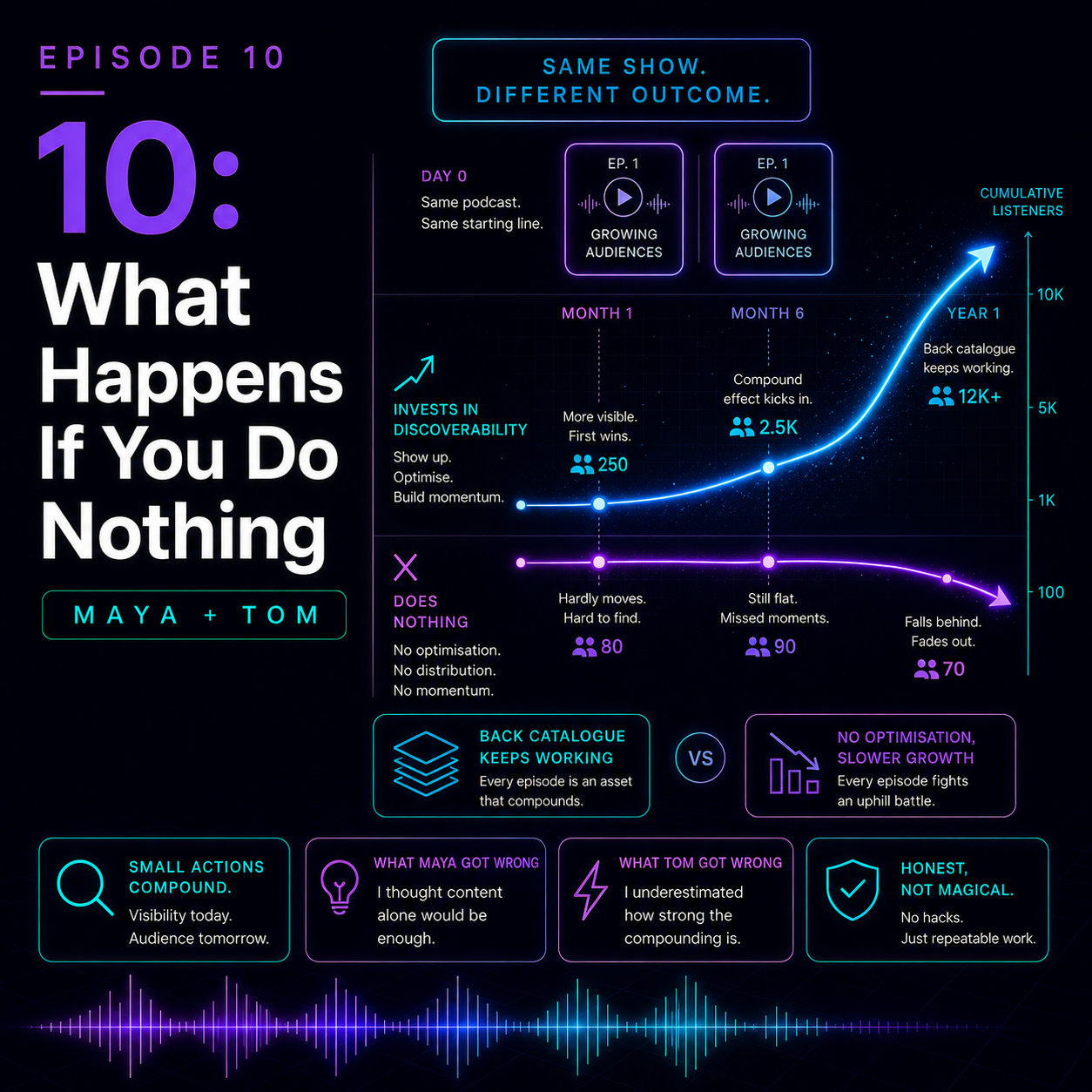
This episode, the season finale of "How to Get Discovered," explores the "invisible cost" of neglecting podcast discoverability. Through a thought experiment comparing two identical podcasts, Show A invests in discoverability (transcripts, show notes, data analysis) while Show B does nothing. After 12 months, Show A's back catalog generates new listeners through search, while Show B's audience remains stable, missing out on potential growth.
What Happens If You Do Nothing
Episode 10 10:49 - 13:10

10: What Happens If You Do Nothing

The Back Catalog as a Podcast Asset

The core argument of the season is that podcasters undervalue their back catalog, viewing it as an archive rather than an asset. The conversations and information within old episodes remain relevant, but they are invisible without discoverability efforts. This isn't about gaming algorithms or content marketing, but about respecting the work already done and making it findable, avoiding the invisible opportunity cost of inaction.

What Happens If You Do Nothing
Episode 10 15:29 - 17:07

10: What Happens If You Do Nothing

Season 1 Conclusion and Listener Call to Action

The hosts conclude Season 1 by encouraging listeners to consider implementing discoverability strategies for their own shows. The key takeaway is to view the back catalog as an ongoing asset that can still "earn" for the show, rather than completed work. They thank listeners for engaging with the 10-episode argument and invite feedback for potential future seasons.

Compounding
Episode 9 2:21 - 5:35

9: Compounding

Compounding Effect: Back Catalog Value in Podcasting

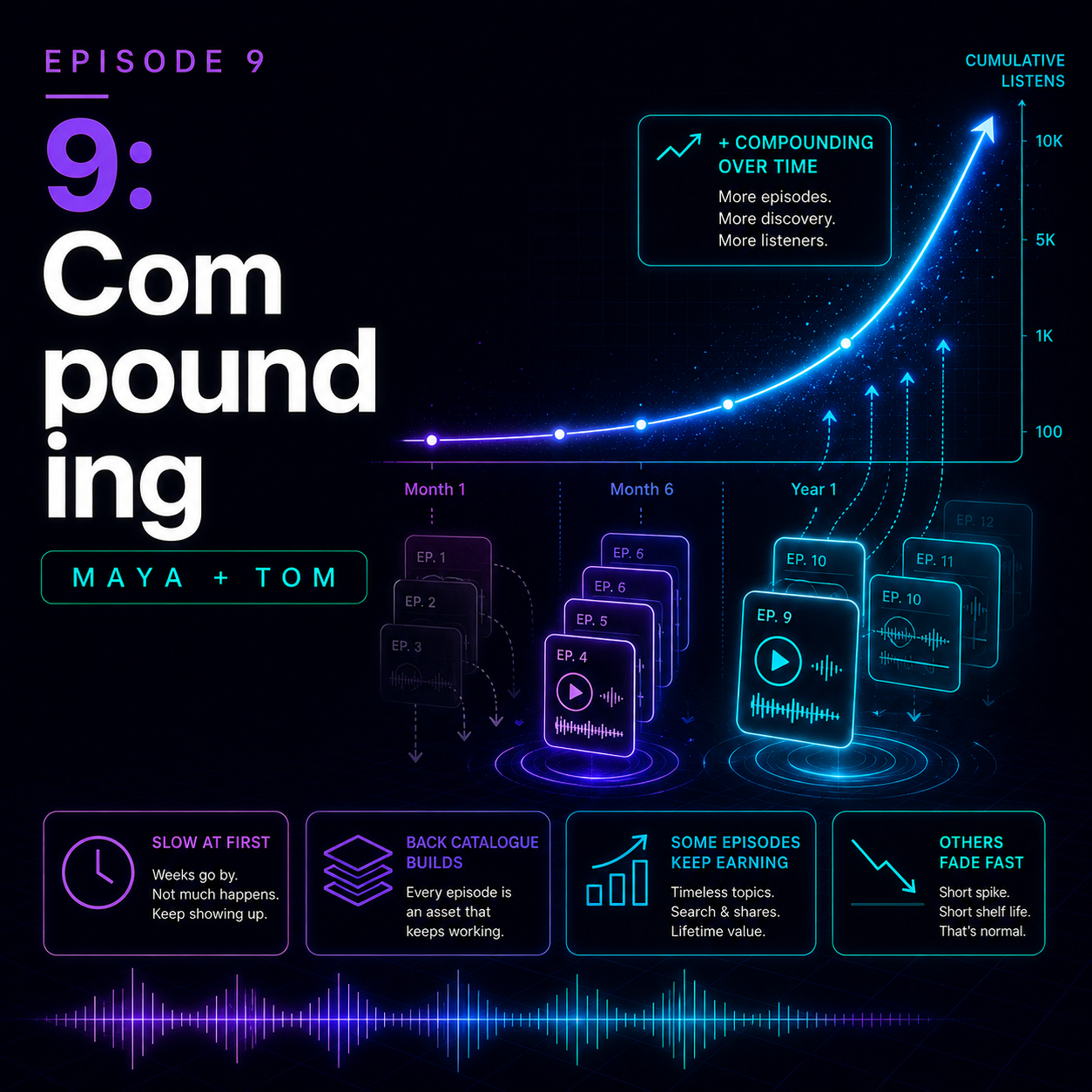
The compounding effect in podcasting describes how a back catalog accumulates listens over years, contrasting with the conventional front-loaded model where most listens occur in the first two weeks. Episodes from early years can receive more monthly listens in later years than during their initial release. This challenges industry measurements focused solely on 30 or 90-day performance, suggesting a different, more enduring asset value for shows with strong discoverability.

Compounding
Episode 9 10:30 - 12:18

9: Compounding

Newsjacking Episodes: Short-Term Spikes vs. Compounding

Newsjacking episodes, created in response to current events, provide immediate spikes in listenership and engage existing audiences but typically do not compound. Their relevance is temporary, meaning their back catalog quickly becomes an archive rather than a continually earning asset. While valuable for timely engagement, a content strategy solely reliant on newsjacking prevents the long-term accumulation of listens seen with evergreen content.

Invisible Shows
Episode 1 6:11 - 7:57

1: Invisible Shows

Back Catalog as an Asset, Not an Archive

The concept of a podcast's back catalog is reframed from a mere archive to a valuable asset. An example of an episode on negotiating freelance rates, still relevant two years later, demonstrates that useful content goes unheard because its position in the feed makes it "old." This highlights the missed opportunity for new listeners searching for specific information.