
Topic: Podcast Strategy

4 chapters across the catalog

Compounding
Episode 9 10:30 - 12:18

9: Compounding

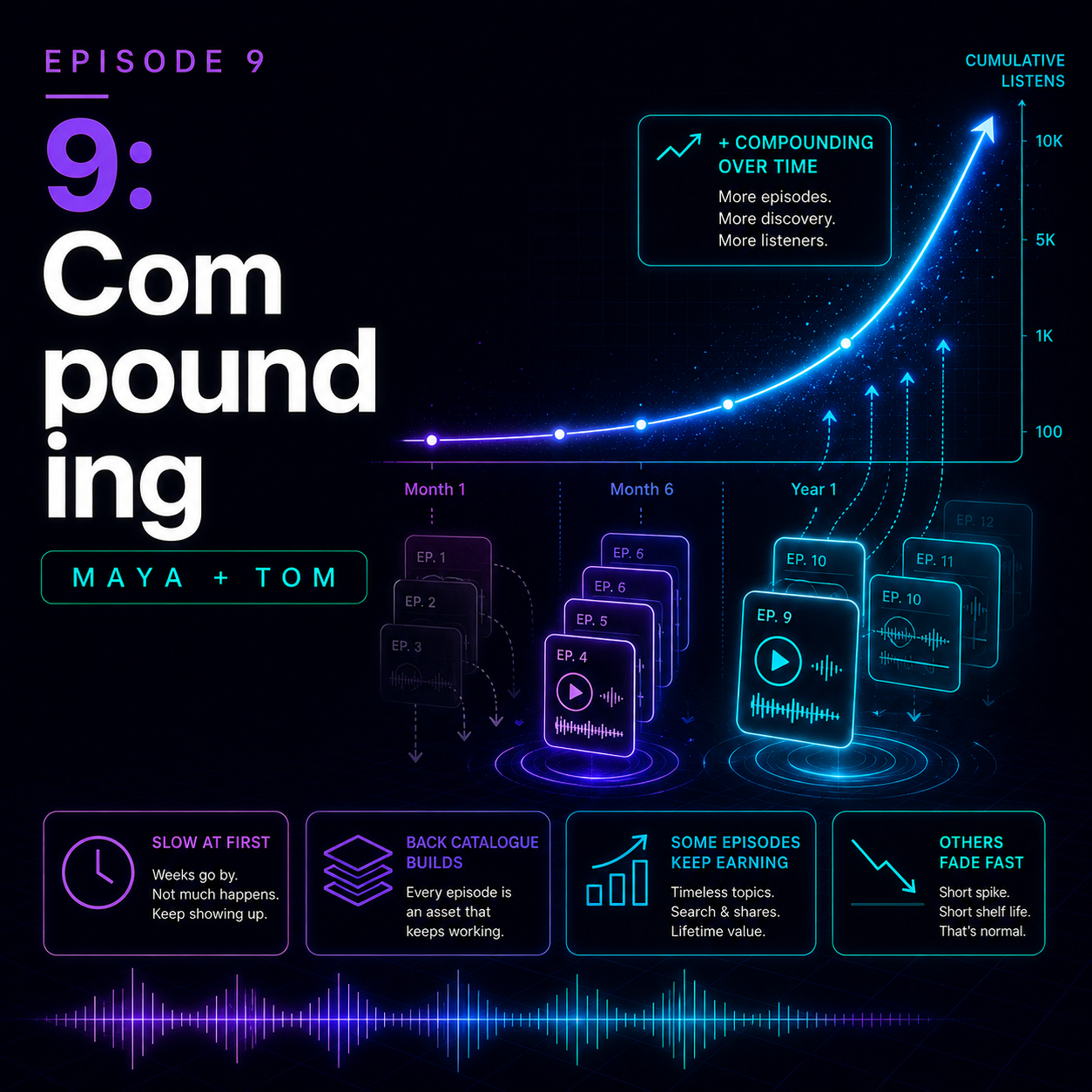
Newsjacking Episodes: Short-Term Spikes vs. Compounding

Newsjacking episodes, created in response to current events, provide immediate spikes in listenership and engage existing audiences but typically do not compound. Their relevance is temporary, meaning their back catalog quickly becomes an archive rather than a continually earning asset. While valuable for timely engagement, a content strategy solely reliant on newsjacking prevents the long-term accumulation of listens seen with evergreen content.
Stop Writing Bad Show Notes
Episode 6

6: Stop Writing Bad Show Notes

Podcast Show Notes: Labels vs. Pitches for Discoverability

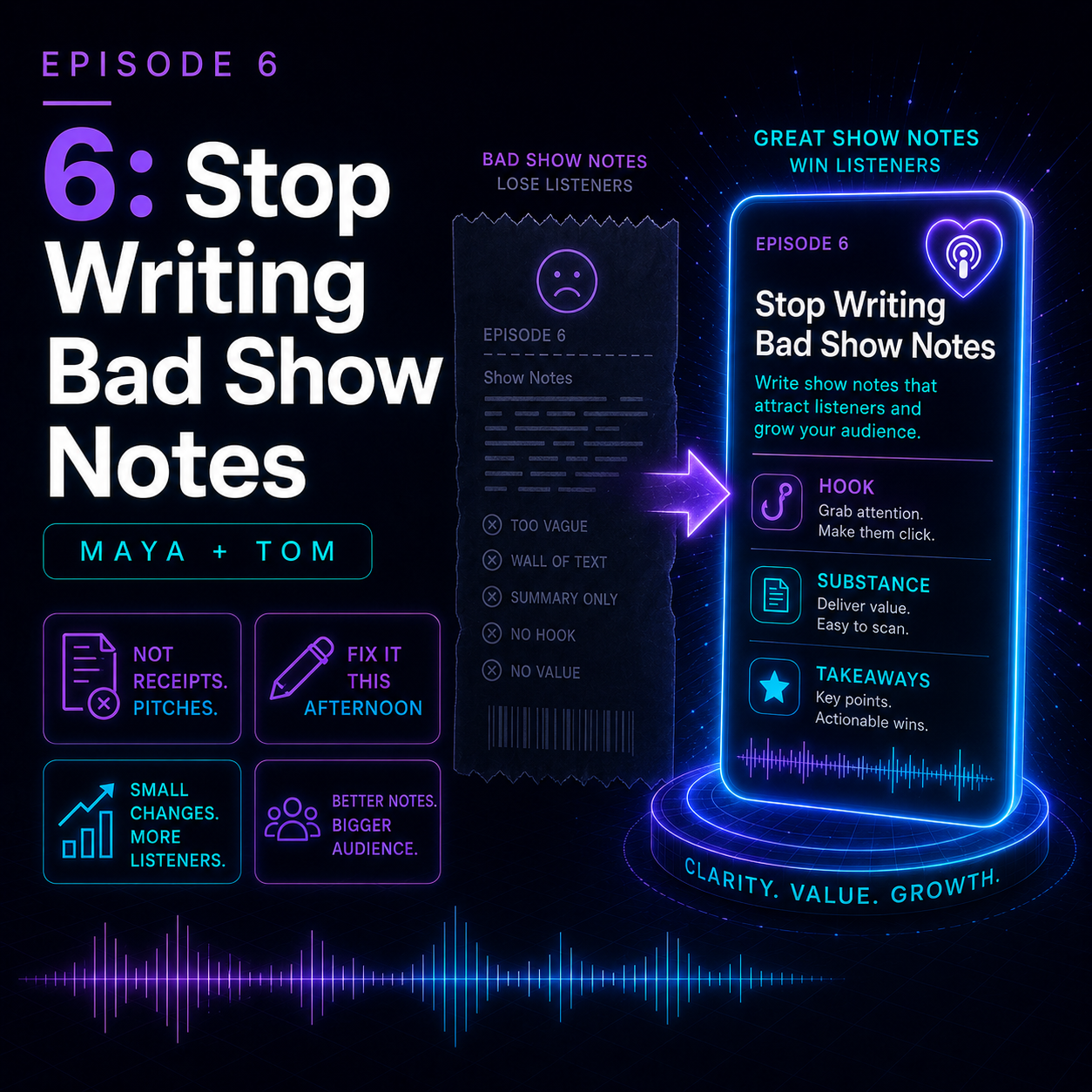
The hosts introduce the episode's focus on "easy wins" for podcast discoverability, specifically improving show notes. One host confesses to writing terrible, one-sentence show notes for three years, viewing them as mere "receipts" or labels. The key argument is that show notes are the second thing potential new listeners see (after the title) and should be written as pitches, not just labels, to encourage playback.

Stop Writing Bad Show Notes
Episode 6 2:40 - 5:07

6: Stop Writing Bad Show Notes

Effective Show Note Structure for New Listeners

An effective show note structure is proposed, consisting of three paragraphs: a hook (what the episode is about, framed for a stranger), substance (three to four specific topics discussed, concretely detailed for search engines and interested listeners), and guest credibility (why their opinion matters, with verifiable details). This approach, though taking 15 minutes per episode, has measurably increased new listeners.

Stop Writing Bad Show Notes
Episode 6 5:07 - 8:42

6: Stop Writing Bad Show Notes

Podcast Episode Titles: Avoiding Common Pitfalls

Podcast episode titles often fall into three ineffective categories: "cute" (in-jokes, wordplay), "lazy" (Episode 47), or "keyword-stuffed" (over-optimized for search engines that don't work as expected). A fourth, more effective category is proposed: descriptive titles that tell a human what the episode is about, potentially with a guest name or a "voice bit" for added hook. The goal is to write for the stranger, trusting regular listeners to tolerate less "cute" titles.