Topic: Search

30 chapters across the catalog

What Happens If You Do Nothing
Episode 10 0:00 - 6:18

10: What Happens If You Do Nothing

The Invisible Cost of Doing Nothing for Podcast Discoverability

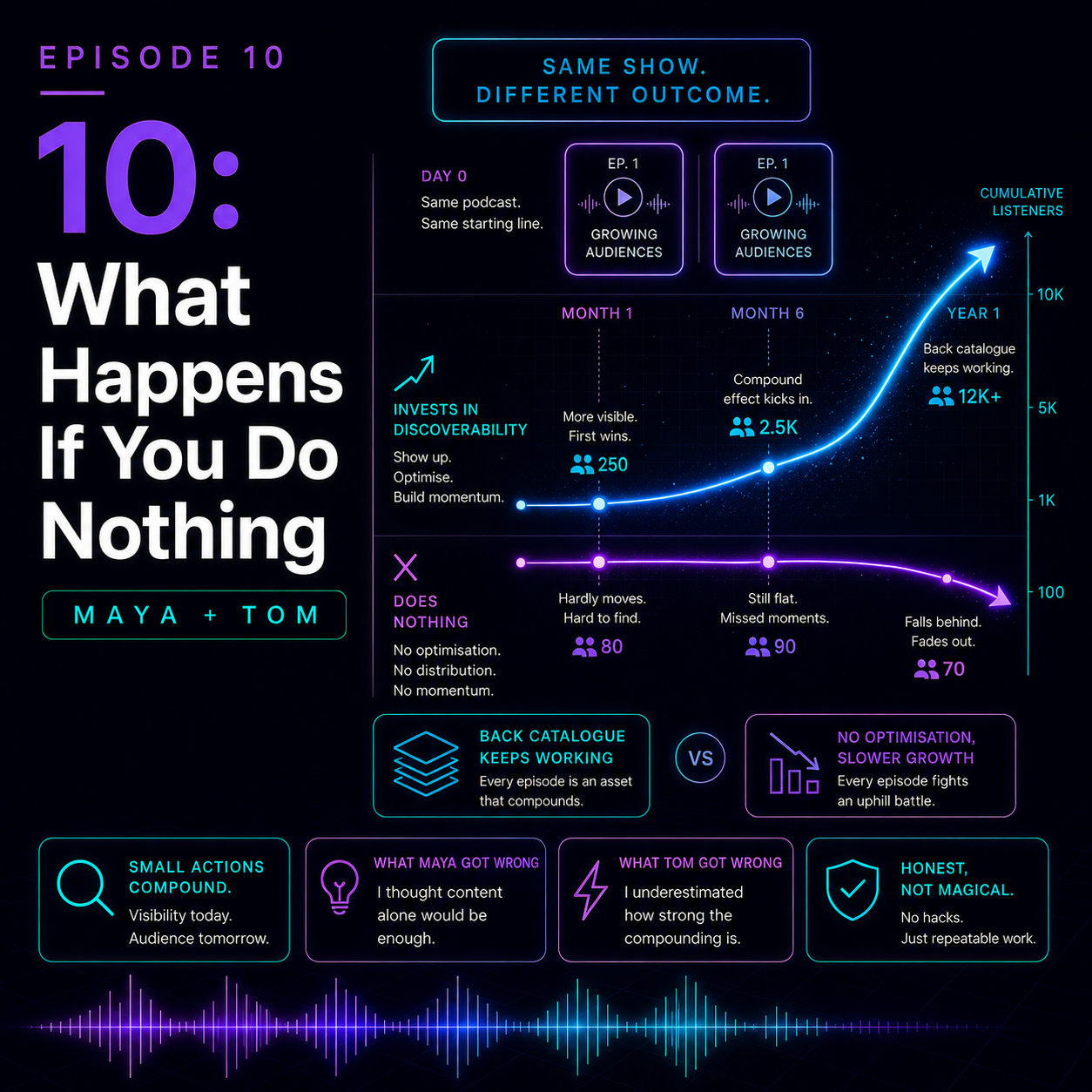
This episode, the season finale of "How to Get Discovered," explores the "invisible cost" of neglecting podcast discoverability. Through a thought experiment comparing two identical podcasts, Show A invests in discoverability (transcripts, show notes, data analysis) while Show B does nothing. After 12 months, Show A's back catalog generates new listeners through search, while Show B's audience remains stable, missing out on potential growth.
What Happens If You Do Nothing
Episode 10 6:19 - 9:00

10: What Happens If You Do Nothing

Maya's Self-Correction on Podcast Discoverability

Maya admits three areas where she was wrong during the season. First, she underestimated the energy required for discoverability work. Second, she was overly confident about AI chatbots surfacing content, noting the system is noisier than implied. Third, she sometimes prioritized search optimization over voice in episode titling, making content less engaging.

Compounding
Episode 9 0:00 - 2:21

9: Compounding

Podcast Discoverability Experiment: Initial Disappointment

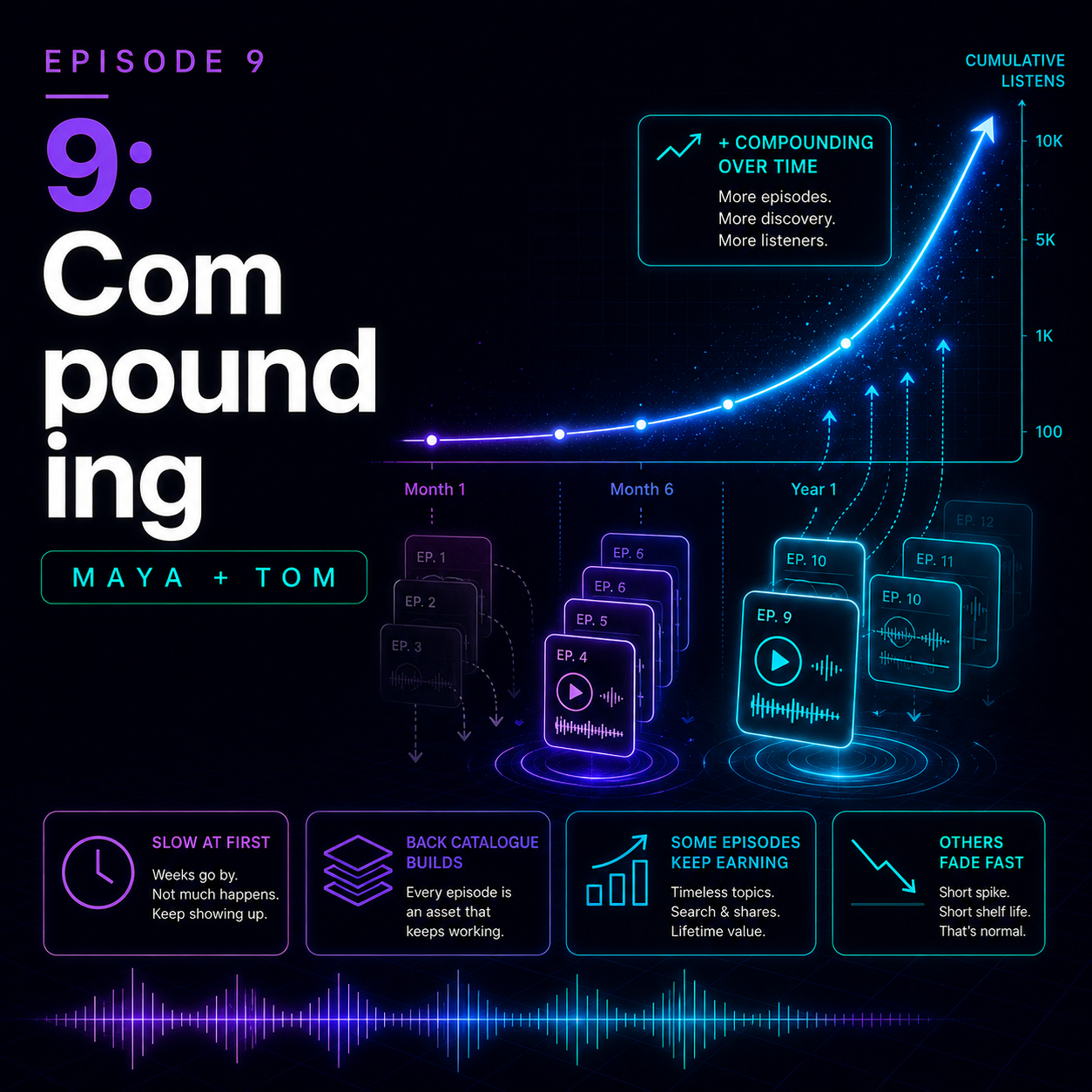
The hosts of "How to Get Discovered" discuss the initial three weeks of a podcast discoverability experiment. Despite transcripts being indexed and Google beginning to crawl pages, the data shows only tiny, single-digit results, leading to slight disappointment for one host who expected a more dramatic, immediate impact. Access to Google Search Console, a higher-tier feature, is currently unavailable.

Compounding
Episode 9 12:18 - 13:56

9: Compounding

Clip-Driven Listens: Platform-Independent Distribution

Clip-driven listens offer a different compounding curve than search-driven listens, as they are triggered by personal sharing rather than queries. A clip can circulate in group chats years after an episode's release, bringing in new listeners because the content remains funny, true, or surprising, independent of current search trends. This method is more resilient and less dependent on platform algorithms or indexing layers.

Compounding
Episode 9 15:51 - 16:43

9: Compounding

Search Console Integration: Upgrading for Data Visibility

One host expresses a quiet intention to upgrade their Podherd tier, specifically to gain access to Google Search Console integration. This decision stems from the current inability to see detailed data for their three-week-old podcast discoverability experiment, highlighting the desire for deeper insights into how their content is performing in search results.

Under the Hood
Episode 8 1:47 - 4:06

8: Under the Hood

Search Engine Page Interpretation and Metadata

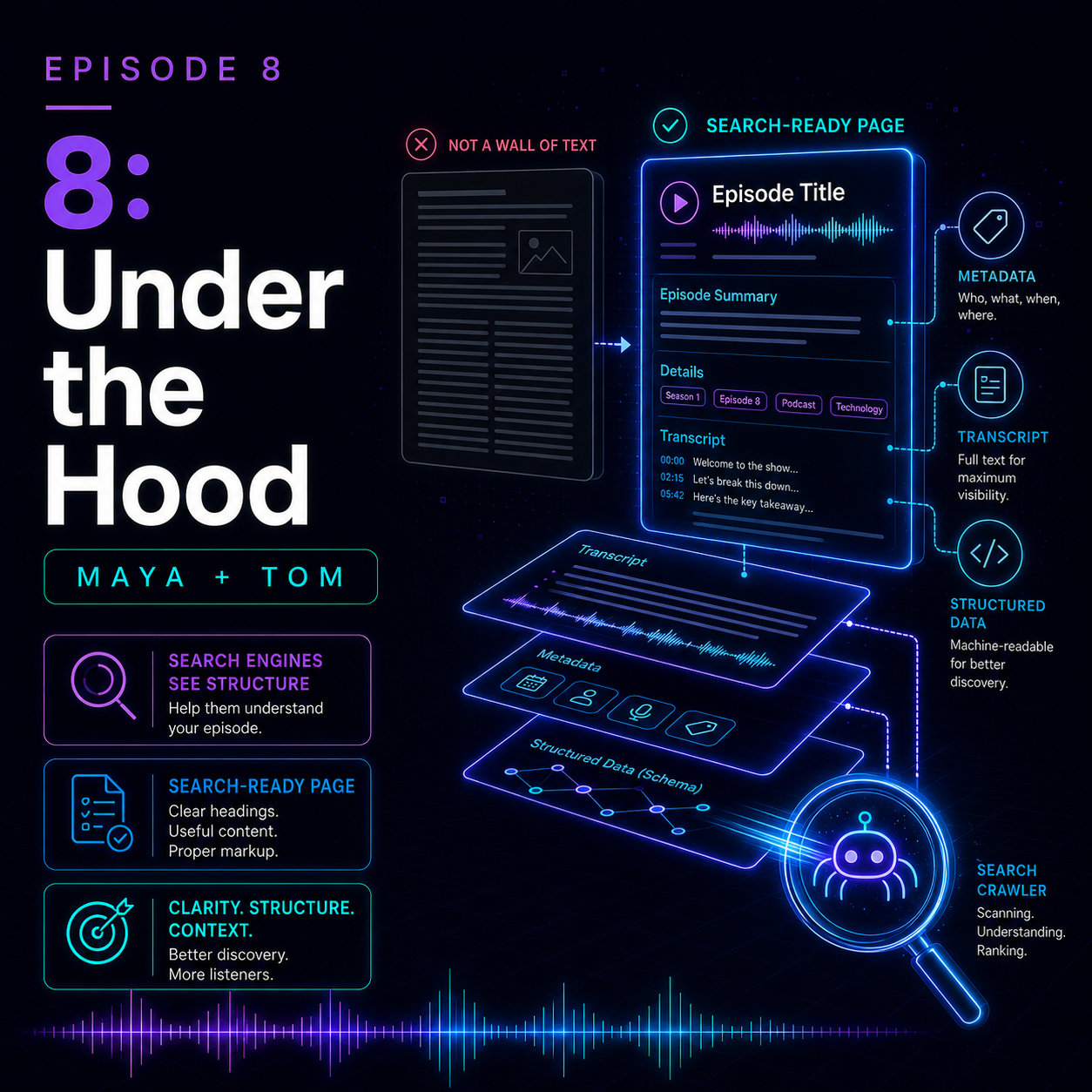
Search engines like Google and Bing interpret webpages differently than humans. Instead of visual layout, they see a document with an underlying structure, including titles, headings, body text, and metadata. Metadata, defined as "data about data," provides search engines with crucial information about the page's purpose, such as whether it's a podcast episode, article, or recipe, enabling specialized indexing and display in search results.

Under the Hood
Episode 8 3:28 - 5:50

8: Under the Hood

Structured Data and Schema.org for Podcasts

Structured data, following standards like Schema.org, allows webpages to communicate their specific content type to search engines. For podcasts, this means marking up a page to explicitly state it's a podcast episode, including its title, description, duration, and transcript. This structured approach helps search engines understand the content without guessing, leading to better legibility for both machines and AI systems, rather than just higher ranking. Most show notes pages lack this due to hosting platform priorities.

Under the Hood
Episode 8 5:50 - 9:04

8: Under the Hood

Transcript Structure and Addressable Moments

An unstructured "wall of text" transcript, even if accurate, is seen by search engines as one undifferentiated block, limiting its discoverability to broad topics. A structured transcript, however, breaks content into sections with headings, paragraphs, and crucial timestamps. These timestamps create "addressable moments," allowing search engines to index specific parts of an episode, enabling users to land directly on a relevant segment when searching for a particular question, rather than just the episode page.

Under the Hood
Episode 8 9:04 - 11:24

8: Under the Hood

Search Engine Indexing Mechanics and Ranking

For a transcript page to appear in search results, Google must know the page exists, crawl and index it, and then rank it as a good answer to a search query. Submitting a sitemap helps Google discover pages. Crawling depends on the domain's historical usefulness and authority. The page's structure, metadata, transcript quality, speed, and inbound links all contribute to its ranking, though listeners remain unaware of this complex process.

Under the Hood
Episode 8 10:34 - 13:04

8: Under the Hood

Domain Authority and Podcast Transcript Hosting

The domain where a podcast transcript is hosted significantly impacts its search performance. Domains with a long history, reputable links, and strong engagement signals accumulate "authority" over time. New pages on high-authority domains rank faster and higher. When transcripts are hosted on a podcast platform's default subdomain, the show benefits less from this authority, as it's spread across all podcasts on that platform. Hosting on a custom domain builds authority for the podcaster's own property.

Under the Hood
Episode 8 12:18 - 14:43

8: Under the Hood

CNAME Records and Domain Ownership for SEO

A CNAME record in a domain's DNS acts as a redirect, allowing a custom URL (e.g., `archive.myshowname.com`) to point to a server hosted by a third-party service. While the actual server is external, the URL seen by the listener and, crucially, by search engines, remains the podcaster's own domain. This ensures that search authority and compound interest over time accrue to the podcaster's domain, rather than the hosting platform's.

Under the Hood
Episode 8 14:01 - 15:36

8: Under the Hood

Google Search Console for Podcast Discoverability

Google Search Console is a free tool that provides critical data for any domain owner, including which search queries lead to their pages, page click-through rates, average search positions, and pages appearing in results but not clicked. This data is invaluable for understanding discoverability and optimizing content. However, this tool is only accessible for domains a user can prove they control, meaning platform-hosted transcripts cannot leverage this data directly.

Under the Hood
Episode 8 14:44 - 17:33

8: Under the Hood

PodHerd Integration and Personal Experimentation

One of the hosts admits to setting up a personal podcast feed on PodHerd's starter tier, which offers Search Console integration. This move, described as "begrudging experimentation," aims to test the discoverability claims made throughout the season. The host plans to gather three months of data to determine if the strategies discussed, particularly regarding metrics and domain authority, prove effective.

The Question Behind the Query
Episode 7 0:00 - 1:14

7: The Question Behind the Query

How to Get Discovered: The Question Behind The Query

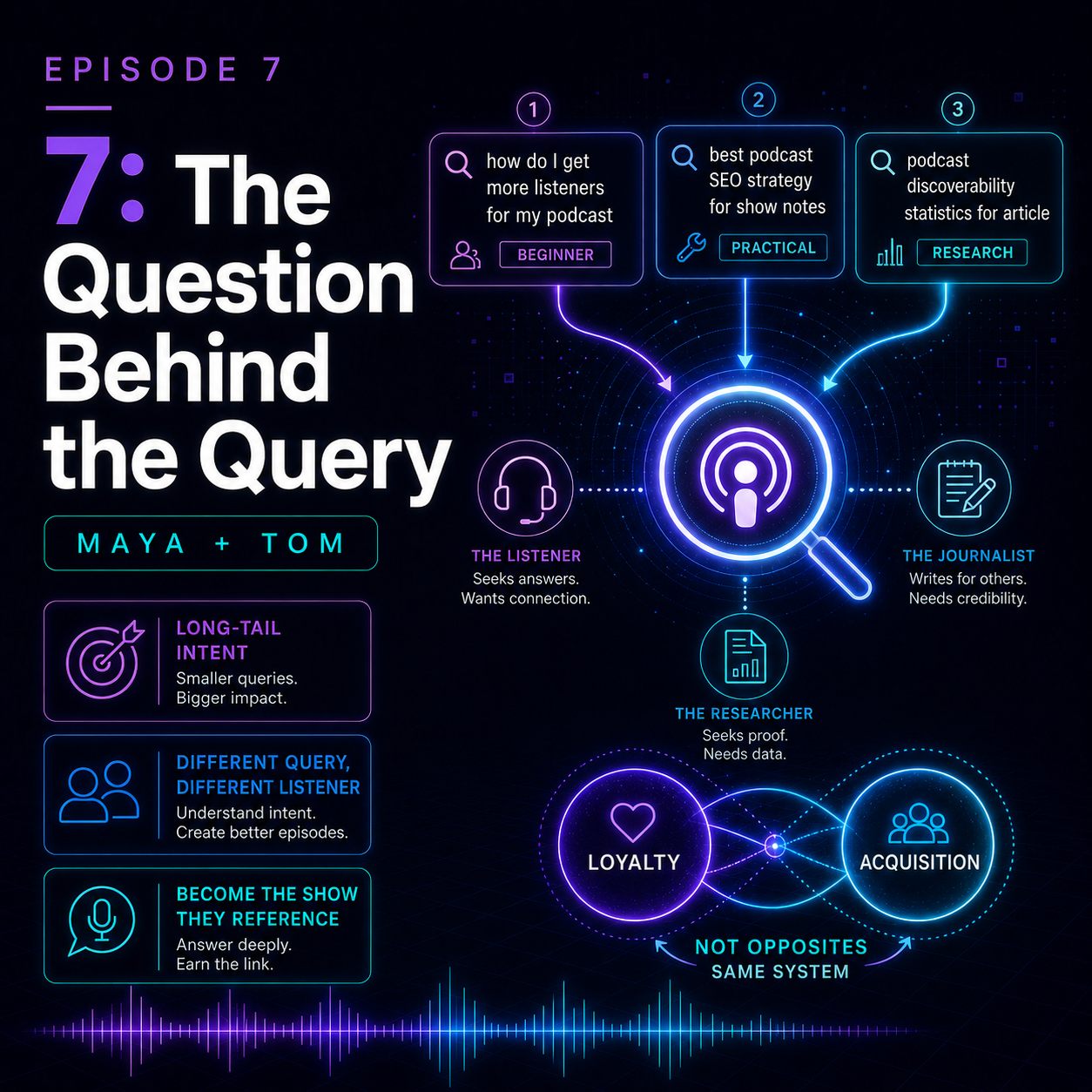
The podcast "How to Get Discovered" introduces its latest episode, "The Question Behind The Query," which delves into the philosophical aspects of podcast discoverability. The episode will explore long-tail search intent, how podcasts become reference material for journalists and researchers, and the relationship between listener loyalty and acquisition.

The Question Behind the Query
Episode 7 1:15 - 2:46

7: The Question Behind the Query

Analyzing Listener Search Queries and Intent

The hosts analyze three distinct search queries related to freelancing to illustrate different listener intents. Queries like "How do I negotiate my freelance rate without sounding desperate?" indicate an urgent need for specific advice, while "Best podcast for freelancers UK" suggests browsing for a new show. "Should I be sole trader or limited company? Side project under 30k" reveals a listener seeking authoritative guidance for a specific decision.

The Question Behind the Query
Episode 7 8:54 - 10:29

7: The Question Behind the Query

Loyalty and Acquisition: Not Opposites

The podcast challenges the common perception that loyalty and acquisition are opposing goals. Instead, it argues that loyalty is the natural progression of acquired listeners over time. Every loyal listener was once a stranger who entered through some "door," whether it was word-of-mouth, search, or a shared clip. The focus should be on acquiring listeners and then retaining them.

The Question Behind the Query
Episode 7 10:29 - 13:47

7: The Question Behind the Query

Optimizing Acquisition for Loyal Listeners

The discussion refines the acquisition strategy, asserting that the most effective approach produces the most loyal listeners, not just the highest download spikes. The SEO industry often optimizes for initial visits or impressions rather than long-term retention. By understanding listener intent through search queries, podcasters can attract "stay listeners" who are more likely to become loyal, rather than "bounce listeners" seeking only a quick tip.

Stop Writing Bad Show Notes
Episode 6 13:49 - 14:18

6: Stop Writing Bad Show Notes

Next Week: The Question Behind the Query

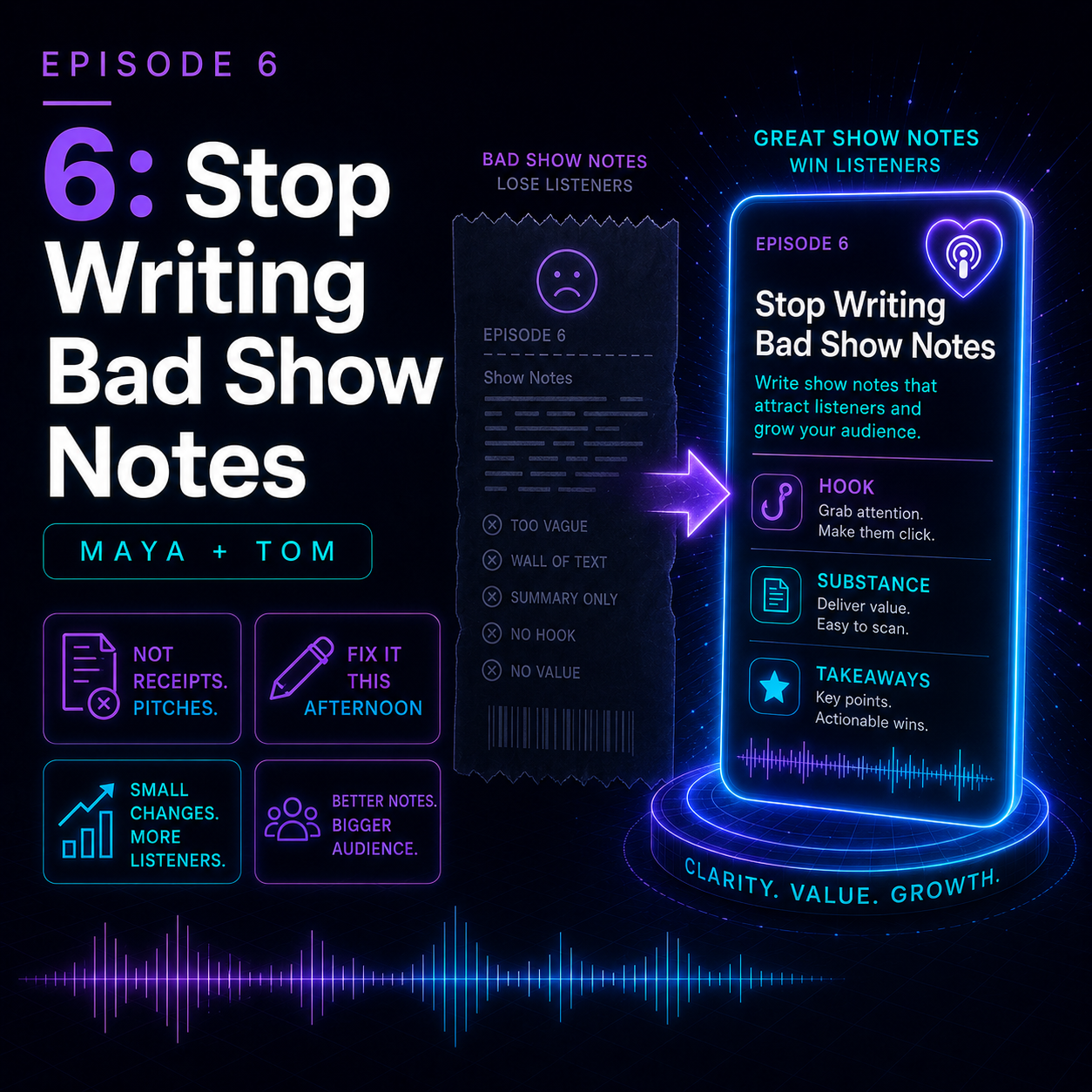
The hosts preview the next episode, "The Question Behind the Query," which will delve into long-tail search intent. The discussion will cover how people phrase their searches, what those phrasings reveal about their needs, and how to position a podcast to be referenced by journalists and researchers.

The Loyalty Trap
Episode 4 5:29 - 8:33

4: The Loyalty Trap

Search-Driven Discoverability and Long-Tail Questions

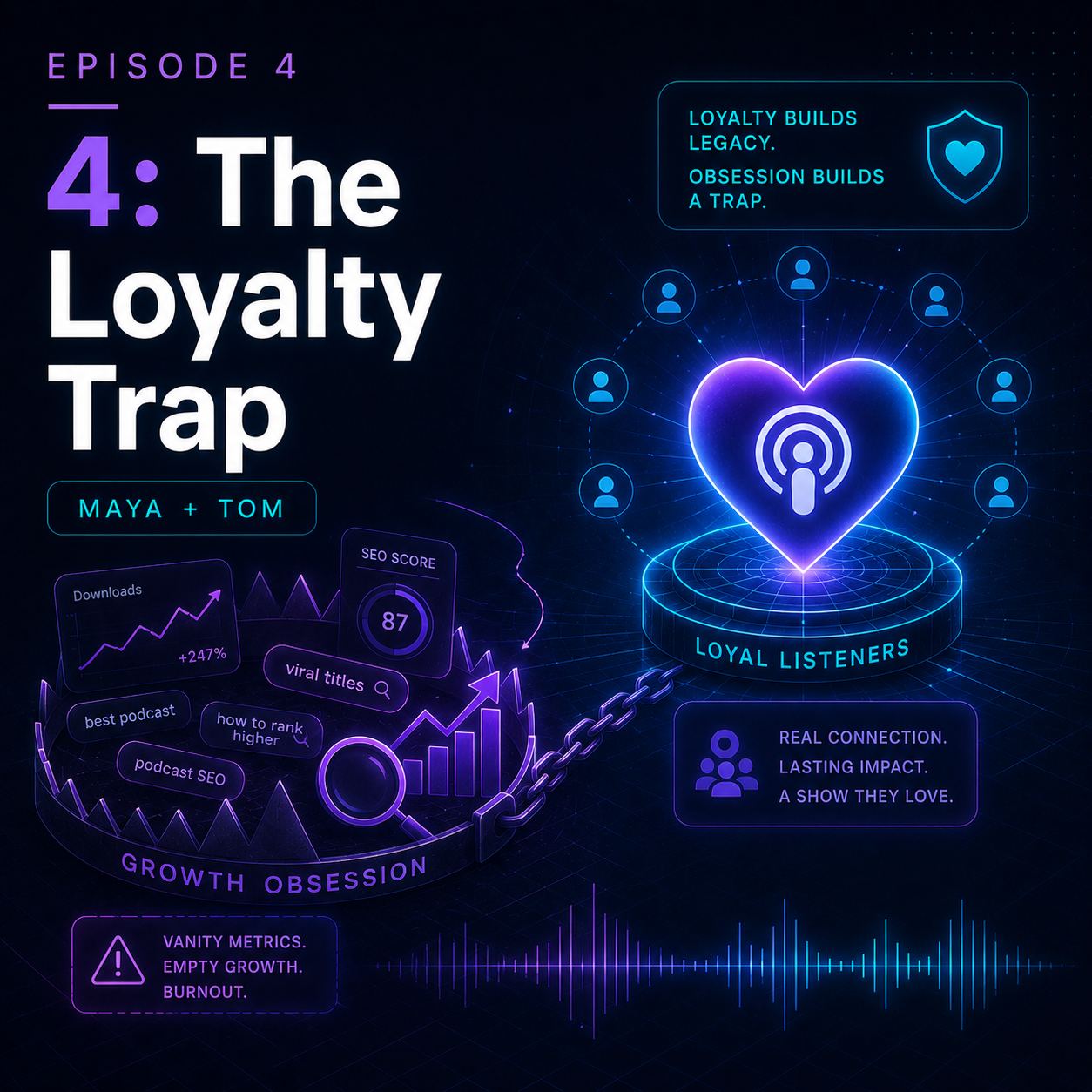
The hosts debate how new listeners find podcasts. While word-of-mouth is acknowledged as important, the argument is made that search is an increasingly significant entry point for "cold listeners" who have specific questions. These listeners often use "long-tail" search queries, and episodes that answer these specific questions can attract highly engaged individuals who are more likely to subscribe.

The Loyalty Trap
Episode 4 15:02 - 16:21

4: The Loyalty Trap

Refining the Loyalty vs. Discoverability Argument

The hosts conclude by refining the initial argument that loyalty matters more than discoverability. They agree that search can serve as a front door to loyalty, and listener-driven clips can be a mechanism for word-of-mouth. However, the core position remains that these tools should not detract from making a quality show, acknowledging that growth tactics can still "eat the show" if not managed carefully. The next episode will focus on evergreen content and the "back catalog."