
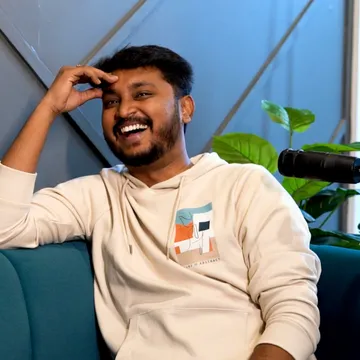
Episode 117 · Friday, 30 January 2026

EP - 117 | 🤣🎬 READY AA?…ACTIONNN!!🔥 Ft. Dr. Gurava Reddy on Raw Talks With VK | Telugu Podcast

By Raw Talks With Vamshi Kurapati - Telugu Business Podcast | 1h 55m listen | 42 chapters
EP - 117 | 🤣🎬 READY AA?…ACTIONNN!!🔥 Ft. Dr. Gurava Reddy on Raw Talks With VK | Telugu Podcast cover
Raw Talks With Vamshi Kurapati - Telugu Business Podcast · No. 117

About this episode

Dr. AV Gurava Reddy returns for an absolute wholesome conversation that goes far beyond orthopaedics and hospitals, touching life, love, discipline, empathy, ethics, and what it truly means to live well in today’s fast, convenience-driven world.In this Telugu podcast episode, we get to see the human being behind the surgeon. From how he became an orthopaedic doctor to defining moments from his early life and his years working in the UK, Dr. Reddy reflects on the experiences that shaped not just his medical practice, but his outlook on life. Personal stories flow naturally —his love story, marriage, parenting, and the constant balancing act between family and an intense medical career, filled with joy, pressure, regret, and gratitude.The conversation moves into themes that resonate deeply with today’s generation: anxiety, burnout, work-life balance, and the pressure to constantly perform. He explains why happiness is not an act but a habit, how counting blessings is an art, and why liking what you do changes everything. From music and favourite songs to celebrity encounters and simple everyday joys, he reminds us why life should feel like a celebration.We also dive into the realities of modern healthcare; time with patients, critical care decisions, empathy versus sympathy, ICU ethics, allegations against doctors, consumer court pressures, and moral conflicts in corporate hospitals. With clarity and honesty, he explains how doctors make decisions under pressure and why ethics must stand firm even when the system pushes otherwise.Beyond medicine, the episode highlights his work through the Sarvejana Foundation, road safety awareness, free knee replacements, accident prevention, insurance education, and mentoring young doctors. He speaks passionately about responsibility, parenting, family bonding, lifestyle diseases, digital detox, physical activity, hobbies, aging well, and the importance of slowing down.Warm, reflective, and grounded, this conversation is for anyone who sees life as a celebration, and for those who are still trying to understand how.Because sometimes, life is not about fixing everything… It's about living. Just living.


CHAPTER 01 / 42 Discussion

Doctor's Life, Career, and Personal Anecdotes

The podcast segment features a doctor sharing personal stories about his life, including a humorous honeymoon mishap, his motivations for becoming a doctor (inspired by tube lights), and his reasons for choosing orthopedics. He also touches on road safety and traditional bone setters.

doctor· orthopedics· honeymoon· tube lights· road accidents· traditional healers

00:00 We have a lot of subjects this time. Let's go for a side track. There is a famous serial in our childhood. If you have a 90s group and one person comes to you, you can say, Hey Arjun! Beautiful! The longest running comedy serial in television screen. You can make a guest appearance. I'll ask you a question, since you gave me permission to ask you something. Your wife gave you divorce papers and you signed them. What's the story behind that? We went to Ark Valley for our honeymoon. In the movie, if a train comes today, it will come in two days. We didn't have cell phones then. So, Bhavani had to call her friend. I said, I'll call him and come. I got down. I saw the last bogie. Bhavani was in the front. There was a pillar in the middle. I called and came to the other side. When I came, that one bogie was left and the rest of the train was gone.

00:46 He doesn't have a ticket, no money, no husband. Now youngsters are very much into their own town. They don't have any anxiety, no stress. Life is so simple, Vamsi. We make it complicated. If God gives me a rewind button, I'll rewind it once and spend more time with my mom. If I don't come on weekends, I'll be running around in Hyderabad. Then I'll get a stroke and stay at home. Then I don't know who I am. The major I saw was a young girl, studying in the rain. Her father was taking her to school. There was a well on the road. There was water on it. He called her. She fell down and got hit by a lorry.

01:24 Literally, Vamsi. He says you should detach emotionally from the patient. If you detach emotionally, what's the difference between you and MR-scan? I love humor. My birthday is a humor. I was born in a rickshaw. My honeymoon is a humor. So, watch Death Attitude tomorrow. That's also a humor. We should talk about your love story also, sir. She's the CM's daughter. We don't even have a fridge at home. Like in movies, the driver goes and marries a millionaire's daughter. It happens very rarely. I'm fed up with it. You're the one who proposed to her, right? I have a good concept for you sir. I gave a reason to your doctor. In cinema style, I don't have a mother with TB, father with cancer, brother with heart attack. Seriously?

02:05 Do you remember Malachi? She's been gone for 20 years. You shouldn't ask such questions. I'm ready. Sir, hi. Hi, Vamsi. Welcome back. Thank you.

02:45 How are you, sir? How's life? Superb! What's going on in life? I always say that life is threateningly comfortable. Threateningly comfortable? Yeah. And sometimes, I'm so comfortable that I'm afraid something might happen. I'm so happy. You know, they say, if you laugh too much, you'll cry. Yeah, I'm afraid I'll cry. But you have to celebrate every moment. Very interesting. I recently saw a few of your interviews. There is an answer to a common question. But the answer is not the same. The question is common. You gave a reason for the doctor's visit. No. You said you saw a film called Aradhana. You said you saw a bulb. And you said you saw a screen in a film. What is the actual reason? No. No. Aradhana is a film. Nagasthrao...

03:30 I thought I'd get Savithri if I became a hero. But definitely, to become a doctor, one of the reasons from my childhood is the tube light. I told you that I was in Bapat when I was young. You might not know this when you were in Bapat, in your generation. In our generation, 40 candles bulb, 60 candles bulb, 100 candles bulb and tube light. In luminescence, it increases. The 40-candle bulb consumes less current. So, in our Madhya Pradesh families, the lower middle class, we had 40 candles. 100-candle bulb was white. These 40-60 candles are dull and have a yellow color. Light yellow. And you can easily see the difference. Next is tube light.

04:14 Tubelights were only in the houses of very rich people. And then in shops, they were like that. When my father was alive, he was a doctor in Kerala. He was our doctor. In those days, there were only two doctors, K.S. Murthy and K.S. Murthy. If you go to K.S. Murthy's doctor, he was white and white. Good consulting room. Two tubelights. Then Murphy calendars came in those days. Now there is no Murphy radio. They used to play baby's radio. Like Kingfisher's young babies, they were small babies. They were so cute. I got them framed and put them in the hospital.

04:51 He was a white and white personality. Tubelights. So when I went there, it was indelible. It was like a scar on my heart. If I were a doctor, I would have kept two tube lights. That's the story. So in cinema style, I don't have a mother with TB, a father with cancer, a brother with a heart attack. Seriously, I was there for the tube light. That's the motivation. Then I got into the industry when I was a teenager. I realized that if I study medicine, I can also be at that level.

05:30 Did you get it in medicine? Yes. We have Savithri, right? Bhavani? You give a funny reason to take ortho. Let's talk about that. Ortho is nothing. As long as there are roads, cars in India, it's business for us. That's the thing. As long as our roads are like this. As long as they are. Then the roads will grow. The roads will grow, and the vehicles will grow. That's why I now... I have put up a trust, a foundation, to prevent road accidents. I went for it even if it was a pest. But definitely, when I was planning to do post-graduation, I eliminated some branches. For example, in pediatrics, the kids... Oh no, I'm not talking about those idiots. I'm talking about the kids. The kids. They say that their mother will kill them. Complicated. He will kill them, and their parents will kill them. So, three of them.

06:17 That's the thing. They are all concerned. So, even if he wants to put a small inflow, he is a major surgeon. So, I left it because I didn't want it. I left gynecology. While leaving it, I felt orthopedics was good. This definitely... You felt it was easy. Even now, if the bone is broken, the doctor will go to the bone doctor. No one treats the rest. Generally. Even if other general doctors and general practitioners do everything, they won't do it. Only Arthapadigalai. Our competition is Puthur Rajal, Kepal Pattilal. So we thought we'd get some good food. Now that we're on the topic, I remember when I was a kid, when my legs were broken, I don't know what happened. They took me to Kepal. He was the one who tied it up. So, I went there for a week or 10 days. He would hold me and twist me. I had a doubt how they would hold me and explain without X-raying. What about that? What do you think? In Kepal, there were so many people who tied up the dhoti. There were Puthur Rajas in Andhra.

07:16 They have a tradition of doing a little bit of a trick. Like stripping a broken bone. But if it goes well for 5 times, it gets damaged 5 times. Because they don't know the nerves and arteries. Sometimes they tie their sons up, and the nerves get damaged inside. They get a compartment syndrome and fall down. They get to the point where they have to remove their hands and legs. So, they don't know about such things. But in those days, orthopedic doctors were not in the habit. That's why they used to go to Kepal. But now, in 2026, if anyone goes to Kepal or Uthu Rajar, they will die.

07:55 Because now in Arthapuram, there are hundreds of thousands of doctors who are in great need. With technology. There is availability. Before that, there was no availability of doctors. So now definitely, especially bones, first is the best chance. If you miss it and get infections, you will have to face problems for the rest of your life. So that's what it is. I'll ask you this question, since you gave me permission to ask you anything. I like it. I read in your book, actually. You said that your wife gave you divorce papers and you signed them. What's the story behind that? Nothing much. Once, I was asked to do an operation on Sunday. And asked to do an operation on Saturday. Is it for sentiment? Not for sentiment. She'll be busy all week. He has only one day off on Sunday. He asks us to do it on that day.

08:39 I counter that. If my wife doesn't spend her Sunday, she will sign the papers and say, I don't want to be like that. So, I tell her not to do it on Sunday. I use that. He also said something here. Your honeymoon story is a funny story. Oh, honeymoon story? I made a great movie with that. Really? Let's talk about it. We went to Arkavali for our honeymoon. After that, we went to a place called Sholay. If you take a train, it takes two days to reach there. 40 years back? Exactly 40 years. In 1986, I got married. May 26th. I think you asked me these questions. I was ready.

CHAPTER 02 / 42 Discussion

Honeymoon Story: Travel Mishaps and Train Encounters

The speaker recounts his honeymoon experiences, including travel to Arkavali and Sholay, a scary experience in Borra Caves, and an encounter with a tribal woman on a train where he tried to get his wife a seat.

honeymoon· travel· Borra Caves· train· tribal woman· marriage

08:39 I counter that. If my wife doesn't spend her Sunday, she will sign the papers and say, I don't want to be like that. So, I tell her not to do it on Sunday. I use that. He also said something here. Your honeymoon story is a funny story. Oh, honeymoon story? I made a great movie with that. Really? Let's talk about it. We went to Arkavali for our honeymoon. After that, we went to a place called Sholay. If you take a train, it takes two days to reach there. 40 years back? Exactly 40 years. In 1986, I got married. May 26th. I think you asked me these questions. I was ready.

09:27 We went to the wedding on May 26th, 20th. After that, we went to Klasnopovia. We thought we'd go there. So, we got into a lorry. It took us half an hour. The lorry was very busy. We thought we'd just chill and go to Borra Caves. We had to crawl through Borra Caves. My wife got scared halfway through the crawl. We were not allowed to go back or forth. So we were brought out again. Were you scared of the phobia? Yes, I was scared. Then we took a train. From there, we took a train to Amudhala Valley. From there, we took a train to Vizag.

10:12 Redlu, tribal women from Koya, they bring their products and come by train. In that, a lady brought a big bus and put it on the seat. She was a newly married woman. I told her that my wife didn't have a seat and pushed her to sit. She scolded me. Unprentable. I can't say that now. She scolded me in every way. I'll never know all those things in my life. Today, you're done with comedy. So, that's one thing. After all that, we finally came to Vizag. We worked hard and booked a train to Vizag to Guntur. We got on. What's our fault if we get on? We booked the train. Everyone who was a little far away came and sat in the general compartment. So, my wife got claustrophobic again. She got scared. So, we said, if he's here, I'm not. We sat near the gate.

CHAPTER 03 / 42 Discussion

Honeymoon Train Mishap: A Humorous Story

The speaker recounts a chaotic and humorous honeymoon experience involving a train journey from Vizag to Guntur, where he and his wife were separated, leading to a series of misadventures and eventual reunion.

honeymoon· train· Vizag· Guntur· separation· humor

10:12 Redlu, tribal women from Koya, they bring their products and come by train. In that, a lady brought a big bus and put it on the seat. She was a newly married woman. I told her that my wife didn't have a seat and pushed her to sit. She scolded me. Unprentable. I can't say that now. She scolded me in every way. I'll never know all those things in my life. Today, you're done with comedy. So, that's one thing. After all that, we finally came to Vizag. We worked hard and booked a train to Vizag to Guntur. We got on. What's our fault if we get on? We booked the train. Everyone who was a little far away came and sat in the general compartment. So, my wife got claustrophobic again. She got scared. So, we said, if he's here, I'm not. We sat near the gate.

11:11 Can you imagine? Whole night journey. We came to Vizag till the end. This is icing on the cake. Even Javed Akhtar could not write this film. We came there. After coming, she did not have cell phones. So Bhavani had to call her friend and tell him that I will make it and come. I got down. In Vizag, it was supposed to be staying there for half an hour. So I got down, and I saw the last bogie. Bhavani was in the front. That train. There was a pillar in the middle. There was a telephone box on the pillar. I called that box and came to the station. When I came, that one bogie was left and the rest of the train was gone.

11:57 Now your wife is in the last bogie. My wife is in the front. I can see the last bogie. So I was thinking that the train is here. I couldn't see the train with you because there are pillars. So when I came, the last bogie was delayed. The last bogie was there and the train left with you. My wife is in the train with you. She doesn't have a ticket, money, husband. Oh my God! And you believe this? You didn't even write the script. Who wrote it? So that's all. If I start crying, I'll be like, you're a big shot. But my husband got down and left me. Don't get me wrong. He got down at Mangalagiri, bought a ticket and gave it to her. Okay, I'm going to leave from here. No communication. No communication, leave the phone. I left from Vijayawada, took another lorry, since I didn't have time to go to the bus stand, I took a lorry, gave him some extra money and got down at Guntur.

12:52 When I go to the station, my wife is on the platform. She will come in a storm. She will literally cry. That is my honeymoon. It is like a movie. More than a movie. I love humor. My birth is a humor. I was born in Rickshaw. My honeymoon is a humor. I will watch Death Entertainer tomorrow. That will also be a humor. So if you believe in humor and like it, you'll find every joke in life. Everything is a humor. We should talk about your love story also, sir. How did you meet? Bhavani and I are relatives. Bhavani's father, Bhavan Venkatram Reddy, ex-chief minister. You were the CM then, right? Yes, I was. I became the CM after I got married. Okay, 10 years later.

CHAPTER 04 / 42 Discussion

How Arjun and Bhavani's Relationship Started

Arjun describes how his relationship with Bhavani, the CM's daughter, began despite their different backgrounds and the initial fears and societal pressures he faced, highlighting their compatibility and happiness after 40 years of marriage.

relationship· marriage· compatibility· social class· arranged marriage

13:48 He has six sisters. One of them is my uncle's wife. So, Gowani's father's sister and my father's brother's wife. That's the relation. In the previous generation, my father and his family were related. So, they are related from now on. So, that relationship exists. So, that slowly and lovingly blossomed. It sprouted. She proposed to you first, right? Yeah, I mean, we don't have a scene where I propose. She is the CM's daughter. We are just a small medical college student in Guntur. As I said, when I was in love with Bhavani, there was no fridge in our house. We used to drink water from the well. So, my father was an assistant professor in college. So, academically and professionally,

14:37 He was a teacher and an assistant professor. But he was almost just middle class. My grandfather's loans and my father's loans were enough for him. So, he didn't study on the road. But just middle class. I don't have the capacity to pose for a movie hero and get married. It's very rare to see a driver marrying a millionaire's daughter. So, but Bhavani, we were meeting each other. So, Bhavani liked me. She asked me why I liked her. I'm not the most handsome guy. Then, in that circle, there would have been probably more handsome people, rich people, most resourceful people than me. I'm just an average, outgoing medical student. When we met. She was in Home Science in Hyderabad.

15:40 But she liked my approach to life. We joke a lot, right? Plus the way I used to take care of her. And the atmosphere in our house. My father, mother, me and all three of us sitting together and eating. So, she liked that type of thing. So, I thought why not? I was packed. I thought, what do we do if the CM's daughter falls in love? Do you see the CM behind you? So, I mean, after my experience, it took me a year to say yes. To come out of that fear? Yes, to come out of that fear. There are many people around us who are very friendly. They don't ask us anything. They just come to us and give us an advice.

16:26 They said, your life is going to be a bus stand. She is very arrogant. She won't accept even if you give her 500 rupees. She won't even wear a saree. Even if she knows, she will tell you. They will make it look like a fake movie. She is very arrogant. She doesn't talk much. She is very selective. Your life will become like Socrates. Socrates has a lot of problems. I was worried if he would settle in my house. I would take him to the city bus from Srinivasa colony to the North center. I would take him to the city bus. I would take him to the city bus. I would take him to the city bus. I would take him to the city bus. I would take him to the city bus. I would take him to the city bus. I would take him to the city bus. I would take him to the city bus. I would take him to the city bus. I would take him to the city bus. I would take him to the city bus. I would take him to the city bus. I would take him to the city bus. I would take him to the city bus. I would take him to the city bus. I would take him to the city bus. I would take him to the city bus. I would take him to the city bus. I would take him to the city bus. I would take him to the city

17:29 She never complained. She always said, I don't have this. I was literally scared. Because all the privileges, political, financial, social, were there. I was here. It came down from there. The little daughter with all the privileges in that house, came to me, and all the liabilities, responsibilities, were in the eldest daughter-in-law. So, drastic change. So, but I'm lucky. Lucky, lucked out. So, now, today,

18:06 I never asked for it. And you keep talking about the compatibility. Oh yeah, very much. I never get tired. So, I always talk about it. We have been married for 40 years. We are very, very happy. Not that we have the same likes. I told you, we are totally different. There is a crowd of more than two people. I have to have 200 people around me. I was in the bedroom with the fan. The fan should be on 5. I should be able to rotate it. So, there were two differences. But we enjoyed each other's presence. We gave each other space.

18:45 I don't work hard on her wishes. We created a good space for us. So, we are lucky. How was it after marriage with your uncle? After that, there was less interaction. We went to England after we got married. I heard a story about your daughter. That something happened when you were not around. No, nothing like that. I always say, my son scolded me before he was born and after he was born. I was doing post-graduation in Sanjay T. Poonam. Bhavani was pregnant here, Swapna nursing home. I took leave for the expected delivery date. He would not come for so long. So I went to Swapna nursing home and served her.

CHAPTER 05 / 42 Discussion

Experiences Around Son's Birth and Marriage

The speaker recounts his experiences surrounding his son's birth, including his post-graduation studies, his wife's pregnancy, and the events at the nursing home. He also touches upon their move to England after marriage and his wife's loneliness after giving birth.

marriage· pregnancy· birth· nursing home· Liverpool

18:45 I don't work hard on her wishes. We created a good space for us. So, we are lucky. How was it after marriage with your uncle? After that, there was less interaction. We went to England after we got married. I heard a story about your daughter. That something happened when you were not around. No, nothing like that. I always say, my son scolded me before he was born and after he was born. I was doing post-graduation in Sanjay T. Poonam. Bhavani was pregnant here, Swapna nursing home. I took leave for the expected delivery date. He would not come for so long. So I went to Swapna nursing home and served her.

19:37 I asked her if she would induce me. She scolded me. She said, go and mind your own business. You don't have to tinker with nature. It's not natural. You go and mind your own business. She scolded me. That's it. I was scolded in Liverpool. Bhavani was the only relative left. We were the only relatives left. So, I was admitted to Metronet Hospital. I was on night duty and had a lot of surgeries. I was there for the delivery. After the delivery, I went to my room to get ready. I did my night duty and took a bath. I went home, took a bath, got ready and slept.

20:20 I woke up the next morning to find out. I told Bhavani I would come. She said she would be born at 1 o'clock. Nobody was there in the hospital that evening. The rest of the hospital staff came. Bhavani was alone with the baby. So she felt so low. And the next morning... She was in a bad mood. That's the story. I don't know when the other two kids scolded me. But, as you said earlier, life is never complicated, it's always complicated for us. Absolutely. Youngsters have a terminology for it. Anxiety, stress, burnout. What's your take on that? Life is so simple, Vamsi. We make it complicated.

CHAPTER 06 / 42 Discussion

Simple Life Philosophy: Liking and Blessings

The speaker discusses his philosophy for a simple and happy life, emphasizing the importance of liking what you do, doing what you like, and counting your blessings to avoid unnecessary stress and anxiety.

happiness· simplicity· blessings· enjoyment· life philosophy

20:20 I woke up the next morning to find out. I told Bhavani I would come. She said she would be born at 1 o'clock. Nobody was there in the hospital that evening. The rest of the hospital staff came. Bhavani was alone with the baby. So she felt so low. And the next morning... She was in a bad mood. That's the story. I don't know when the other two kids scolded me. But, as you said earlier, life is never complicated, it's always complicated for us. Absolutely. Youngsters have a terminology for it. Anxiety, stress, burnout. What's your take on that? Life is so simple, Vamsi. We make it complicated.

21:14 And life is every moment is a celebration. And another thing is you should count your blessings. And another point is you should like what you do, you should do what you like. If you remember these four things, life is smooth. It's a crazy romance. Where do you miss your bus? Many people ask me why I am so happy. I like what I do. I do what I like. These are simple sentences with profound depth. For example, I do what I like. I like what I do. That's the first. You are doing a broadcast. I am doing operations. One person is doing another job. First, we have to learn to enjoy that job.

21:55 Many people are arrogant. They say, my boss is not good, my salary is not good. What's wrong with that? So whatever you're doing, you're not enjoying. In that process, you forget what enjoyment you have. For example, I love music. You love poetry. In this arrogance, you don't do that. So in both, you're a loser. But once you start liking what you do, then you will do what you like. That is the essence of life. Very simple. But our people miss it a lot. Number two, I always say that count your blessings. We are together now. You are talking here, I am talking there. I came in the car, you have an AC room, you have a big studio. All this is God's gift. Count your blessings. I don't have 300 hospitals, if I cry, no problem. You too, not here, somewhere else, you have to be in Hollywood, you will cry.

22:48 But you should count the blessings what you have. There are many people who are more privileged than us. Absolutely. That's what I'm saying. That's what it is. Counting the blessings and enjoying the blessings is an art and science by itself. Counting the blessings doesn't mean material blessings. You just enjoy the sunset, enjoy the sunrise, enjoy the rain, enjoy children's love. There are so many. That's the essence. I'll jump to it. One of my most favorite moments was when I was in my old house, not this house. I was sitting behind a fort. There was a railing. You know railings, right? It goes up and down like this. There was a small box on top of it.

CHAPTER 07 / 42 Discussion

Favorite Telugu Song and Its Meaning

The speaker discusses his favorite Telugu song from the movie Kanchana, highlighting its poetic lyrics about self-respect and the beauty of life, and praising director Vishwanath.

Telugu song· Kanchana· Vishwanath· lyrics· self-respect

24:17 When you get the scope, when you are in a good mood. I remember only when I am in a good mood or when I am in a good mood. It's not like a hobby. It's gone from a hobby. Yeah, I know. I know. You keep talking about music, right sir? Let's talk about 2-3 songs that you like. Oh boy! There are so many. Let's talk in Telugu. In Telugu? My favorite is... I want to marry many Telugu sea heroines. But they didn't agree. Did they ask? That far. They don't have that much of a scene. Who did you think sir? Kanchana. There is a song in that film, which is about self-respect. Vishwanath is one of the first directors who said,

24:57 If you haven't seen it, go and watch it. It's a beautiful song. It's a beautiful picture. In that song, it says, Eka raalavu kannula mucchamulu, Eka vaadavu thottala kusumamulu. Kannula mucchalu means tears. She is so elated. Look at the poetic expression. Na kadala mucchalu raalavu, Eka vaadavu thottala kusumamulu. I don't even use flowers in the garden. Life is so beautiful. The lyrics, the beauty of the song, the tune of Rajeshwara... I have heard that song hundreds of thousands of times. Similarly, the songs of Radhika, Pranay, Sudha, Geethika... You can sing them anytime. Yeah. Not just me, but my two friends. That song is beautiful too. Similarly, in the wedding song,

CHAPTER 08 / 42 Discussion

Discussion of Favorite Telugu Songs and Artists

The speaker discusses their favorite Telugu songs, including "Pulakenchani Madhi Pulakenchu" and others from old films, mentioning artists like Radhika, Pranay, Sudha, Geethika, and singers like Balu, while also reflecting on the connection between music and emotions.

Telugu songs· music· artists· emotions· Balu· Srinivannel

24:57 If you haven't seen it, go and watch it. It's a beautiful song. It's a beautiful picture. In that song, it says, Eka raalavu kannula mucchamulu, Eka vaadavu thottala kusumamulu. Kannula mucchalu means tears. She is so elated. Look at the poetic expression. Na kadala mucchalu raalavu, Eka vaadavu thottala kusumamulu. I don't even use flowers in the garden. Life is so beautiful. The lyrics, the beauty of the song, the tune of Rajeshwara... I have heard that song hundreds of thousands of times. Similarly, the songs of Radhika, Pranay, Sudha, Geethika... You can sing them anytime. Yeah. Not just me, but my two friends. That song is beautiful too. Similarly, in the wedding song,

25:48 The song is called Pulakenchani Madhi Pulakenchu. It's a song about a story that is not told. The poet has written it so well. Basically, the hero is sleeping. It's like reading a book. The hero is sleeping. The hero is in love with the hero. But we don't express our love for the hero. So, the song tells us about the music. The song tells us about the music. The song tells us about the music. The song tells us about the music. The song tells us about the music. The song tells us about the music. The song tells us about the music. The song tells us about the music. The song tells us about the music. The song tells us about the music. The song tells us about the music. The song tells us about the music. The song tells us about the music. The song tells us about the music. The song tells us about the music. The song tells us about the music. The song tells us about the music. The song tells us about the music. The song tells us about the music. The song tells us about the music. The song tells us about the music. The song tells us about the music. The song tells us about the music. The song tells us about the music. The song tells us about the music. The song tells us about the music. The song tells

26:27 The adjectives for music and love are the same. It's in your heart. It's in your heart. It's in your heart. It's in your heart. It's in your heart. It's in your heart. It's in your heart. It's in your heart. It's in your heart. It's in your heart. It's in your heart. It's in your heart. It's in your heart. It's in your heart. It's in your heart. It's in your heart. It's in your heart. It's in your heart. It's in your heart. It's in your heart. It's in your heart. It's in your heart. It's in your heart. It's in your heart. It's in your heart. It's in your heart. It's in your heart. It's in your heart. It's in your heart. It's in your heart. It's in your heart. It's in your heart. It's in your heart. It's in your heart. It's in your heart. It's in So I enjoy those moments. In my old films, I love the songs of Vinayala, Terrace roof garden, Religaddi, Full moon. I enjoy it a lot. I can't get enough of it. You talk a lot about Srinivannel or SPB. Do you use any of their songs? In contemporary, Megha Sandeshav, Srinivannel is not written, Devalipally is written. There is a song called Mundhu telisena, Mandirai mittula undena.

27:19 It's a great song. I don't know where Balu is, but he's a great singer. Whenever he calls me, he says hello first. He sings Neelalu Karena. I know that. It's an amazing song. You asked about Sriniven Nel's songs. I don't know what Sriniven Nel's songs are doing these days. But it's like a conversation between two lovers. Then, in Raja, there is a song called Yedho Okar Ragam. What would that be? In that, it is about Jyapakala. Jyapakala is Odarpu, Jyapakala is Melukulukku. Jyapakala is Nitturupu, Jyapakala is Odarpu. Who else writes? In two sentences, it is about memories. I have never read such a perfect book. I am such a beautiful writer.

CHAPTER 09 / 42 Discussion

Remembering Sita Ram Reddy and his songs

The speaker recounts sending a book of songs to Sita Ram Reddy, who passed away shortly after. They also reflect on the loss of other members of the Telugu community during the COVID-19 pandemic.

Sita Ram Reddy· songs· Telugu community· COVID-19· death· Guruvayur Shastri

28:07 I like the song, Jagamanta Kutumbu O Naadi. I like the song, Jagamanta Kutumbu O Naadi. I like the song, Jagamanta Kutumbu O Naadi. I like the song, Jagamanta Kutumbu O Naadi. I like the song, Jagamanta Kutumbu O Naadi. I like the song, Jagamanta Kutumbu O Naadi. I like the song, Jagamanta Kutumbu O Naadi. I like the song, Jagamanta Kutumbu O Naadi. I like the song, Jagamanta Kutumbu O Naadi. I like the song, Jagamanta Kutumbu O Naadi. I like the song, Jagamanta Kutumbu O Naadi. I like the song, Jagamanta Kutumbu O Naadi. I like the song, Jagamanta Kutumbu O Naadi. I like the song, Jagamanta Kutumbu O Naadi. About two months ago, I sent a big book with the car driver. I took a photocopy of it and sent the songs he wrote. I sent it to him and he called me Guruvayur Shastri. I am his Sitaravidya. We both changed our hats. He called me and said, Guruvayur Shastri sir, select 20 or 30 songs that you like from this book. Let's do a program together.

28:57 Guruvayur Shastri and Sita Ram Reddy's favorite song. He died within a month of giving that book. Very unfortunate. Still, I have that book. I have kept it safe. After that, all his songs were properly binding. But he took a photocopy of this and is writing it himself. I sent it. During Covid, our Telugu community They died in a never ending drought. Balu and Sreetharaman Saraswathi did not die due to COVID. But they died at that time. It is our bad luck to leave them in such a short time. Do you remember any recent songs? I can't remember the lyrics. I think it was Chandrapouse.

CHAPTER 10 / 42 Discussion

Sankranti Celebration and Memorable Interactions

The speaker recounts hosting a Sankranti celebration for American friends, inviting celebrities, and cherishing interactions with artists like Sudha, Balu, and Bapu, highlighting the value of these experiences over material possessions.

Sankranti· celebrities· Sudha· Balu· Bapu· friendship· experiences

29:48 Ananthasiri Ramam. I think you posted it on the channel. Ananthasiri Ramam writes great songs. No doubt about that. But again, lyrical values. He gives good music to Kiran. I listen to a lot of his songs. But the songs he writes are like the ones he wrote in those days. But I'm a great fan of Chandrabhose and Ananthasreeram. They write good songs. Why? Sudala, Ashwakthi. He writes such good songs. You're watching from their father's side too? Yes, I'm watching from their father's side. Once, all my friends, from America, went to Sankranti. I kept them in a farmhouse and recreated Sankranti in our village tour for a couple of days. From Yuddhal Bhanu to Ganga Yuddhal, all those types.

30:36 I invited a celebrity for a day. One day I invited Sudha, another day Jaganmohini Krishnan, another day Indira Gandhi. Mohan Krishna. I invited them and had an extra ghost. I spoke to Sudha for 2 hours. You have good concepts. When I call my friends, I like to sit and talk freely. So, Sudhala sir wrote a song called Komaram Bheemudu in RR. He used to write songs in new words, in Telangana, in Mandalay. I will tell you the truth, in Hyderabad, compared to the assets, cars and hospitals I have,

31:32 I got to meet them, I got to talk to them. I had a lot of fun and I had a lot of wonderful experiences. It was like that. A full moon light. I think it was around 15 years ago. Bapu, Balu, Sunitha, we were sitting in a beautiful full moon light garden and talking. Balu was telling me, Bapu was talking, Sunitha was singing. He was surreal. He was so happy. Balu used to sing and talk so well. He used to remember his selection of words and he used to talk so well.

32:18 And now, programs like Swarabhishekam and Parthathiyagam. It would be great if you could talk in between. Appropriately, correctly, remember it, link it here, the selection of words. It's wonderful. Sir, there is a famous serial called Amrutham, right? After hearing that song, he was like, Oh, Anjaneyulu. In that, he would be singing a song. That's a great line, sir. Sitaram Shastri... Yesterday, one of our team members said he couldn't speak Telugu. I sat down and explained to him what I meant. Wow, beautiful.

CHAPTER 11 / 42 Discussion

Praise for Sitaram Shastri's Songwriting

The speaker praises Sitaram Shastri's songwriting, particularly his work on a serial called Amrutham, highlighting its impact and the dedication involved. They also mention a friend, Ganga Raju, and a trip to Sri Lanka where they wore t-shirts related to the show.

Sitaram Shastri· Amrutham· songwriting· Ganga Raju· Sri Lanka

32:18 And now, programs like Swarabhishekam and Parthathiyagam. It would be great if you could talk in between. Appropriately, correctly, remember it, link it here, the selection of words. It's wonderful. Sir, there is a famous serial called Amrutham, right? After hearing that song, he was like, Oh, Anjaneyulu. In that, he would be singing a song. That's a great line, sir. Sitaram Shastri... Yesterday, one of our team members said he couldn't speak Telugu. I sat down and explained to him what I meant. Wow, beautiful.

32:56 There is a great difference between a small and a big ocean. You are in a small ocean and you are in a big ocean. What is your problem? Is it the power or the water? This is your problem. Is it a big old war? That is Sitaram Shastri's dedication to a serial. Sitaram Shastri is a good friend of Ganga Raju. Ganga Raju is our friend. Yes, I know. How much of a friend is he? They connect intellectually. So he wrote one of the most favorite songs. The fan club was different. I have seen it in episodes. I don't know the name of the sitcom. I have seen many episodes. I have remastered it digitally. We printed t-shirts for it. We bought it recently.

33:42 We went to Sri Lanka for my birthday. We all wore T-shirts and took photos. I brought you here because of my topic. But you gave a guest appearance in it. I played a role of a doctor in the new movie. How was my experience? It was great. Gangaraju is one of the longest running comedy serial on television. It was a good promotion line. Exactly. What all episodes did he write? The actors were organic, healthy and had no slapstick humor.

CHAPTER 12 / 42 Discussion

Discussion of Gangaraju Comedy Serial

The speaker discusses their experience acting in the Gangaraju comedy serial, highlighting its positive aspects like the lack of negativity and the organic humor, and mentions their children's involvement.

Gangaraju· comedy serial· acting· humor· family

33:42 We went to Sri Lanka for my birthday. We all wore T-shirts and took photos. I brought you here because of my topic. But you gave a guest appearance in it. I played a role of a doctor in the new movie. How was my experience? It was great. Gangaraju is one of the longest running comedy serial on television. It was a good promotion line. Exactly. What all episodes did he write? The actors were organic, healthy and had no slapstick humor.

34:20 It was a great episode. My kids acted in it. Really? Yeah, Aadhar did it. I acted in it. And it was great. What I liked was that there was no negativity. There was no conflict. There was no fighting between the aunts and uncles. There was no crying or arguing. There was no theme. They would plan a scheme, fail, and then do it again. They would explain everything about marketing and business. It was great. School education jokes. Plan, fail, replan. That's their theme. Even now, sir, imagine a 90s group is with you. Imagine one person is holding it.

CHAPTER 13 / 42 Discussion

Patient Care: Time vs. Impact

The speaker discusses the challenge of providing adequate patient care within a limited timeframe, balancing efficiency with establishing rapport and addressing criticisms about consultation length.

patient care· time management· rapport· efficiency· criticism

35:51 How long did it take you to do all this? From the time I came back from England, I never worked on Saturdays. Really? Never. As a doctor, I have to find time to do it. Otherwise, I get very tired. There is no time for family, for your personal goals. Where is the time to do what you like? If you work like this for 5 days. For example, I told you that we came to you. I saw 160 patients. That's it, sir. When do we have to do it in the afternoon? We have to do it at 4.30. So I came today after seeing 160 patients.

36:29 So, that's what it is. Now, since we have the context, if you want to see 160 patients in a day, and also in two sessions, how much time do you give to each patient? 3 minutes. I saw your reviews on Google, and it said you don't give time. Both are inevitable. You don't have the time or you don't have it. You need to be there for those who come and those who don't. There are two perspectives. Some people criticize me, saying, Guruvar Reddy, you don't give 2-3 minutes. Some people don't listen to me. But I... I am brave.

37:07 I can look into the patient's eyes and talk. What I can tell you now is that I need three minutes to go into the patient's heart. I can say this boldly. I don't need three hours. In three minutes, I can establish that rapport. I learned it and I got it on my own. So, for example, you interview all the 160 people I've met, everybody is happy. 90% of them are happy. Some people say it would have been better if I stayed a little longer. But they know that, seeing the people outside. And they waited for 3 hours, for 3 minutes. They know that they won't get it in three minutes. But where do I get marks from others? Some of my colleagues, they talk for 20 minutes to 30 minutes. But when the patient comes out, he's in confusion. Do you understand? Why is there confusion? I'll tell you one thing. If I want to gain confidence from a patient, you should be rather

CHAPTER 14 / 42 Discussion

Building Patient Confidence: Doctor's Communication Strategy

The speaker discusses the importance of projecting confidence to patients, even if uncertain, and outlines a 3-5 minute communication strategy for building rapport and trust during consultations, emphasizing genuine human connection.

patient confidence· communication· doctor-patient relationship· trust· consultation· rapport· genuine connection

37:07 I can look into the patient's eyes and talk. What I can tell you now is that I need three minutes to go into the patient's heart. I can say this boldly. I don't need three hours. In three minutes, I can establish that rapport. I learned it and I got it on my own. So, for example, you interview all the 160 people I've met, everybody is happy. 90% of them are happy. Some people say it would have been better if I stayed a little longer. But they know that, seeing the people outside. And they waited for 3 hours, for 3 minutes. They know that they won't get it in three minutes. But where do I get marks from others? Some of my colleagues, they talk for 20 minutes to 30 minutes. But when the patient comes out, he's in confusion. Do you understand? Why is there confusion? I'll tell you one thing. If I want to gain confidence from a patient, you should be rather

38:09 assertively right than hesitatingly wrong. If I were to put it in Telugu, rather than the truth that you can tell by stammering, I would rather hear the lie that you can confidently tell by looking into my eyes. Do you understand? The patient should be like that. They should be assertive. Why do you need me to take care of you? Even if I lie, I mean, even if I lie and say that the treatment is wrong, I will look into your eyes and say that I am there for you. If you give them confidence, they will take care of you. Half of the patients will be diagnosed with it. If you keep on saying that this and that can happen, this and that can be fine, then the patient will not have confidence. That is where I tell my 3 minutes. I talk for a maximum of 3-5 minutes. The first minute is welcome. What I say, where did you come from, how are you, etc. I establish them in advance. I ask everyone to come in.

39:05 Some people ask for just one or two. I'll make everyone sit. I'll ask them what they are, where they are from. For example, if they say they are from Guntur, I'll make a social contact saying, we are from Guntur and I studied there. That's one minute. I won't ask what the problem is. In the first minute, they will be like, oh, this doctor is our guy. Number one. Number two, in the second minute, they will ask, what is the problem? I will also discuss that with everyone, including patient relatives. In the third minute, I will tell you the treatment. In the fourth minute, I will summarize the treatment I told you in one, two, three, four minutes. Without any confusion.

39:44 In the fifth minute, there's a parting shot. Like, go carefully, we'll meet again later. Right. Or, if you're in Vemavaram or Guntur, this time, bring some marathas from Vemavaram. Another parting shot. So, that type of family, our humanity should come. It should come genuinely, Vamsi. You can't act that. You can't act 100 times a day. It should come genuinely. That's a boon given by God to people's skills. I got that milk. So, I have seen 160 patients and there is no other choice. People want to see me.

40:27 How many times have I called you? I've been calling you for the past month and you're still at 90. Correct. Oh my! You've started at 90. Exactly. Will you be able to handle it by evening? I doubt if you can handle it till the podcast is over. I told you, right? Another thing is, from morning to evening, almost similar dialogues. Everyone comes to me with a sore throat. Tertiary practice. Mom, your throat is sore. God's throat is sore. All our residents make jokes on me. They imitate what I say. Same dialogue, right? I'll start with the same dialogue. When you come to 160 patients, the last patient will have the same smile, the same warmth.

41:06 If I can talk to them in the same way, they will come to me. That's it, right? Correct. So, I get tired in the morning and evening, but I don't show that to the patient. I told them that I will retire if I can't give those three minutes to the patient who gave me the morning. Many people ask me when I will retire. This is my yardstick. Are you looking at it closely? Where is your retirement? I have plans. I want to retire and travel the world. You have already traveled a lot. I have traveled a lot. I have seen almost 60 countries. I want to see 100 countries before I retire. Before I retire from life. Okay.

CHAPTER 15 / 42 Discussion

Addressing Allegations of Ghost Surgeries

The speaker addresses rumors that he doesn't perform surgeries himself, clarifying his role in the operating room and explaining how he manages multiple surgeries simultaneously, emphasizing his focus on critical parts of the procedure.

surgery· ghost surgeon· allegations· senior surgeon· operating room· medical practice

41:06 If I can talk to them in the same way, they will come to me. That's it, right? Correct. So, I get tired in the morning and evening, but I don't show that to the patient. I told them that I will retire if I can't give those three minutes to the patient who gave me the morning. Many people ask me when I will retire. This is my yardstick. Are you looking at it closely? Where is your retirement? I have plans. I want to retire and travel the world. You have already traveled a lot. I have traveled a lot. I have seen almost 60 countries. I want to see 100 countries before I retire. Before I retire from life. Okay.

41:47 So, that's the thing. So, we'll probably see when retirement is. And sometimes, some people say... I actually spoke to your team. I'm asking this after speaking to you. Because the viewers should know too. I heard a small allegation. Guruvar Reddy sir doesn't do surgeries. There are ghost surgeons, like ghost writers. I was shocked. You'll remember who's doing it if you're a patient. What's happening? You don't do it. Is it true? No, no. The partial truth and partial false. I don't do surgery for the entire day. For example, I do 15-20 surgeries a day. If you do it with simple logic, I do 2 surgeries every hour. 15-20, 30 hours. Impossible, right? So, everyone will know that I didn't do 100%. But the point is, in 2 hours, my favorite surgery is 20 minutes.

42:33 Correctly balancing the ligaments, adjusting the joint, correcting any deformities. That is your specialty in that? That is my seniority. So, I clean the joint, then do draping, which is a sterile cloth pattern. Then, I apply antiseptic, open it, and then stitch it at the end. I don't do all of this. I will tell the patient on the first day itself. I do it for exactly 20 minutes. I do it for 20 minutes here and then go away. I'll tell the patient to sleep, and I'll go to the next room and do it again. I do 5-6 theatres simultaneously. You do it in one location? I start at 6.30 in the morning. I go from 1 to 5 at 6.30 and come back from 5 to 1. I do it like that. I'll come back from OPD in the middle.

43:26 For example, if I do two surgeries in the beginning, it will be done. I will finish in 20 minutes. The patient comes out and it will take another hour. I will do another 20 minutes in that. Then I will come down for an OPD after a break. Most of the senior surgeons... I think you came to me when I was in surgery. Yeah, absolutely. If you come and talk to me, there are surgical scrubs. I come and talk to you after the surgery. So, it's common. Almost all senior surgeons do that. All of them, 90%. But this allegation is more on me. You can see more. Because of my volume. So, later, I get a lot of people. Suppose, you get a surgery.

44:04 I have friends and enemies. Why? What is there to see? Competition and visibility. I have friends everywhere. I have never been jealous of any doctor. I have never prejudged anyone. So, there are some problems. I tell the patient that I will not do the entire operation. I will do it in 20 minutes. So that's what it is. I decided to do a second podcast with you a few months back. I'll tell you why. I wanted to tell you in person, but I stopped because I wanted to tell you in the video. After our first podcast, one fine guy got a recording from your side saying that, I have a book launch, you should definitely come. You'll feel very happy if you come.

CHAPTER 16 / 42 Discussion

Gratitude, Connection, and Valuing All People

The speaker discusses the importance of personal connections, showing gratitude to everyone, and valuing all people regardless of their position, sharing anecdotes about his interactions and relationships with others.

gratitude· connection· relationships· respect· friendship· influence

44:04 I have friends and enemies. Why? What is there to see? Competition and visibility. I have friends everywhere. I have never been jealous of any doctor. I have never prejudged anyone. So, there are some problems. I tell the patient that I will not do the entire operation. I will do it in 20 minutes. So that's what it is. I decided to do a second podcast with you a few months back. I'll tell you why. I wanted to tell you in person, but I stopped because I wanted to tell you in the video. After our first podcast, one fine guy got a recording from your side saying that, I have a book launch, you should definitely come. You'll feel very happy if you come.

44:48 I remember, when I was in the first year, I was one of the 100-200 people who came there. That was when you were in the second year. Yes, I took two books. At that time, you were among those people, and everyone was a big influential person. I sat in the middle of the set. He was there on stage, talking about us and sharing his experience. You guys have such a strong personal connection with everyone. It's been almost a year since our podcast. It's been a year. I felt good when he called me to say hello. I felt that warmth. That day, Jaggu and I decided to talk about friendship, bond, network and all that. I decided to start this new attempt with you.

45:31 Yeah, you're absolutely right. This is a celebration in my life. From Lift Boy to the Chief Minister. I'm lucky to have that perspective. I quote Lift Boy a few hundred times. Rajiv Rajesh, he is from Bihar. His world is 6 into 2. He cleans the lift like a great emperor. He feels so proud. Wherever I put him, he says, you are doing a great job.

46:09 I'll give you an example of how to celebrate. I'll say good morning to all my subordinates, my secretaries, ward boys, and all the people who work with me. If I say good morning to 10 people on the lift, I'll say good morning to everyone behind me. If someone comes to my side, I'll shake their hand. I like all this. You're good with elders, you're good with everyone. That's it, right? What's new in that? What's new and what's great? How you are with the people who work with you, your culture will come out of that. Got it? So that is what I'm very happy at it. I'm a little busy now, I'm getting old, I'm getting tired. In 10 days, Ward boy,

47:06 I would go to the wedding or her daughter's birthday in this Hyderabad traffic for an hour and a half or two hours and give her the money. Now, it's too late. So that is what I enjoy. I called you today. I don't have any show off to you. That's what I'm saying. I wanted to include everybody in my life. That's what it is. Yeah. So that's what. Now, some people say, I'm a hospital MD. That ego.

CHAPTER 17 / 42 Discussion

The Ethics of White Lies in Practice

The speaker discusses the use of "white lies" in professional and personal contexts, arguing that sometimes a harmless lie can bring more happiness than the truth, particularly in patient interactions and social situations.

white lies· ethics· patient care· honesty· acting· professionalism

47:06 I would go to the wedding or her daughter's birthday in this Hyderabad traffic for an hour and a half or two hours and give her the money. Now, it's too late. So that is what I enjoy. I called you today. I don't have any show off to you. That's what I'm saying. I wanted to include everybody in my life. That's what it is. Yeah. So that's what. Now, some people say, I'm a hospital MD. That ego.

47:44 When you leave it in the car park, you are the happiest man. I don't know. You called me for the second podcast. Why did you call me? That's it. You said something subtle earlier. You said we should be genuine and act 100 times. I had another question there. After a stage, because of the family pressures, growth of the company, growth of the business, practice growth, family growth, your business growth, some ethics, some professional goals, we are in some kind of mind pressure.

48:20 But you being nice to everyone, you should leave all this and come to me. But, sometimes our hearts are moving and there is a doubt that we have to act. How do you be good all day? Or how many times a day do you have to act? If I ask you that. Acting is... You have to tell white lies once in a while. That's called white lies. For example, you're going to a function or a big event. There are big shots there. Something happened at home before you came. You can't show your face when you go there. Sorry, please. When I say acting, I mean white lies. If you take white lies as acting, it's acting.

49:01 For example, let's take a patient. The patient comes and asks, sir, can I walk? Suppose I have cancer. How long will I live? If you die tomorrow morning, he will die in half. So many people asked me in interviews, do you ever lie? I lie many times. What do I mean by white lies? If I can make a person happy without harming any other organization, with a lie, rather than making them sad with the truth, if I can make them happy with a lie, I take that. As we said earlier, assertively wrong than hesitatingly right. For example, you and I are friends. So, I went to another city. After going to another city, I came back to Hyderabad.

49:49 I came to Hyderabad and came to you. You said, why did you come for me? Actually, I came for another work. But along with that, I came to see you too. I came for a different work. I came to see you. The truth is that if I came for you, the happiness in your heart will increase by 100%. I am not at loss, you are not at loss, the organization is not at loss. Is it? That is the white lie. That one gives enormous satisfaction to others. We get to see a lot of such small situations. You can take it under the skin of your acting. Some people say, he lies, he lies, he is not better than you, he is not a better lover than you. My friends say that. But I don't mind that. I don't care also. Let them feel. That is what I would like to. That's the point.

CHAPTER 18 / 42 Discussion

Doctor's Empathy: Patient Care in Critical Situations

The speaker discusses the importance of empathy in patient care, especially in critical situations, and shares examples of how they connect with patients and their families by putting themselves in their shoes and making difficult decisions with compassion.

empathy· patient care· critical situations· decision-making· compassion

49:49 I came to Hyderabad and came to you. You said, why did you come for me? Actually, I came for another work. But along with that, I came to see you too. I came for a different work. I came to see you. The truth is that if I came for you, the happiness in your heart will increase by 100%. I am not at loss, you are not at loss, the organization is not at loss. Is it? That is the white lie. That one gives enormous satisfaction to others. We get to see a lot of such small situations. You can take it under the skin of your acting. Some people say, he lies, he lies, he is not better than you, he is not a better lover than you. My friends say that. But I don't mind that. I don't care also. Let them feel. That is what I would like to. That's the point.

50:40 When you were talking about emotions and empathy, I thought that you can't talk to anyone as much as you talk to people who work in hospitals or doctors about empathy. Because for a patient, I'm talking about general post-mortem, for a patient, his relative, his husband, son, wife, whoever, their problem is their life issue. But when they come to the hospital, it's a patient's idea, a bill. When you come to the doctor, generally in the perspective, you are saying that you exchange the same empathy. But for many people, there may not be a scope to equalize their pain and your pain. So in that sense, how do you deal with it? For example, patients may have to take a very big decision. They may have to stop IPA, ventilation, etc. How do you deal with such situations? How do you talk to the patients?

51:32 In critical situations like this? Yes, when there are critical situations. I will go into their shoes. For example, we operated on an 80 year old boy yesterday. 80? The common problem I get is that 80 plus people fall down and get fractures. Yes. For hip replacement. They come for hip fractures. When they come, they have a dilemma. Sir, is he going to live or not? and whether the operation was correct or not. So, what I tell them is, if a 80-year-old man has a new bowel after surgery, he will be painless for the rest of his life. We are lucky to be able to walk. Another thing I tell them is, if you leave him on the side, he will die of bed sores and pneumonia.

52:24 Instead, taking risks in the operating theatre is the correct way. And it's the kindest way. I'll say that. And at the end, I'll use a sentence. Every patient will be satisfied with that sentence. If he's my father, I'll say, I'll operate tomorrow morning. That sentence is so powerful. They don't talk anything else. They say, you've told him, right? Do it. I'm going to their school and talking about a great thing, personal connect. If he is my father or my daughter, I will operate on her tomorrow morning. I'd rather lose her on the table than in the bed. That's it. Prove it. Instead of taking it and seeing her suffer every day, and not being able to tell her, and making her do all the motions and urination on the bed, and having bed sores, and having to cry, and doing everything, I'd rather die from a heart attack in the operation theatre.

53:21 I'll tell you what I do. We go out 99 out of 100 times. But there is a risk. I'll take that risk if it's my son or daughter. I'll do whatever you say with 9 out of 10 patients. Because I went to their house and spoke to them. I deal with them like that. Same thing in critical care. In critical care, even if I don't deal directly, it's a hospital. In critical care, it's ICU. For example, in roadside accidents, some people come like a coma. Some people come with heart attacks, some people come with other problems. They unconsciously remain in a coma. They stay for a month or two. After that, whether to remove them from the ventilator or not, or to do something else. It's a big dilemma.

54:05 So, at that time, the ICU people explain to me, but I go to the hospital head and he comes to me. He says, you tell him about you. Then I say this, it is more necessary to go ahead. It is our duty to let him go peacefully. If it is my father, I will not put the ventilator on him. Again, they will take their word. That will definitely be helpful. For any doctor, it's empathy. Not sympathy. Empathy and sympathy are different. Sympathy is when you are here and the other person is here. That's sympathy. When you look down and say, oh, you are a jolly fellow, that's sympathy. Jolly is the wrong word. Not only that, empathy is when we are on the same level. I feel whatever pain you have in your heart. That's empathy. So, a doctor should have empathy for the patient. There shouldn't be sympathy. So, that's a big difference.

54:55 But all happy doctors are people with empathy. There is no excuse for that. I am not the only one. There are hundreds of thousands of doctors like me. All of them are happy. I am not saying they are successful. I am saying they are happy. A happy doctor is a doctor who has got empathy. Got it. And when you were the hospital head, What are the cases that you face? I mean, not the OPs you see. There are some critical issues. You face such cases, right? How do you deal with those? Do you have priorities? Do you have to come to me for these things? Do you have to come to me for being in the hospital for so many days? It's nothing like that. It depends on the patients. Sometimes, we call the patients red flags. They start fighting after getting admitted. Yeah. I mean, the fights are unreasonable demands. Then, they say, we need the best treatment and no money.

CHAPTER 19 / 42 Discussion

Hospital Head Challenges: Patient Demands & Finances

The speaker discusses challenges faced as a hospital head, including dealing with patients who make unreasonable demands, refuse to pay, and the financial realities of running a hospital, dispelling the myth of hospitals making excessive profits.

hospital management· patient demands· healthcare costs· ICU· medical expenses

54:55 But all happy doctors are people with empathy. There is no excuse for that. I am not the only one. There are hundreds of thousands of doctors like me. All of them are happy. I am not saying they are successful. I am saying they are happy. A happy doctor is a doctor who has got empathy. Got it. And when you were the hospital head, What are the cases that you face? I mean, not the OPs you see. There are some critical issues. You face such cases, right? How do you deal with those? Do you have priorities? Do you have to come to me for these things? Do you have to come to me for being in the hospital for so many days? It's nothing like that. It depends on the patients. Sometimes, we call the patients red flags. They start fighting after getting admitted. Yeah. I mean, the fights are unreasonable demands. Then, they say, we need the best treatment and no money.

55:44 So, we can't behave like Mother Teresa. All the corporate hospitals are outrun. You said that you won't go unless you pay. Many hospitals are in give and take. So, like shown in movies, you won't go unless you pay. But if some people stay in the ICU for a month without paying, lakhs and lakhs of bills will increase. We have to pay some amount. Then they come to us. What do you do then? We call them and talk. Some of the ICU chiefs and medical superintendents talk. They ask us to pay consumables. Consumables are the expenses. Hospital rentals, ventilator rent, oxygen, etc. Consumables are the expenses. Antibiotics and medicines.

56:37 Some people will pay, some won't. Some won't pay even if they don't have it. Some won't blame us for their mistakes. It's a challenge every day. It's the same in critical care. Many people think hospitals make a lot of money. There's no truth in that. It's not really like that. We get money. Why do we need so many hospitals if we don't have any losses? We won't be able to run the business at a loss. But, it's very rare to have millions of dollars invested in patients' lives. We all try to do good. But, there are some expenses. Some hospitals will definitely get inflated.

57:21 Some people do it well. There are many mixes. But the bad thing is, we patients know that we are all idiots, we are all Ravans, we are all Dracula, we eat blood. That's what they think. In the comments, the old podcasters say that you have made a lot of money during COVID. Exactly. I can't prove it publicly. But it's there. It's inevitable. I was thinking from the management side, I had a doubt. Many people say that it is becoming a success, keep 10 rupees for legal in every 100 rupees.

CHAPTER 21 / 42 Discussion

Hospital Management, Ethics, and Doctor Pressures

The speaker discusses their experiences in hospital management, emphasizing the absence of pressure to meet targets or impose unethical practices on doctors at Apollo and Kim's hospitals, contrasting it with stories heard from other institutions.

hospital management· ethics· doctor pressure· MR scans· Apollo Hospital· Kim's Hospital· targets

1:01:11 So, they think that we are going to steal you, take your blood and build a wall. I'm not saying that all doctors should be Mother Teresa. There are bad doctors, but the majority are doctors who want to do good. Right. And generally, in this profession, It's not just about interest or principles. Generally, you may have some ethics, but professionally, you may have some growth formulas. Or, after you merge with Kim's, naturally, you may have some turnovers or growth expectations from management. If your principles and their expectations are the same, how do you manage those conflicts? I was lucky that I didn't face that conflict. Really? Seriously. I'm telling you. Because I was lucky that I had practice.

1:02:02 Are you coming to them or are they more important to you? I have been practicing well for 20 years. So, I have run the hospitals for the last 12-19 years. No one has put pressure on me. But, I have done touchwood in Apollo and Kim's. I have never thought that I should write so many MR scans per month or earn so much. Not just me, but generally, these two hospitals, I have worked in both. Apollo and Kim's. I can say this with confidence. I never heard of a doctor who was targeted by the government. I hear stories about other hospitals. But I don't know. I worked in Apollo and Kim's hospitals for 25 years. I was in Sunshine Hospital for 12 years. I never gave any conditions to any doctor. For example, if you give 10 lakhs to a doctor,

1:02:55 Okay. He practices. So, if we look at a year, he earns 2 lakhs a month. There are no patients, he is not actively participating, and he earns only 2 lakhs. Hospital is a loss, right? A year later, he says, I'll give you 10 lakhs. If you look at it, the revenue is this much. So, please don't think anything. Either pay for the service or go to another hospital. Okay. That happens a lot. But if you do 200 MR scans, 500 blood tests, and if you don't give targets, I can't hear Apollo or Kim's or where they are placed. Not just me.

1:03:39 But in my opinion, my practice was good, so I matched their expectations. I didn't get pressured. I didn't get any pressure in these two hospitals. I worked for 5 years in Apollo. It's a huge hospital in Apollo. But no one has given us the direction to do this. And how did this Sarvejana Foundation start in your journey? What was the reason for it? Sarvejana Foundation was basically named after my parents and my aunt and uncle. Sa means Sathyanarayan, which is my father.

CHAPTER 22 / 42 Discussion

Sarvejana Foundation: Origins and Philanthropic Goals

The speaker explains the origins of the Sarvejana Foundation, named after family members, and its role in giving back to society, emphasizing the importance of doctors progressing through learning, earning, teaching, and giving phases in their careers.

Sarvejana Foundation· philanthropy· doctors· giving back· charity· legacy

1:03:39 But in my opinion, my practice was good, so I matched their expectations. I didn't get pressured. I didn't get any pressure in these two hospitals. I worked for 5 years in Apollo. It's a huge hospital in Apollo. But no one has given us the direction to do this. And how did this Sarvejana Foundation start in your journey? What was the reason for it? Sarvejana Foundation was basically named after my parents and my aunt and uncle. Sa means Sathyanarayan, which is my father.

1:04:16 R stands for Rajalakshmi, my mother. V stands for Venkatram Reddy, my father-in-law. J stands for Jayaprada, my aunt. Sarveja and Na. Na means my food. Sarveja and Sukuna Bhavan came together. I started on their names almost 5 years ago. This is a charity that I see every day, and I come out of the problems I face in my profession. In my opinion, every doctor, any doctor, has 4 phases in their life. The first decade is learning. The second decade is earning. The third decade is teaching. The fourth decade is giving. Only if you are in these four phases, the doctor will get a complete and complete result. If you earn all your life, you are not a good doctor.

1:05:07 No matter how much teaching is important, no matter how many people you teach Vijaya, they will not teach you. I feel so blessed. Every year, 15 to 20 doctors fellowship with me. There are almost 200 people who work with me and practice successfully in India. There are at least 20 people in Andhra and Telangana. So, I'm very happy about all this. Similarly, I'm in the fourth decade giving back to society. As I told you last time, I'm going to divide my shares into four parts. One part is for me, the other part is for my children, and the fourth part is for this society. That's how Sarvajana Trust was born. What is Sarvajana Trust? I see accidents every day. We see accidents.

CHAPTER 23 / 42 Discussion

Sarvajana Trust: Road Safety and Initiatives

The Sarvajana Trust addresses the alarming road accident statistics in India, focusing on prevention and support for victims, while also providing water and joint replacement education.

road accidents· India· Sarvajana Trust· prevention· deaths· over-speeding· water· joint replacement

1:05:07 No matter how much teaching is important, no matter how many people you teach Vijaya, they will not teach you. I feel so blessed. Every year, 15 to 20 doctors fellowship with me. There are almost 200 people who work with me and practice successfully in India. There are at least 20 people in Andhra and Telangana. So, I'm very happy about all this. Similarly, I'm in the fourth decade giving back to society. As I told you last time, I'm going to divide my shares into four parts. One part is for me, the other part is for my children, and the fourth part is for this society. That's how Sarvajana Trust was born. What is Sarvajana Trust? I see accidents every day. We see accidents.

1:05:58 Some will lose limbs, some will lose their lives. So, if you look at that, half of the people would have been able to prevent accidents. If you look at some statistics about road traffic accidents in India, I think you should know, Vamsi, you should tell everyone. Number one statistics, in the whole world, our vehicles are 1%. That is, if there are 100 vehicles in the world, we are giving one vehicle. In the world, we are giving 11% of the deaths. Wow! Look how much it is. Then, on our roads, on Indian roads, every 3 minutes, there is a death. Death. Now, we are talking about 20 people dying in this hour. 80% of the deaths are because of the over-speeding.

1:06:49 And 80% of the deaths are bread-earning people. People aged between 16 and 40. They are all nation builders. They are all bread earners. Look at how much GDP is going forward because of them. So, because of our country's brain drain, going to other countries, famine, war, and road deaths. And 70% of these are preventable. Right. So, the statistics are so horrible. Our Telangana and Hyderabad are the same. Hyderabad is a total of 50 cities, and our city is the 7th city in accidents. So, everyone is a youngster. Do you know why school children die the most? Not because of fever, but because of road deaths. Overspeeding. They fall out of their cars as soon as they leave school.

1:07:37 So, we have such terrible road deaths. India is number one in the world in road traffic deaths. Many governments are participating in this. Multiple causes. This is behavioral science. They don't wear helmets, seat belts, and drive on the wrong side. So, we took the first step in the survey to prevent road traffic accidents. So, I'll tell you what we do for road traffic accidents. Secondly, we replace the poor with water. That's our job. So, one for mother, one for other. We have a water for the mother who has given birth to a child and another for the mother who has not given birth to a child. So, both are like Sitaram and Shastri. We have a water for the mother who has given birth to a child and another for the mother who has not given birth to a child. We have already done this for 200-300 people.

1:08:26 Third is to teach joint replacement to youngsters. Okay. By holding conferences. You said fellowships earlier. Yes, by holding fellowships. So these three verticals. We are doing a lot for road accidents. So what are the activities that you do? What do you do to be aware of road accidents? There are four E's in awareness. First is education. Second is engineering, third is enforcement, fourth is emergency. We work in these four. In education, first, wear a helmet. If you don't, you'll die. Wear seat belts. There are seven deadly sins. We created Yamadharma Raj. We saw a video. He comes to your cabin. Yes, correct. We covered 30 junctions. He goes to a junction every day.

CHAPTER 24 / 42 Discussion

Road Safety: Education, Engineering, Enforcement, Emergency

The speaker discusses a four-pronged approach to road safety awareness, focusing on education, engineering, enforcement, and emergency response, highlighting initiatives like school quizzes and confronting traffic violations.

road safety· education· enforcement· accidents· awareness

1:08:26 Third is to teach joint replacement to youngsters. Okay. By holding conferences. You said fellowships earlier. Yes, by holding fellowships. So these three verticals. We are doing a lot for road accidents. So what are the activities that you do? What do you do to be aware of road accidents? There are four E's in awareness. First is education. Second is engineering, third is enforcement, fourth is emergency. We work in these four. In education, first, wear a helmet. If you don't, you'll die. Wear seat belts. There are seven deadly sins. We created Yamadharma Raj. We saw a video. He comes to your cabin. Yes, correct. We covered 30 junctions. He goes to a junction every day.

1:09:16 They would go there, hold the gun and say, you wear a helmet or else you will come to me and I will shoot you. So, that novel thing, people have to penetrate. We did that. Similarly, we created awareness on road traffic deaths for at least 5 lakh children by doing school quizzes. So, this is all education. People, nothing but behavioral science. But, what hurts so much is, they are educated idiots. They know, they know. If you drink and die, it is your death. If you take drugs and die, it's your loss. No one else will suffer. But if you go out on the road and drink and drive, or drive on the wrong side, someone else will die. So you are a terrorist.

1:09:56 That's wrong. Society has to do it. What should be done for that is enforcement. Third, the police should catch them and fine them. But we don't have the manpower of the police force. If at least 2 crore people take out the money, only 20 lakhs of people can earn money. Because there is no mechanism for enforcement. We need to find new methods for vehicle licensing. So there are many such things. So you are not doing any addition in the enforcement? In enforcement, we are trying to make an advocacy group. Pressure group. I have come up with this in the paper and everything.

CHAPTER 25 / 42 Discussion

Road Safety Advocacy and Enforcement Ideas

The speaker discusses forming advocacy groups to pressure the government to improve road safety measures, including increasing fines, incorporating safety messages in movies, providing free eye tests for lorry drivers, and using emotional appeals through stickers and public displays.

road safety· advocacy· enforcement· fines· eye tests· public awareness

1:09:56 That's wrong. Society has to do it. What should be done for that is enforcement. Third, the police should catch them and fine them. But we don't have the manpower of the police force. If at least 2 crore people take out the money, only 20 lakhs of people can earn money. Because there is no mechanism for enforcement. We need to find new methods for vehicle licensing. So there are many such things. So you are not doing any addition in the enforcement? In enforcement, we are trying to make an advocacy group. Pressure group. I have come up with this in the paper and everything.

1:10:34 I wrote articles in such papers. We wanted to make a pressure group to the government. We are going to the police commissioner, and we are going to take an appointment with the chief minister. What I am going to request is, in the movies, there is cancer, and advertisement for a car accident. On road tax accidents, you can put a one minute oath or a powerful dialogue in every movie. How many people will be penetrated? That's it. So, that's how we spoke to the police commissioner and asked him to increase the fines. Now, if we don't have helmets, the fine in Hyderabad is 150 rupees. India has the least fine in Hyderabad.

1:11:19 So, we need to increase the number of such. We need to have advocacy and pressure groups to do this. We were the last to come to the hospital for emergency. So, actually, 30 to 40% of the lorry drivers don't have good eyesight. Can you believe it? They can't see. He would beat us. So, we were giving them eye tests. We were giving them free eye tests. We were giving them a hand. Did you go to the doctor? Yes, we went to the doctor. We were standing on the road, and we were putting our hands on the petrol pump.

1:11:58 Then, on emotions. Where law cannot act, love can act. We created stickers on emotions. We asked a girl to wear a helmet and say, come home, I'm waiting. Then, we made big helmets. You can see them in one or two weeks at junctions. A 6-feet helmet on the road at junctions. To remember. To remember. So, that's how we do it. You have to remember for our needs. That's all. Because, really, the magic is in behavioral science. In that, if you, YouTubers, or I, or the people who do the papers, or TV, the request I make is, how much we take it to the public, that's how much we get. 100% sir. 100%. So, that's what it is.

CHAPTER 26 / 42 Discussion

Behavioral Science, Public Awareness, and Funding

The speaker discusses the importance of behavioral science in public awareness campaigns, emphasizing the need for public engagement and financial support for social causes, revealing they've personally spent 2 crores over three years and seeking further donations.

behavioral science· public awareness· donations· funding· social cause

1:11:58 Then, on emotions. Where law cannot act, love can act. We created stickers on emotions. We asked a girl to wear a helmet and say, come home, I'm waiting. Then, we made big helmets. You can see them in one or two weeks at junctions. A 6-feet helmet on the road at junctions. To remember. To remember. So, that's how we do it. You have to remember for our needs. That's all. Because, really, the magic is in behavioral science. In that, if you, YouTubers, or I, or the people who do the papers, or TV, the request I make is, how much we take it to the public, that's how much we get. 100% sir. 100%. So, that's what it is.

1:12:44 So, give me the bytes as you come. I will share it with you. Definitely. And next time if you do such events, I want to participate. Definitely. We will invite you. If you need any help in production aspect, if you can support us, we will come. Definitely, Vamsi. Thank you. If you want to create some content around. Yeah, social cause. So, definitely we will do this together. I really need your input. Definitely, sir. I will be there. I will be more than happy. I am spending 5 to 6 hours every Sunday for this. Is it? In case, if anyone wants to support, what can they do? They can contribute the money, first of all donations. Because a lot of money, even if you want to do a program, it will take lakhs. For clarity, how much did we spend approximately? I spent almost 2 crores.

1:13:26 What was the source of this? Did you give it to them? I gave it to them. I gave them the code. But some people... From the consulting center, some of my patients... After they left, they gave me 10,000 or 5,000 in their mother's name. So, in the last three years, we spent almost 2 crores. We have to penetrate in road traffic accidents. Because if the public knows how many people, they will understand. If you have any ideas, please comment below. I'll share it with sir. Definitely. Definitely. Because it hurts a lot. Once you see it, you will have some heartbreak. Because you won't see what we see. I'll tell you one thing. During the rainy season, a young girl, she is 20 years old, she is doing her intermediate studies.

CHAPTER 27 / 42 Discussion

Tragic Accident and Avoidable Deaths Discussion

The speaker recounts a tragic accident involving a young girl who died due to a pothole during the rainy season and discusses the broader issue of avoidable deaths, particularly those caused by drunk driving among college students.

accident· death· pothole· drunk driving· college students· avoidable deaths

1:13:26 What was the source of this? Did you give it to them? I gave it to them. I gave them the code. But some people... From the consulting center, some of my patients... After they left, they gave me 10,000 or 5,000 in their mother's name. So, in the last three years, we spent almost 2 crores. We have to penetrate in road traffic accidents. Because if the public knows how many people, they will understand. If you have any ideas, please comment below. I'll share it with sir. Definitely. Definitely. Because it hurts a lot. Once you see it, you will have some heartbreak. Because you won't see what we see. I'll tell you one thing. During the rainy season, a young girl, she is 20 years old, she is doing her intermediate studies.

1:14:12 She was going for an intermediate exam. It was raining. Her father was taking her to the school. He was taking her to the exam. Our Paradise Centre was nearby. Paradise Hospital was there. There were wells on the road. There were wells in the rain, right? There was water on it. You didn't know about the well. So he let her go in that. That's a big well. She fell with it. She fell like this and went in a lorry. Literally, Vamsi, half of it. I don't even know how to describe it. I went to the casualty, there were cracks in the middle, and the body was separated from side to side. She died in front of my eyes. She was an intermittent girl. Look at how horrible it was. There was nothing. The road was full of potholes. So, hundreds of such cases. Our responsibility, the responsibility of the organization,

1:15:06 So, if we do that, at least 5% of the avoidable deaths will be there. We won't be in the same situation if we have a few. But how many avoidable deaths? Drinking, drunken driving. If you look at the college list, there are at least 5-10 deaths in every college. They don't say it in college, that drunk and driving is a big thing. They say it's a common thing. I heard a lot about it. They asked me to share it on Instagram. I'll try to understand. I'll ask them what happened. They'll tell me. They'll say I was drunk and hit me. So for them, if you need to talk to the camera straight, for the youngsters who are watching this podcast,

CHAPTER 28 / 42 Discussion

Road Safety Advice for Youngsters

The speaker urges young people to avoid risky driving behaviors like drunk driving, speeding, and not wearing helmets or seatbelts, highlighting the tragic consequences and the pain caused to families. They emphasize that most accidents are avoidable and appeal to the listeners to prioritize safety.

road safety· drunk driving· helmets· seatbelts· accidents· youngsters· Hyderabad

1:15:06 So, if we do that, at least 5% of the avoidable deaths will be there. We won't be in the same situation if we have a few. But how many avoidable deaths? Drinking, drunken driving. If you look at the college list, there are at least 5-10 deaths in every college. They don't say it in college, that drunk and driving is a big thing. They say it's a common thing. I heard a lot about it. They asked me to share it on Instagram. I'll try to understand. I'll ask them what happened. They'll tell me. They'll say I was drunk and hit me. So for them, if you need to talk to the camera straight, for the youngsters who are watching this podcast,

1:15:42 What are they missing? I mean, for a little happiness or to get used to something, what are they missing? There are engineering students in Hyderabad, there are engineering colleges, there are degree colleges. You all have a wonderful feature. Don't drive drunk, don't drive wrong, don't drive without a helmet. 80% of the accidents are avoidable. There are 100s of boys who died without helmets in Hyderabad. It will be good if you wear a helmet. Don't wear a helmet to prevent crops from happening. Wear a helmet properly. Don't wear a helmet backwards. So please wear a helmet. Mothers, fathers, sisters, girlfriends, wives are waiting for you at home.

1:16:31 Please, please, please. Please, please, these 7 deadly sins. 1. Without helmet 2. Without seat belt 3. Speed driving 4. Drunk driving 5. Wrong side driving 6. 7. Total 7. 7 deadly sins. Please don't do them. Cell phone driving. So, no. And the pitiest thing is, parents don't know if they'll get drunk or not. They're very confident. A few weeks ago, four students from Iqfai were celebrating their birthday. They broke the divide. I don't know if they took alcohol. So, I can't comment. Four of them died. One girl survived.

1:17:26 She was treated with pelvic and bladder fracture. She had a lifelong trauma. Yes, that's her trauma. The boys, the birthday boys, the parents' pain, and so on. These are the avoidable. I'm saying that, if we take the government, cancer, heart attacks, HIV, all these, they have four rates of road traffic deaths. They are also productive people. They are all people who contribute to society. So that's what it is. So it's our responsibility to reduce this. At least two out of every 100 people should change their mind.

CHAPTER 29 / 42 Discussion

Importance of Health Insurance and Affordability

The speakers discuss the critical need for health insurance, addressing common misconceptions about its value and advocating for government incentives to increase insurance coverage, highlighting the financial burden of healthcare costs.

health insurance· medical costs· government incentives· financial burden· healthcare· insurance coverage

1:17:26 She was treated with pelvic and bladder fracture. She had a lifelong trauma. Yes, that's her trauma. The boys, the birthday boys, the parents' pain, and so on. These are the avoidable. I'm saying that, if we take the government, cancer, heart attacks, HIV, all these, they have four rates of road traffic deaths. They are also productive people. They are all people who contribute to society. So that's what it is. So it's our responsibility to reduce this. At least two out of every 100 people should change their mind.

1:18:08 That's it, sir. If you think you got out of the hospital after watching this video, that's a big thing for us. And, sir, this is a concept called insurance, which is a bit of a neglect. I talk to every doctor. I don't care if they repeat it or scold me. I talk to every doctor when they come. Many people don't take insurance seriously. Or else, they say, we'll see when we get it. We never got it. Or else, they say, we spent so much money, it's a waste. And, they throw it away. That's when something happens. So, what advice would you give to such people? You asked the right question. Insurance for motorcycles is not available. Insurance for cars is not available. You'll get caught if you come. That's it. We pay insurance for household items. Why should we pay insurance for our life? I don't understand. For phones, sir. We have phones in our hands. That's why we don't pay. Exactly. I don't understand. What I'm saying is, insurance is increasing a little now. But it should increase even more. Secondly, all of you... There should be pressure from the government too.

1:19:04 If you don't pay the insurance, you'll get a 40% income tax. Or you won't be able to vote. Or you won't be able to use the benefits of the civic sector. If you cover all that, you'll have to pay the insurance. If you don't have insurance, you'll get a motorbike seat. If you don't pay your health insurance, you'll have to pay a penalty. Secondly, patients should have the right to learn. Insurance companies have also come forward. Yes, sir. You said that he hasn't paid for 4 years. If he pays for 4 years, he will pay for insurance, live well for a year, and regret it if he doesn't pay. He will be happy that he paid for 5 years. Human psychology. He will calculate it. Yes, he will calculate it. Which is ridiculous.

1:19:54 So, insurance should definitely be paid by everyone. Insurance should be 80% penetrated. My cousin, Dr. Baskar Rao, who is the chairman of Kim's, he argues so much. He said it well last time. Coffee cups. Exactly, he says, one coffee cup is your insurance. That's it. Is that premium less? How much do you spend a year? If you pay Rs. 4000 or 5000, you have 10 lakhs of insurance. They won't pay that either. If you go to a hotel and eat, if you go to the cinema and eat, you can buy popcorn and go to the cinema. So, you must definitely pay your insurance. Medical insurance, not life insurance. Life insurance and LIC are two different things. But if you pay medical insurance, your family will be very concerned about where you will get the money from. Because, I don't know the statistics correctly, but 10 to 20% of people in India go into poverty because they can't afford healthcare costs.

1:20:49 It's costly now. If you want to do a stent or something, it will cost lakhs. Medical inflation? Yes, it will cost lakhs. Even for fever, it will cost lakhs. But fever is not a simple viral disease like in olden days. It can be dengue, it can be something else. If it is late, it is life-threatening. You have to do a blood test. So, treatment is costly. So, what protects us is insurance. So, that is wrong. Everyone should do it.

1:21:25 You meet your friends and family often, right? Yes. Do you drink? I do. Don't you? Many people ask me. I say that I'm drunk on life. That's it. I'm a teetotaler. No smoke, nothing. No smoke, nothing. I don't even drink fizzy drinks. Have you ever tried? I never do that. I mean, sometimes I do have red or white wine. I take a sip whenever I want. I don't feel comfortable. My mouth feels dry and dehydrated when I sleep at night. So, that's why I don't do that. I don't even taste whisky or beer. No. No. No. No. No. No. No. No. No. No. No. No. No. No. No. No. No. No. No. No. No. No. No. No. No. No. No. No. No. No. No. No. No. No. No. No. No. No. No. No. No. No. No. No. No. No. No. No. No. No. No. No. No. No. No. No. No. No. No. No. No. No. No. No. No. No. No. No. No. No. No. No. No. No. No. No. No. No. No. No

CHAPTER 30 / 42 Discussion

Personal Habits: Abstinence and Wine Benefits

The speaker discusses their teetotaler lifestyle, avoiding alcohol and fizzy drinks, while also mentioning the perceived health benefits of red wine and its potential role in reducing heart attack risks.

teetotaler· alcohol· red wine· health benefits· heart attack

1:21:25 You meet your friends and family often, right? Yes. Do you drink? I do. Don't you? Many people ask me. I say that I'm drunk on life. That's it. I'm a teetotaler. No smoke, nothing. No smoke, nothing. I don't even drink fizzy drinks. Have you ever tried? I never do that. I mean, sometimes I do have red or white wine. I take a sip whenever I want. I don't feel comfortable. My mouth feels dry and dehydrated when I sleep at night. So, that's why I don't do that. I don't even taste whisky or beer. No. No. No. No. No. No. No. No. No. No. No. No. No. No. No. No. No. No. No. No. No. No. No. No. No. No. No. No. No. No. No. No. No. No. No. No. No. No. No. No. No. No. No. No. No. No. No. No. No. No. No. No. No. No. No. No. No. No. No. No. No. No. No. No. No. No. No. No. No. No. No. No. No. No. No. No. No. No. No. No

1:22:11 We eat a lot. When I go out with my friends, I eat either pabugu or gucchini. I eat a lot. I complete the snacks and they finish the drinks. I was the last driver. I thought everyone in England would throw a party on Christmas. I thought it was very popular. Later I realized that they were all drunk. But the doctors say that you should drink scotch or a peg everyday after a certain age. They say red wine is good for the heart. Does she have any signs or just like that? There is some truth to it. Red wine is a vasodilator. It increases the diameter of the blood vessels. According to statistics, heart attacks are less in France. All over the world. Because of the wine consumption. Some people say that a cardiologist can drink wine regularly, one glass a day.

1:23:00 That's an acceptable scientific truth. You also say a lot about the concept of back to basics. There is a question as to how far is it possible? When I was young, I taught my sisters to ride a bike. Then I taught my brother to ride a bike. I have 4 sisters. They are all from a joint family. One of them learned and the other one couldn't. But whatever, the basics are cycling. They started cycling for a few days and then they learned to ride a bike. But today, any youngster can learn to ride a bike. Not even by getting active. Not even by getting gearless, but by riding a bike. Some people learn to ride a car. In the basics level, in every activity, I have only given examples of cycling and driving, but in every example, for example, knitting is a tradition that only happens during Sankranti. That too, in front of a few people's houses. For many people, there are housekeepers, right? Home help. They also do the knitting, because they can't do it at home. So, we have missed out on these basics, right? So, what if we can talk about our basics?

CHAPTER 31 / 42 Discussion

Indian vs. Western Toilets: A Modern Perspective

The speakers discuss the debate around Indian vs. Western toilets, arguing that while the squatting position of Indian toilets has scientific benefits, modern lifestyles and reduced flexibility make Western toilets a more practical choice for many, also touching on the benefits of walking and swimming.

Indian toilet· Western toilet· squatting· flexibility· walking· swimming· health· tradition

1:23:55 I don't know if we can go back completely, but from your side, the importance in our traditions... Also, sir, we have to talk about this too. Last time, when you talked about Western Commode vs Indian Commode, I got a bit of backlash. When I posted that video. I was like, what is he saying? So, let's talk about that too. Sure. Definitely. Since you said that last time, about Western Commode vs Indian Commode, now... Our India's ancient traditions and traditions are great, but the rest are bad. It is wrong to think that Western countries are bad. It is stupidity. It is like a tubular vision. There is good everywhere and bad everywhere. Should we take the good and leave the bad?

1:24:35 The reason I say that Kambodu is better than Indian toilets is because, the squatting position, which is like sitting in an Indian toilet, is proven for scientific fact that four times more weight is applied on the thighs. Similarly, when you get down on the stairs, four times more weight is applied on the thighs. Now, we have been using Indian toilets from the beginning, right? Back then, we did not have thigh pain, right? Now, it is new for you to say, but many people would have commented on you and me. Now, it depends on the times. Originally, if you sit like you sit in an Indian toilet, the muscles will contract, the intra-abdominal pressure will increase, and the process of motion will be easier. That is a science. There is nothing wrong with that.

1:25:23 But in the past, there was no flexibility in the feet. So, if you put pressure on the feet, Weight has increased and we are facing problems. That's number two. In these changing circumstances, this is not correct. That's my point and my argument. When I ask anyone, I see 100 people every day with their arms crossed. The first thing they ask is, do you have an Indian toilet? They themselves say, sir, I wake up in the morning and come out of the toilet and my life is lost. Everyone says that. So, if you sit down normally, squatting position like Indian tortoises, you will get a pain in 2 minutes. Because our thighs don't have that flexibility. In the olden days, if you see our ancestors, they would sit on a ratcha bandhan. They would sit like this. Correct. Even the politicians would sit like this. They were very flexible. But that flexibility, that ligament strength, that quadriceps strength is different. Now it is not there.

1:26:28 So, this is one backdrop. In the olden days, there were no such mechanical studies or scientific practices. Understood? Now, everyone says that it is good to climb stairs. It is a sport, right? Correct. Climbing stairs is good for the heart and lungs. But it is bad for the legs. So, there are two things that are necessary for the body parts to be healthy without spoiling the legs. One is walking, and the other is swimming. All the parts of the body are well balanced. But swimming also... Do you think bones will have an issue? No, no. Swimming is very good. Swimming is very good. Bones are also good. Backpairing is even better. But swimming is not a habit for everyone. So, you can do walking properly. I have said this many times. Walking is good for jogging and running.

1:27:14 Jogging and running are not mentally like, we run with our legs stretched out, we sweat, we burn calories. It's just a feeling. There is no big difference between walking and jogging. It's the number of calories burned. Brisk walking is always safe with a good, nice sports shoe. That's the first point I asked you about in the toilet. Right. Now, back to basics. Now, he said to bend. Actually, I tell all the women who come with back pain, first of all, don't bend your back and shoulders. Bend your back. Okay. They will bend. If you want to bend, they will bend. That's it, right? There is a trick in that too. You can bend your shoulders and sit down and put it. The squatting position is slightly better than bending forward. It is very, very difficult to bend the waist and put it. It will load on the waist.

CHAPTER 32 / 42 Discussion

Reflecting on Traditions: Good, Bad, and Biomechanics

The speaker reflects on childhood memories and discusses how some Indian traditions, like resting during menstruation, provided necessary rest, while others, like using cow dung as a pad, were harmful. They also touch on the importance of proper muscle conditioning before practicing yoga asanas.

traditions· Indian culture· menstruation· yoga· biomechanics· rest· childhood

1:28:01 So, it's difficult to do that biomechanically. So, back to basics, I like to dig too. Throughout my life, I grew up in my mother's home. I grew up in my mother's home. Then, there was Sankranti festival, hen farming, Kabadi, and nightly debates. All these things are still very much in my heart. I wrote a lot in Guruvayur. There was a slide at my house, near the school. A stone used to slide on it. When you come down, the back of your butt is all rock. All the nails were broken and holes were made. My mother used to make it by hand. She used to make a nail hole every day. The happiness that came from that is unimaginable. So, there are such back to basics. But some Indian traditions

1:28:51 All traditions are not good. Not anywhere. Some traditions are well-rooted. Whether they know or not, they brought in some with a lot of scientific evidence. For example, a very simple one. In our old days, when periods came for ladies in some communities, they would ask them to sit without touching for three days. Now that seems to be a violation to many people. But in that, except for those three days, the lady would not get rest for the remaining days. She cooks from 6 in the morning to 10 at night. She does all the work. So, the elders, for those 3 days, she did nothing. Nobody can touch her. She would sit on the sofa, read books in the college. Now, there are videos. She would read books in the videos. They would bring her food. So, 3 days, very hard earned rest.

1:29:43 Understand? It was invented by their elders. So, they invented such bowls. Then, they invented some dangerous things. Now, scientifically, it is dangerous. For example, after cutting the Amelkul, they used to put a pad. A pad. Our cow dung. They used to put it so that it wouldn't rot. But now, it looks very wrong and dangerous. There are such mixes. But everything I do is correct. Even Yoga, Vajrasana, Padmasana, if the muscles are not good, many people indirectly or indirectly scold me. I say it's not good. Because when you do Vajrasana and Padmasana, tremendous loads fall on the muscles.

1:30:24 So if you are an average person and your muscles are vulnerable, you will have more of these Vajrasana Padmasana. So that's all. That's why I say to reduce the number of Vajrasana Padmasana. There is no need for them to scold me for reducing it. I am not just a yoga expert. Yoga has wonderful exercises for back pain. Bhujangasana, Dhanurasana, all of them are wonderful exercises for back pain. So that's all. But some joints will have a load. When there is a load, it is better to avoid those joints. So, back to basics is a very interesting topic for me. You do a series on this. Yes, I do a series on how to stand, sit, and do exercises. I do it in my podcast. And, recently,

CHAPTER 33 / 42 Discussion

Importance of Warm-up and Exercise Safety

The speaker discusses the importance of warming up and stretching before physical activities like badminton and pickleball to prevent injuries, especially as one ages, highlighting the risk of labral tears in the shoulder from repetitive movements without proper preparation.

warm-up· stretching· exercise· injury prevention· badminton· pickleball· labral tear· shoulder pain

1:30:24 So if you are an average person and your muscles are vulnerable, you will have more of these Vajrasana Padmasana. So that's all. That's why I say to reduce the number of Vajrasana Padmasana. There is no need for them to scold me for reducing it. I am not just a yoga expert. Yoga has wonderful exercises for back pain. Bhujangasana, Dhanurasana, all of them are wonderful exercises for back pain. So that's all. But some joints will have a load. When there is a load, it is better to avoid those joints. So, back to basics is a very interesting topic for me. You do a series on this. Yes, I do a series on how to stand, sit, and do exercises. I do it in my podcast. And, recently,

1:31:13 When I was playing in the play zones, I used to go to badminton regularly for almost a year. I got used to it. I played for 1-2 hours daily. After a few days, I started getting pain in my shoulder. After that, someone told me not to play badminton so much. I should play less. Generally, if you play with someone, you will get more speed. In one hour, I was playing like this for almost 500,000 times. When I was walking around, I was getting more pain. Plus, I was getting ankle pain for a few days. So, this badminton culture, this pickleball culture, all these, to what extent... I mean, the question of being healthy came up. Yeah. I mean, physical activity is always good, Vamshi. But, what you should know is, warm-up is important.

1:31:56 We forget about warm-up. We go to the court and play for an hour. If you look at good athletes, they play for 1 hour and warm-up for 15 minutes. Usually, after 40 years, your warm-up and play should be equal. 1 is to 1. If you want to play for 30 minutes, it's better to warm-up for 30 minutes. Age is important, but you need to warm up. Because muscles and ligaments get tight. So, you need to warm up, stretch and then come back. That's why they do stretching for bodybuilding. They make you weight directly. That's very important. Otherwise, you'll get injuries. It'll be boring. We want a fast game. Correct. Otherwise, you'll get injuries. So, the repeated shuttle and 102. The problem with the shoulder is, there are labral tears. Labral means a capsule.

1:32:45 It's a delicate exercise. If you hit a truck enthusiastically, it will suddenly shake. That's a laboratory. After that, the tear will slowly grow. I'm not saying you shouldn't play shuttle, but again, warm up and shoulder strengthening exercises will be good. Same thing with pickle ball, tennis, whatever is there. Sir, there is a neck bump. Some people have more neck than spine. Is there any issue with that? Many people have come and said that they have a big swelling here. It is not swelling, it is bad posture. If you see, if the head and neck are in line, it will not be there. If you go forward, you will see a prominent bump. That is bad posture. That's why I said last time, if you stand on the wall,

CHAPTER 34 / 42 Discussion

Posture Correction and Maintaining Activity

The speaker discusses the importance of proper posture to avoid neck bumps and other health issues, emphasizing aligning shoulders, buttocks, and heels. He also shares his personal experience of staying active and youthful at 67.

posture· neck bump· alignment· health· activity· aging

1:32:45 It's a delicate exercise. If you hit a truck enthusiastically, it will suddenly shake. That's a laboratory. After that, the tear will slowly grow. I'm not saying you shouldn't play shuttle, but again, warm up and shoulder strengthening exercises will be good. Same thing with pickle ball, tennis, whatever is there. Sir, there is a neck bump. Some people have more neck than spine. Is there any issue with that? Many people have come and said that they have a big swelling here. It is not swelling, it is bad posture. If you see, if the head and neck are in line, it will not be there. If you go forward, you will see a prominent bump. That is bad posture. That's why I said last time, if you stand on the wall,

1:33:29 Shoulders, buttocks and heels should be in the same line. They should be attached to the wall. Many of us walk like this. Especially computers. I'm like that now. They walk like this. It's wrong. You should sit straight. It might look a bit odd at first. But that is the way. If you drop something from your ear, it should hit your shoulder. Try it normally. It will hit here. Right. So, proper posture. That is the right posture. But that posture is very important. Half the problems come from that. Do you have any issues with your nose? Are you talking about the nose God gave you? No, I am talking about the nose God gave me. I am 67 years old now. But my nose is still working fine. You are very active sir. I don't feel 67. When you are with your grandkids, the way you enjoy with them and play tennis and all, you are full active. I enjoy that.

1:34:32 I don't feel old at all. That's not a problem. If you do a podcast with ophthalmologists, they would have specialized it and given it to them. So, they have the same issue in science. I wanted to ask if you have something like that. I was telling a joke. When a doctor says that he has a fever, they ask, does a doctor also have a fever? Then I say, if you say so, I will tell you not to comb your hair for barbers. So, it's just a fun. Everybody gets that. Sir, many people say that they see youngsters. They are between 25 and 30 years old.

CHAPTER 35 / 42 Discussion

Perceived Aging and Lifestyle Changes

The speaker discusses the common sentiment of accelerated aging among people in their 30s, and the lifestyle choices of their parents, seeking advice on balancing activities and bonding.

aging· lifestyle· exercise· parents· health

1:34:32 I don't feel old at all. That's not a problem. If you do a podcast with ophthalmologists, they would have specialized it and given it to them. So, they have the same issue in science. I wanted to ask if you have something like that. I was telling a joke. When a doctor says that he has a fever, they ask, does a doctor also have a fever? Then I say, if you say so, I will tell you not to comb your hair for barbers. So, it's just a fun. Everybody gets that. Sir, many people say that they see youngsters. They are between 25 and 30 years old.

1:35:08 And what I hear commonly is, people who are in their mid-30s, I get a lot of nose pain very fast. I feel aging very fast. Based on what I've seen in the last one year, many people relate to me. Many people in my circle are my peers. We've been observing that. And two years back, I did a one-hour gym, and the benefits I got, just within two years, the benefits I get from doing a one-hour gym, there's a big difference. Because of our lifestyle or anything. At the same time, I'm afraid of my parents. There are people who are 40+, 45+, 50+, father, 45+, mother, or 40+, mother. When I see this, I get angry, but I also make them angry. Because they are also getting involved in this lifestyle. In case if you need to advise,

1:35:54 For us and our parents too. Add these activities every day. You say you have bonding time with your family, right? One day in the morning, 10 days later. If you want to do it, what kind of bonding time would be good for your health? Walking. The simplest walking. My advice is, I saw a video of a girl. She's so humorous. Okay. You go home daily. You may not be able to do it daily. Two days a week. I appreciate some North Indians, especially some Marwadi families. They have a structured bonding. Every Sunday, they have a family gathering to eat. Wherever they are in the village, all the kids come and sit with their mother and eat.

CHAPTER 36 / 42 Discussion

Importance of Family Bonding and Walking

The speaker emphasizes the significance of structured family bonding activities, particularly walking, for health and strengthening relationships, drawing examples from cultural practices and personal experiences to illustrate the benefits of dedicating specific time for family.

family bonding· walking· health· relationships· structured time

1:35:54 For us and our parents too. Add these activities every day. You say you have bonding time with your family, right? One day in the morning, 10 days later. If you want to do it, what kind of bonding time would be good for your health? Walking. The simplest walking. My advice is, I saw a video of a girl. She's so humorous. Okay. You go home daily. You may not be able to do it daily. Two days a week. I appreciate some North Indians, especially some Marwadi families. They have a structured bonding. Every Sunday, they have a family gathering to eat. Wherever they are in the village, all the kids come and sit with their mother and eat.

1:36:40 There is a structured bonding. We should also have that. I don't see many people in Andhra. If I see them, I will eat with them or not. I know Akira Naisar's family well. On his last days, every Sunday, food should be made at his house. All the kids. It's okay if they are out for a movie shoot. But when they are in the village, they should sit with him on Sunday and eat. Given. That's how the bonding comes from that. So, on my marriage day, we all decided to go somewhere. Some people can do it, some people can't. But we have to do it. Similarly, this bonding. For example, you told me about my mother. My mother is very active. How much is the age of the party?

1:37:27 Let's say, one day a week, let's say, on a Monday or a Saturday, you say, Mom, today we have to go for a walk. Be ready when I come. I'll be back by 8. We'll go for a walk after lunch. That's a rule. If your wife is not there, you and I are alone. Or if your wife is with you, you can join her. That's a different thing. But that's a structured time for her. Whatever you are doing, you have to go home by 7 o'clock. You have to follow the rules. Mom will be ready. There are so many good points. She'll be happy to be there for you. If you go there regularly, she'll be even happier that her son came for her. Then they both go for a walk. Beautiful moonlight.

1:38:09 It's a peaceful place with gated communities. I don't know about your place in Hyderabad, but there must be good places. When you walk there, you can hear good news. You can hear the news of your childhood, the news you remember, the fears you have, the things you did in the office, the things you talked to your boss about. You can hear all kinds of news for an hour. What a quality time! It's better for you, for her, and for walking. So that's number one. Number two, for mom and dad, if they're 40 or 50 years old, arrange a trip to the temple for them every three months. You finance it. You can afford it. Mom, you two, dad and mom, I'll tell them, I'll buy tickets, you're going to Varanasi today, you're going to Ayodhya today, you're going somewhere else today. I'll take care of the rest. Put it on and give it to them.

CHAPTER 37 / 42 Discussion

Core Strength, Balance, and Fall Prevention

The speaker discusses the importance of core strength and balance, especially after 40, to prevent falls and fractures in old age, referencing the "Blue Zones" research and simple exercises to improve core muscles. They also highlight environmental hazards that increase fall risk.

core strength· balance· falls· fractures· Blue Zones· exercise· aging· prevention

1:39:04 It's a wonderful feeling. They won't do it like you. They won't ask you. But if you do it, you don't have to go. If you don't go, there's another story. But if you let them do it, like my son did, that fulfillment. You thought about them. You told them what they wanted. That's again a mental relief. Again happiness. So all the things. So, you have to encourage walking after 40 years. Then, core group strength. Core muscles. Someone asked about single leg stance. If you can do a single leg stance for 2 minutes, you are doing well. Generally, when you get old, the problem is that you fall.

1:39:51 The reason for falling is the core muscles. Core muscles are the muscles around the abdomen. Back and front are called core group. If the core group muscles are not strengthened, you tend to fall. Actually, a series called Blue Zone came out on Netflix. Blue zone is the area where people who have lived for more than 100 years are. This was researched and documented 30 years ago. There are 5 or 6 places like that in the world. One in Japan, one in America, one in Turkey. Research shows that they survived for 100 years for no reason. One of the reasons is that they walk up the slope. That particular area has a slope like this. When they walk up the slope, they are over 70 years old. They fall down. In old age, the most common way to die is a fracture.

1:40:43 There is a saying, you come through the uterus and you go out through the hip. If you have a hip fracture, more than 60% of people die after 17 days. Either in the hospital or after going home. So to avoid those fractures, we need to develop this core group. You don't have to spend lakhs for that. Simple dumbbells. There are some. I asked for it on YouTube. You have to do it with women too. I did it with my mom. Simple exercises. So these two particular exercises in that age group. Then in that age group, avoid carpets, door mats, wet bathroom, etc. Wires, if there is a telephone wire from here to there, it is more risky. So we have to reduce those things. So all these are also in our hands. Now your age group is basically weights,

CHAPTER 38 / 42 Discussion

Healthy Aging: Exercise, Hobbies, Social Relevance

The speaker discusses the importance of exercise, mental stimulation, and social engagement for healthy aging, suggesting three hobbies to maintain well-being and relevance in later life, emphasizing the increasing lifespan and need for retirement planning.

aging· exercise· hobbies· social relevance· retirement· mental health· longevity

1:40:43 There is a saying, you come through the uterus and you go out through the hip. If you have a hip fracture, more than 60% of people die after 17 days. Either in the hospital or after going home. So to avoid those fractures, we need to develop this core group. You don't have to spend lakhs for that. Simple dumbbells. There are some. I asked for it on YouTube. You have to do it with women too. I did it with my mom. Simple exercises. So these two particular exercises in that age group. Then in that age group, avoid carpets, door mats, wet bathroom, etc. Wires, if there is a telephone wire from here to there, it is more risky. So we have to reduce those things. So all these are also in our hands. Now your age group is basically weights,

1:41:36 Regular cardio. I'll tell you that too. Now, there are hundreds of personal trainers and gym trainers. Very well trained. You don't have to search for them like you did in the past. It's not that costly. Personal trainers can be costly. But it's good to have a gym trainer to help you. So, it's not a big problem. In today's situation, if you don't have time to go to the gym, you'll be the one to blame. Yes, that's right. There are 24-hour gyms too. So, you can go to the gym even if you drink 11 litres of water and go to 11 houses. But as you said, you need to have some exercise and mental relaxation at this age. In my opinion, personally, after 60 years, you should have 3 hobbies. One hobby is to tickle the brain. Okay. Like a pseudo or a puzzle. If you do that, you will get less Alzheimer's and senile dementia. Alzheimer's means forgetting. Yes. You know, right? It's a terrible disease.

1:42:36 So one hobby is to tickle the brain. Second hobby is to make your heart ponder. It's not about music or poetry. There's no effort in that. But it makes your heart ponder. That's the second hobby. The third hobby is to keep you socially relevant. If you are living like an island, drinking 4 beers a day, listening to 4 movie songs, you should be socially relevant. Like a charity, a trust, or volunteering, something relevant to the society. At least a small impact.

1:43:12 So, if you have these three, you are done for life. In the present, the average lifespan has increased in India as well. Almost 70 years is our average lifespan. When independence came, it was 35 years. It almost doubled. If we continue to go on like this, if you don't have any major heart attacks or diabetes at 60, you will live till 85 or 90. What does that mean? Old age is more than youth. If you take youth, it's 20 to 40 years. Now, if you take 40 to 90, you're in a non-youth state for 40 to 50 years. You have to plan how well you want to spend that.

1:43:54 That's what it is. So you don't have a choice. So old age is coming and you're going to live longer. To live longer, you have to live healthier. To live deeper. We should learn that. We should all participate in that and be active. Correct. That's why I say, in India, where ever it is, in India in particular, rather than working, we should plan more for retirement. That's what it is. There should be some hobby, some activity to make you go. Otherwise you'll feel depressed. Along with 60+, even people of this age, even people below 60, hobbies are important. Yes, very important.

CHAPTER 39 / 42 Discussion

Importance of Hobbies and Online Resources

The speaker emphasizes the importance of hobbies and highlights the accessibility of learning new skills through the internet and online communities, using personal anecdotes about learning art.

hobbies· internet· online communities· learning· art· Anwar

1:43:54 That's what it is. So you don't have a choice. So old age is coming and you're going to live longer. To live longer, you have to live healthier. To live deeper. We should learn that. We should all participate in that and be active. Correct. That's why I say, in India, where ever it is, in India in particular, rather than working, we should plan more for retirement. That's what it is. There should be some hobby, some activity to make you go. Otherwise you'll feel depressed. Along with 60+, even people of this age, even people below 60, hobbies are important. Yes, very important.

1:44:35 A person without a hobby is like, all study and no play makes Socrates an ass. If you don't have the game, you are buying yourself. We are living in great times. It's enough if you have internet for your hobby. Understand? There are so many groups. If you like stamp collection, there are hundreds of groups for stamp collection. He will show his stamps. We don't know him. He will ask for your stamps. If you don't get a stamp, he will tell you where. He will tell you which country the stamp is from. You can pick up any hobby.

1:45:18 So, I don't have anyone to teach me the hobby. I don't have anyone to learn it. If you want to learn PR, there is internet. If you want to learn art, there is internet. I am learning art now. I'm writing, I'm starting painting. Anwar is teaching me. You know Anwar, right? Anwar is both a writer and an artist. Anwar is my now, Dronacharya A.Kalavya type. So he's given me two pens and I've started sketching. After a few days, I wanted to do watercolors and oil paint. So that's what it is. So generally, the concept of being alone.

CHAPTER 40 / 42 Discussion

The Importance of Solitude and Microdosing Pleasure

The speakers discuss the importance of taking time for oneself, even in small increments, to rejuvenate and improve overall well-being, advocating for "microdosing" pleasure through short periods of solitude and relaxation.

solitude· me time· relaxation· microdosing· rejuvenation· well-being

1:45:18 So, I don't have anyone to teach me the hobby. I don't have anyone to learn it. If you want to learn PR, there is internet. If you want to learn art, there is internet. I am learning art now. I'm writing, I'm starting painting. Anwar is teaching me. You know Anwar, right? Anwar is both a writer and an artist. Anwar is my now, Dronacharya A.Kalavya type. So he's given me two pens and I've started sketching. After a few days, I wanted to do watercolors and oil paint. So that's what it is. So generally, the concept of being alone.

1:45:59 Your time. Yeah, your time. How does it help you in your stage? And everyone should know that if you can talk. My son-in-law is in my house. He is an expert in this. Really? We sit and talk, and he suddenly disappears. Does he go away? He stays here, but he goes away. He says, where are you? It's your time. I would have too, but I don't get so much of a zone out when there are four of us. But once in the hospital, suddenly, not suddenly, I would take a 10 minute break between patients and keep singing. I would read a book once. So, I would read a book for 10 minutes. So, that's my me time.

1:46:43 So, I like that. And a lot of people say that rejuvenates. Yeah, I've been trying it for the last three months. When I was having too much work balance issue, what I did was, I used to sit in the cabin for 10-15 minutes every day. Not a fixed time, but in the afternoon or evening. I used to sit in the cabin and lock it. I used to watch the screen, watch TV or a product. I used to watch it and sit. I can see a lot of difference. It's called micro dosing of the pleasure. Another problem we have is that we plan everything to enjoy and relax. We go out on a Sunday, and then on a Saturday, we go out again and enjoy for 24 hours. That's wrong. We can't do that. Microdosing. We can easily get half an hour for a dose. Just lock down yourself and then put a book or put a music or just simply close your eyes, put your feet on the table and relax and see.

1:47:37 Like sky gazing, even wall gazing works for me. So, sir, we talked a lot this time. We lugged the subject a lot, went a little sidetrack, touched everything and then talked about the subject again. But for the viewers, as usual, another advice. But this time, I want to give advice to the parents. In the parenting aspect, with the experiences you have seen, you... I mean, I want you to explain or talk to only parents. For the mother and father, do you say parenting tips? Or do you say, don't make these mistakes? Or do you say, the mistakes you made? Yeah, I can't stop parenting mistakes. As a son, as a father, and now as a grandfather, I've seen three roles. What I tell youngsters is that you should spend some time with your parents. I told you, right? If God gives me a rewind button, I'll rewind once and spend more time with my mom. That's the only rewind button for me. The mistake I made in life, I repent today and spend more time with my mom.

CHAPTER 41 / 42 Discussion

Parenting Advice: Spending Time and Avoiding Regret

The speaker shares advice for parents and children, emphasizing the importance of spending quality time with parents to avoid future regret, and suggesting a shift towards friendship-based parenting.

parenting· regret· family· generation gap· friendship· time· mistakes

1:47:37 Like sky gazing, even wall gazing works for me. So, sir, we talked a lot this time. We lugged the subject a lot, went a little sidetrack, touched everything and then talked about the subject again. But for the viewers, as usual, another advice. But this time, I want to give advice to the parents. In the parenting aspect, with the experiences you have seen, you... I mean, I want you to explain or talk to only parents. For the mother and father, do you say parenting tips? Or do you say, don't make these mistakes? Or do you say, the mistakes you made? Yeah, I can't stop parenting mistakes. As a son, as a father, and now as a grandfather, I've seen three roles. What I tell youngsters is that you should spend some time with your parents. I told you, right? If God gives me a rewind button, I'll rewind once and spend more time with my mom. That's the only rewind button for me. The mistake I made in life, I repent today and spend more time with my mom.

1:48:41 I was running a career in Hyderabad, so I couldn't give her time. Then she had a stroke and was in my house for 3 years in a wheelchair. I didn't know who I was then. I don't have any other heart-breaking incident. It's my fault. I'm saying that no one should make that mistake. Our generation gap, when we go home, our parents do that thing, not that thing, they judge us, and many people talk very frustratingly. There may be some truth to that. Because we have generation gaps between us and the elders. But generation gap cannot be emotional gap.

1:49:21 So, we don't have to talk to their parents. We don't have to counter their abuse. Just go to their room and sit for 10-15 minutes. Hold their hands and look into their eyes. Just be silent. Listen to what they say. If you think you are doing something wrong, come out. If you can do that, it is a very precious time. As a child. But as a parent, the old days are different from the present. Now, parenting is about friendship. Parenting is like, in the old days, my father used to beat me with a belt.

1:50:01 Sir, I have to say that your video, your son's and your father's video is really good. Is it? The concept is that you are the actual content creator. Yeah, please. So my father beat me with a belt. I heard that too. But now, I don't need that. But with a certain kind of friendship, I created that atmosphere. But of course, it's not that easy. But parenting is like a friendship. An important point is that we are a product of our times.

CHAPTER 42 / 42 Discussion

Advice for Young Doctors: Ethics & Synergy

An experienced doctor shares advice for young doctors, emphasizing the importance of patience, perseverance, ethics, professionalism, and integrating work with life rather than seeking a strict balance.

young doctors· ethics· professionalism· work-life synergy· mentorship

1:50:41 The knowledge I have at that age, the knowledge my son has at that age, and the knowledge my granddaughter has at that age are different. Because the knowledge drive has increased. Now my granddaughter is four years old. She knows seven continents. She knows where the Great Wall of China is. She knows where the Coral Reef is. She knows everything. She knows the biggest continent, the smallest continent. She has four years. That much knowledge overdrive in school. So what I'm saying is, the knowledge is so much now, to imbibe it. So, starting from the past, like we did, in 6 days, is the first mistake. That's a big mistake. What we did in 6 days is good, and what you did is wrong. That's not right at all. And, since the concept of advice has come up, the young doctors you see now, in your hospital, or in fraternities, if they talk about 3 things that they should know,

1:51:36 From your side, with your experience. What I would like to say to young doctors is, as the old saying goes, Rome is not built in a day. We all have been successful, but we never got a day. Every successful doctor has hundreds of hours of hard work, frustration, sometimes disappointment, sometimes despair. All of that is there. But if you go on the pedestal and say, I am the king, you won't get a day. So what I say to young doctors is, number one, slow and steady wins the race. Number two,

1:52:15 Don't be afraid of a big doctor or where you can live in front of him. Don't be intimidated by other successful doctors. That's the second point. Which profession does that? If you have your own line, your own commitment, your own hard work, you will find a way. It may not be a four lane road. You will find your own way. That's the second point. Third point, no matter how hard you work, you have to be ethical and professional. Especially in medical, young doctors. If you rush and say, I have to get a Mercedes or a BMW tomorrow, or send my kids to America tomorrow, even if you lose your ethics and professionalism, you will not be happy. That's the third point. Actually, that's the first point I'm making. Because, unfortunately,

1:53:10 Some youngsters are forgetting some ethics in that race. So I can say this with confidence. Many doctors who do it ethically and professionally have succeeded. Hundreds of thousands are doing good practice. You should do the same. Fourth point is work-life balance. I don't use the word balance. Work-life balance means that two are different, and one is competing with the other. I use the word work-life synergy. Work and life are mixed together. You have to mix those two and move forward. That's the important point.